Free NewsletterPro Login

Warning: Undefined variable $stocks in /var/www/briefs.co/htdocs/wp-content/plugins/oxygen/component-framework/components/classes/code-block.class.php(133) : eval()'d code on line 448

Warning: foreach() argument must be of type array|object, null given in /var/www/briefs.co/htdocs/wp-content/plugins/oxygen/component-framework/components/classes/code-block.class.php(133) : eval()'d code on line 448

Warning: Undefined variable $funds in /var/www/briefs.co/htdocs/wp-content/plugins/oxygen/component-framework/components/classes/code-block.class.php(133) : eval()'d code on line 472

Warning: foreach() argument must be of type array|object, null given in /var/www/briefs.co/htdocs/wp-content/plugins/oxygen/component-framework/components/classes/code-block.class.php(133) : eval()'d code on line 472
/* the link was here */
×
Free investor livestream — Nov 17

How To Use ChatGPT & Claude To Research Stocks Like A Pro

01
The prompt we use to break down any stock
02
How to fact-check what AI tells you
03
How to compare two stocks in minutes

Self-Insurance for AI Data Centers Is Reshaping the Market

Published Sep 12, 2026
Share:
Summary:
  • Captives, once a heavy-industry staple, are emerging as a leading option for covering physical risks around AI data centers, with rapid growth expected.
  • Marsh oversees about 1,900 captives writing roughly $79 billion in premium, with a relatively small portion used to buy reinsurance.
  • More than 6,000 captives globally now write around $240 billion in premiums, nearly a fifth more than two years ago, per Captive Review.

Why captives are suddenly center stage

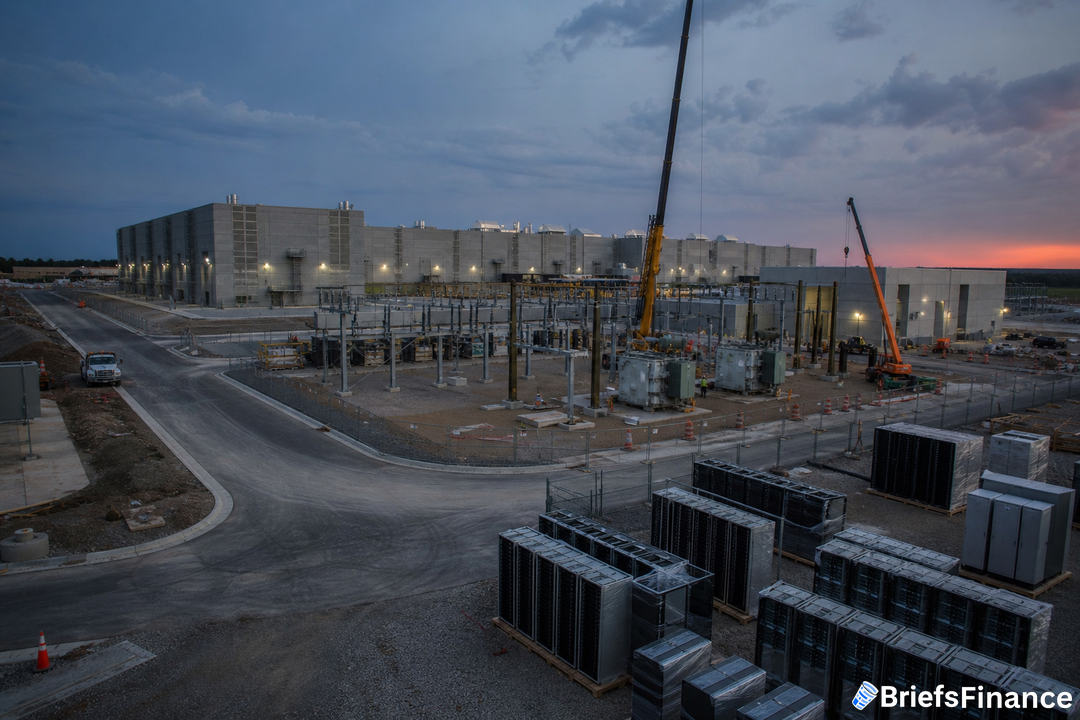
Supersized AI data centers are landing where land is cheap, which often means sharing zip codes with tornadoes, floods, or drought. Traditional coverage struggles to keep up. Michael Serricchio, who runs captive solutions for the US and Canada at Marsh, put it this way: "What you're going to see is an explosive growth in the use of captives to take on the portfolio risks for data centers." He said risks tied to "build-outs, construction, surety, property and liability" will likely "end up in their captive." Serricchio didn't name specific companies, citing deal sensitivities.

Captives aren't new. Oil and gas players helped kick them off around five decades ago to handle hard-to-place environmental disasters like oil spills. Today, they can be set up to handle natural catastrophe exposure, liability, and workers' compensation. A major selling point is the ability to reinvest premiums rather than treating them as a sunk cost paid to a third party. As Cottingham & Butler puts it, turning insurance from "a pure cost center into a potential profit center" is the corporate world's "best kept financial secret." Serricchio hears a common refrain from clients: "I've paid property insurance premiums for 10 years, I've never made a claim, and I don't want to do that anymore."

The coverage gaps and the workarounds

Some data center risks do not fit neatly into standard policies. S&P Global Ratings notes that there is no obvious insurance product for the costly GPUs inside these facilities. Even business interruption cover for a power outage can come with a 12 to 24 hour waiting period before it activates, according to S&P. "There's an insurance gap that needs to be solved," said Charles-Marie Delpuech, a director at S&P Global Ratings.

That gap is spurring alternative forms of risk retention that mimic captives without being captives. Meta Platforms Inc., for instance, explored ways last year to backstop risk at its Hyperion data-center campus, Delpuech said, calling the facility "beyond fully-insurable." Meta ultimately provided a special guarantee for bondholders financing part of the project. The senior secured notes sold by Beignet Investor LLC - an SPV created by Blue Owl Capital Inc. for its share of funding in the Hyperion transaction with Meta - received an A+ from S&P. A request for comment to Meta drew no prompt reply.

Smart investors build strategies that protect capital while positioning for steady long term growth. Join Briefs Finance CEO Jaspreet Singh on September 29th for a FREE live investor workshop, How to Profit From A Dollar That's Losing its Value, where he shows how we're spotting investment opportunities as the dollar falls. Save your spot.

The numbers behind the trend

This is no longer a niche. Captive Review counts more than 6,000 captives worldwide writing about $240 billion in premiums, close to a fifth higher than two years ago. AM Best reports that the approximately 150 US captives it reviews generated in excess of $8 billion of savings during the past five years.

Marsh says it oversees around 1,900 corporate captives that together write approximately $79 billion in premium, with about $11.5 billion deployed to buy reinsurance for large risks. Joe Peiser, who leads risk capital at Aon Plc, characterizes the trend as "a steady and almost uninterrupted increase," attributing it to rising loss severity that encourages clients to retain the first layer of risk.

Where regulation is heading and why it matters for your money

Governments want a local foothold. In 2023, France enacted measures aimed at fostering domestically domiciled captives, while UK policymakers have been working on a bespoke and competitive framework to cultivate a homegrown market. That could shift some business away from established centers such as the US, Bermuda, and the Cayman Islands. Zurich Insurance's group head of captives, Adriana Scherzinger, said captives have moved beyond a niche alternative and now function as core instruments for financing risk, allocating capital, and managing volatility. In her words: "In data centers, the scale is unprecedented: trillions of dollars will be deployed in the coming years." With capacity already tight, "reinsurers, captives, cat bonds and sidecars will all need to play their part to put the risk capacity in place and keep this growth story running through 2027 and beyond."

For your wallet, watch which companies keep more risk in-house, how much premium stays on corporate balance sheets instead of going to insurers, and which locations become hotbeds for captives. That is where pricing power, capital flows, and operational resilience across the AI buildout will start showing up in quarterly numbers.

A thoughtful plan helps you safeguard savings and seek opportunities to grow wealth. Our CEO Jaspreet Singh is hosting a FREE live investor workshop, How to Profit From A Dollar That's Losing its Value, on September 29th. Sign up free to join him live.

Disclosure

Recent News

1 2 3 … 118

Get Market Briefs delivered to your inbox every morning for free!

No fluff. No noise. No politics. Just finance news you can read in 5 minutes.

Blogs

November 3, 2026
How to Budget Every Payday: 5 Moves So You Never Worry About Money
  • A median earner could make about $4.7 million over a career, yet most retire with closer to $13,000 in the bank because of a keeping problem, not an income problem.
  • Audit your money, save $2,000, pay off credit card debt, then automate a 75/15/10 split across three bank accounts.
  • Earn more only after your system is in place, then protect what you build with an accountant, attorneys, the right insurance, and an estate plan.
Read More
November 3, 2026
How to Invest in Stocks: 5 Things to Do Before You Invest Your First Dollar
  • Paying off credit card debt at around 22% interest beats the stock market's roughly 10% average, and even Warren Buffett's 19%.
  • Save $2,000 in a separate emergency fund, learn to research with AI, and decide whether you're a growth, income, or wealth preservation investor.
  • Write down a plan for buying during market crashes, which have happened 25 times in the last 100 years.
Read More
November 3, 2026
Best ETFs to Buy: 5 Three-ETF Portfolios for Every Investing Goal
  • An ETF is a basket of stocks, so one purchase spreads your money across many companies instead of riding on just one.
  • Jaspreet Singh laid out five portfolios of three ETFs each, built for kids, cash flow, growth, slow and steady growth, and protection from a weaker dollar.
  • Based on 10-year average returns, $500 a month could grow to between about $660,000 and $3.1 million over 30 years, though past returns never guarantee future ones.
Read More
November 3, 2026
Best Investments of a Generation: 5 Market Shifts Backed by Your Tax Dollars
  • Private companies are about to spend $1 trillion a year on AI, and the Trump administration is putting tax dollars behind the same industries.
  • The five shifts are AI and its supply chain, robotics, rare earths, energy, and defense.
  • Each comes with real risk, from an AI bubble to wars ending or a new Congress, so these are ideas to research, not sure things.
Read More
November 3, 2026
How to Get Ahead Financially: 10 Moves to Make While Everyone Else Falls Behind
  • Learning a high-income AI skill, or building AI tools for tradespeople, can raise your earning power in a tough job market.
  • Higher interest rates, the 2025 tax cuts, Trump accounts, and stacked cash back can put more money back in your pocket.
  • Following where government money is moving, keeping cash ready for market crashes, and investing in your own education can speed up your wealth.
Read More
November 3, 2026
National Debt at $40 Trillion: Why Inflation Is the Hidden Tax, and Who Profits From It
  • Time magazine asked President Trump how he'd tackle the $40 trillion national debt, and he suggested inflation could help pay it off, a cost that lands on everyday Americans.
  • From 1971 to 2025, cars, houses, and college outpaced both inflation and incomes, while the S&P 500 grew more than 33,000% with dividends reinvested.
  • The U.S. can default, inflate, or outgrow its debt, and history shows each path rewards different assets.
Read More
November 3, 2026
FOMC Meeting: Why the Fed Is Getting Nervous, and Why AI Stocks Feel It
  • At its latest meeting, the Fed held rates steady but warned it may raise them again, because inflation is running near 3.5% against a 2% target.
  • Oil prices, tariffs, AI's hunger for energy, and government spending are all pushing prices higher, and gold, silver, and bitcoin fell on the Fed's news.
  • Chinese AI stocks are down about 40% in a few months and Google fell more than 10% in a day, raising fears that higher rates could pop an AI bubble.
Read More
November 3, 2026
Midterm Elections: Where the Money Could Move if Republicans or Democrats Win
  • The U.S. government spent about $7.5 trillion last year, and the midterm elections could change which industries get more of that money.
  • A Republican win could favor manufacturing, fossil fuels, banks, and defense.
  • A Democratic win could favor healthcare, weight-loss drugs, clean energy, and infrastructure.
Read More
November 3, 2026
Brazil Stock Market Crash: Why Lula's Win Matters to U.S. Investors
  • Brazil's stock market fell more than 20% in a few days, and its currency dropped 8%, after Lula won a presidential election investors expected him to lose.
  • The shock reaches U.S. investors through coffee and beef prices, the BRICS push away from the dollar, and a market that had become an investor favorite.
  • The last time Lula first won, in 2002, Brazil's stock market fell more than 20% and then grew 12x by 2008, though nobody knows if that will repeat.
Read More
November 2, 2026
Credit Utilization: How Paying Down Cards Can Help Your Score
  • Credit utilization is your card balances divided by your credit limits, checked overall and card by card.
  • Lower is generally better, and Experian says the effect becomes more noticeable around 30%.
  • Paying down balances and keeping new charges off your cards are the main ways to lower it.
Read More
1 2 3 … 32
Share via
Copy link










