Free NewsletterPro Login

Free Live Investors Workshop

Seats limited

Tue, Sep 29.

The dollar is losing value.

Here’s how investors can still profit.

Hosted By

Jaspreet Singh

Founder, Briefs Finance

X

Warning: Undefined variable $stocks in /var/www/briefs.co/htdocs/wp-content/plugins/oxygen/component-framework/components/classes/code-block.class.php(133) : eval()'d code on line 448

Warning: foreach() argument must be of type array|object, null given in /var/www/briefs.co/htdocs/wp-content/plugins/oxygen/component-framework/components/classes/code-block.class.php(133) : eval()'d code on line 448

Warning: Undefined variable $funds in /var/www/briefs.co/htdocs/wp-content/plugins/oxygen/component-framework/components/classes/code-block.class.php(133) : eval()'d code on line 472

Warning: foreach() argument must be of type array|object, null given in /var/www/briefs.co/htdocs/wp-content/plugins/oxygen/component-framework/components/classes/code-block.class.php(133) : eval()'d code on line 472
/* the link was here */

Beijing land auction fizzles, spotlighting a deeper cash crunch for cities

Published Sep 13, 2026
[tts_player]
Share:
Summary:
  • A Beijing parcel valued at least $1 billion drew three interested developers, but with only one bidder on the day, the sale was canceled.
  • After late August housing rule changes, Proptech Innovations saw land sold by area fall 36% week over week across 70 major cities.
  • Goldman Sachs projects a 30% hit to land-sale revenue this year and says the slide could run to 2027 or longer, with receipts ultimately up to 90% below the 2021 peak.

What happened in Beijing

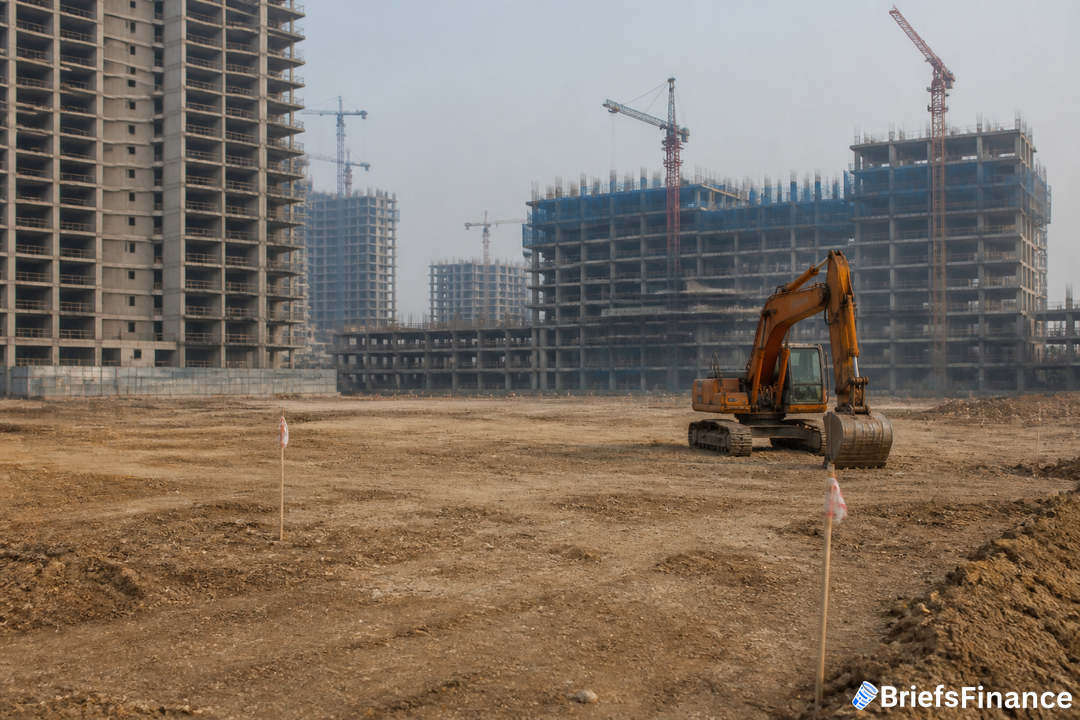
Earlier this month, Beijing prepared to auction a site tagged at no less than $1 billion. Three developers had signaled interest ahead of time, raising hopes for competitive bidding. When the auction opened, only one came ready to bid. The land regulator scrapped the sale, set no new timeline, and did not respond to a faxed request for comment.

After pausing the process, the city said it will "optimize" the offering, without details. According to Proptech, Beijing may bring the parcel back after lowering its starting price.

Policy shift, cooler demand

Local governments have leaned on land sales for years, and that revenue stream has been sliding. Fresh pressure arrived with a late August revamp that unwinds a roughly three-decade setup where builders collected homebuyer funds long before delivering apartments. The new approach bars developers from pulling sales proceeds until projects are completed, tightening cash flow and making it tougher to chase pricey plots.

Developers backed off quickly. Proptech Innovations reported land area sold fell 36% across 70 major cities in the week right after the reform compared with the prior week. In the bigger picture, local authorities' income from land transfers in the first seven months was down 72% versus the same period in 2021, based on Bloomberg calculations from government data. A Ministry of Finance series notes that 2026 figures are measured through July 31.

When economic signals shift, steady stewardship helps preserve and grow your savings. Join Briefs Finance CEO Jaspreet Singh on September 29th for a FREE live investor workshop, How to Profit From A Dollar That's Losing its Value, where he shows how we're spotting investment opportunities as the dollar falls. Save your spot.

Goldman Sachs estimates the overhaul will trigger a 30% drop in land-sale revenue this year, a steeper fall than the 17% annualized decline over the past four years. The bank expects the downturn to last until 2027 or beyond, with receipts ultimately as much as 90% below the 2021 peak.

The cash squeeze on developers and cities

At the height of the housing boom, Bloomberg's read of official data indicates that home sales supplied a majority of developers' incoming cash; in the first seven months of this year, they still accounted for 45%. JPMorgan said the revamped collection rules represent a major negative jolt for the sector. Citigroup's analysts said the change would markedly postpone when builders begin receiving cash after purchasing land. That caution is showing up in big markets: on the first workday after the overhaul, state-owned China Overseas Land & Investment Ltd. was the only bidder for a Shanghai site priced at a minimum of $2.2 billion, even though more than 20 developers had expressed interest at a government marketing event earlier this year.

Cities are trying to plug the gap by tightening tax collection, including closer scrutiny of offshore income, and by issuing more special bonds to fund infrastructure and real estate. Over time, officials may need steadier streams such as taxes from expanding industries and rising personal incomes, plus securitizing state-owned assets. The financial strain on municipalities also increases the pressure on Beijing to bolster a slowing economy. Some economists estimate that July growth fell even further short of the annual target, prompting Premier Li Qiang to push for stronger support.

Why this matters for your money

Softer developer appetite for land means thinner local budgets and a higher chance of more central stimulus. Sentiment is shifting on the ground too: Zhang Kai, a land-market analyst at research firm China Index Holdings, said enthusiasm for buying land in Beijing had cooled sharply over the past two months after the latest housing-sales reforms and that developers are behaving more cautiously. If you hold China-focused funds or global names that lean on Chinese demand, that is the current tide you are swimming in.

Staying calm and proactive can make the difference in safeguarding your financial future. Our CEO Jaspreet Singh is hosting a FREE live investor workshop, How to Profit From A Dollar That's Losing its Value, on September 29th. Sign up free to join him live.

Disclosure

Recent News

1 2 3 75

Get Market Briefs delivered to your inbox every morning for free!

No fluff. No noise. No politics. Just finance news you can read in 5 minutes.

Blogs

September 11, 2026
How Is the Economy Doing? Washington Says It's Fixed, but the Numbers Don't Agree
  • Treasury Secretary Scott Bessent says the economy is fixed because lower earners' incomes are now rising faster than top earners'.
  • The Atlanta Fed and Bank of America show different numbers, and Hilton, Marriott, and McDonald's can't agree on what they're seeing either.
  • Whichever side is right, the economy is built to make investors rich, and inflation is how it does it.
Read More
September 10, 2026
US National Debt Hits $40 Trillion: Why the Economy Hasn't Collapsed Yet
  • The US national debt crossed $40 trillion in 2026 and is growing faster than the economy. The debt to GDP ratio now sits at 125%, the highest outside the pandemic and higher than World War II.
  • On September 9, 2026, Treasury Secretary Scott Bessent rolled out an emergency plan for the government to lend money to itself. Ray Dalio now says the dollar has roughly three years before real pain.
  • Empires rarely default. They debase. Since 1971, median household income grew about 8x while houses grew 17x and the S&P 500 grew 360x, so investors got richer while workers fell behind.
Read More
September 9, 2026
Your 401k Is Fueling the AI Bubble
  • About $10 trillion of 401k money sits in a $77 trillion stock market, mostly through target date funds and S&P 500 funds. Roughly 30% of every S&P 500 dollar lands in five AI-heavy tech stocks.
  • Four bubble signals run hotter today than before the 2000 crash: top-ten concentration, tech's share of the index, the Buffett Indicator, and how much of the market index funds own.
  • You only lock in an AI bubble loss if you sell. The 2022, 2020, 2008, and 2000 crashes were all buying windows for long-term investors, and the US-China AI race means government money could keep flowing in.
Read More
September 9, 2026
What Is Wealth Preservation? How To Protect Your Money From Anything
  • Wealth preservation is an investing strategy built around keeping the money you've already made instead of chasing growth.
  • It leans on assets that hold steady when markets fall - gold, Treasury bonds, and companies that keep earning through wars, crashes, and pandemics.
  • The tradeoff is real: you give up some upside, and the two key numbers to check are maximum drawdown and correlation to the market.
Read More
September 8, 2026
Why Is Everything So Expensive? Why Prices May Never Come Back Down
  • Official inflation is 3.4% and prices are up 32% since 2020, but rent (41%), gas (47%), car insurance (64%) and ground beef (79%) all outran the 28% median wage.
  • The Federal Reserve targets 2% inflation on purpose. Rising prices push extra dollars to investors and shrink the real cost of a $40 trillion national debt.
  • Investors who simply owned the S&P 500 gained about 150% over the same six years, and the Fed's September 16 decision will show whether it protects the dollar or the economy first.
Read More
September 7, 2026
The U.S. Housing Market Just Flipped: Renting a Home Now Beats Buying One
  • The US is in a buyer's market in 41 of the 50 largest metro areas, but prices sit near record highs and mortgage rates are close to 7%.
  • The same median house costs 27% more than it did in 2021 while the monthly payment costs 90% more, and incomes rose a little more than 10%.
  • A 2008-style crash is not showing up in the data, so the pressure is landing on buyers instead of prices.
Read More
September 4, 2026
An Interest Rate Hike in 2026? The Fed Just Broke Its Own Script
  • The Federal Reserve spent a year signaling cheaper money, and its new chairman just warned that an interest rate hike may be coming instead.
  • The Fed is stuck between high inflation and a weak job market, and fixing one makes the other worse.
  • Higher rates also reprice roughly a third of America's $40 trillion national debt this year, which is why Washington wants cuts so badly.
Read More
September 3, 2026
5 Passive Income Ideas That Pay You Whether You Work or Not
  • School teaches one formula: work, earn, spend. Stop working and the money stops, so the wheel never ends.
  • Five assets pay you without your labor - dividends, rent, interest, royalties, and the things you already own.
  • $80,000 a year of cash flow takes about $1 million invested at 8%, or roughly 20 years of $1,000 a month.
Read More
September 2, 2026
The Best Way to Invest 10k: Three Options To Transform 10K into 10 Million
  • Passive investing in stocks or real estate targets around 10% a year, and time in the market matters more than the price you get in at.
  • Active investing means putting your time in alongside your money, which raises the target to roughly 20% a year and raises the risk of losing it all.
  • Investing in yourself has no ceiling, because a new skill can create a new income that no market return can match.
Read More
September 1, 2026
The Tax Write Offs the Rich Are Using in 2026 While the IRS Shrinks
  • The 2026 tax brackets landed lower than they were headed, and the standard deduction jumped from a planned $8,350 to $16,100 for single filers.
  • New write offs for overtime, tips, seniors and car loan interest are live now, and most of them are written to expire in 2028.
  • About a third of IRS auditors have been fired, and four assets do most of the work for people who want income without a matching tax bill.
Read More
1 2 3 26
Share via
Copy link