What Bardella said, and why it matters
Jordan Bardella, 30, used a Saturday interview with Bloomberg's Francine Lacqua at Italy's Ambrosetti Forum to plant a flag: "What is certain is that in this budget we will very firmly oppose tax increases - increases in taxes on French people - in a country where the overall tax burden is already among the highest of any developed economy." He extended that stance to companies too: "We will also very firmly oppose increases in taxes on businesses, because the consequences for growth are significant and will be very significant tomorrow and after." He then made the boundary explicit: "Those will be our red lines in these budget discussions."
Bardella also sketched the timeline for his party's counteroffer, indicating that in October National Rally would present its proposals, with "a budgetary vision and a fiscal trajectory that we want to commit to for five years. Because in truth, the real budget debate will take place during the presidential campaign."
The road ahead in Paris
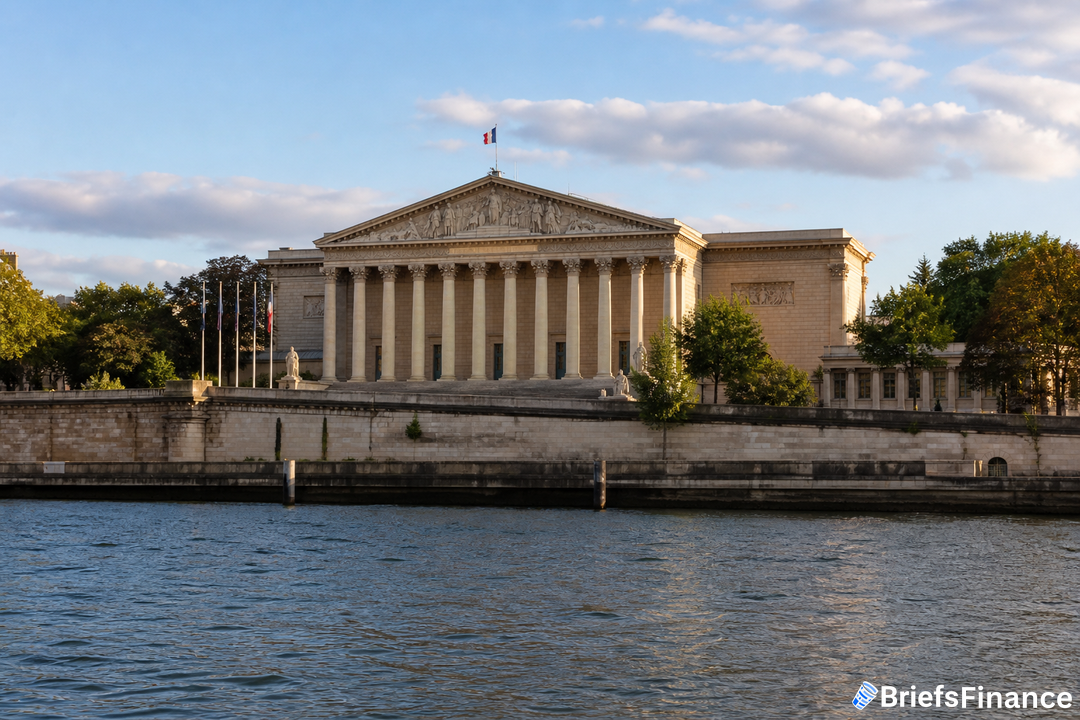
Budget talks kick off at the end of September, when Prime Minister Sebastien Lecornu's minority government brings its plan to a National Assembly that is anything but unified. In the last two years, his predecessors have been brought down by the legislature because of their fiscal plans, and the approaching presidential contest further dims chances of agreement. Meanwhile, for months, polls have shown Marine Le Pen leading as the candidate most likely to succeed President Emmanuel Macron when voters go to the polls next year, keeping National Rally at the center of the fiscal fight.
Eurostat data show France has lagged many European peers in shrinking deficits since the Covid shock, a backdrop that adds pressure to the talks.
Understanding what moved a market beats knowing that it moved. Get the free Market Briefs daily newsletter and follow the drivers.
Markets are watching the deficit math
Ratings agencies are on alert. In late August, Fitch affirmed its outlook on Europe's second-largest economy as stable, while reiterating that swelling deficits and higher debt could put France's rating at risk. The country's grade sits six notches above speculative territory. With global bond yields rising and political bargaining grinding on, France's finances are drawing sharper scrutiny.
If these red lines harden into policy, expect the argument to shift from how to raise money to where to cut and what to prioritize. For your wallet, the signal to watch is whether the final budget leans on spending restraint, bets on growth, or stalls in stalemate, because each path ripples into taxes, services, and borrowing costs.