Projects and scale under way
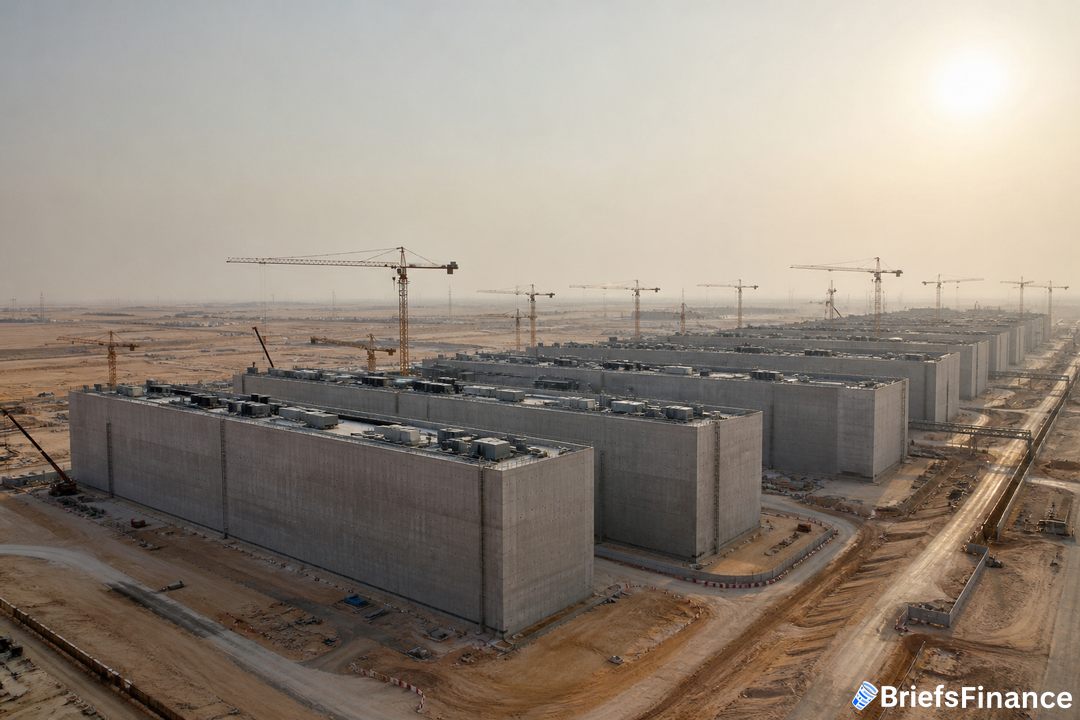
Gulf leaders want growth that is not tied to oil, and AI compute is their new calling card. In the UAE, government-linked firms are pressing ahead on a massive Abu Dhabi AI campus designed to bring online five gigawatts of computing power, according to people familiar with the effort. Khazna, the G42-backed builder in charge of the site's infrastructure, said it expects to bring the first 200 megawatts online in the fourth quarter. "We have not seen any slowdown in customer demand or confidence as a result of the recent regional events," the company said.
In Saudi Arabia, Public Investment Fund-backed Humain is looking to tap global and local backers for an initial $2.5 billion to build data centers across the kingdom, people familiar with the plan said this week. The company is proceeding with a buildout topping six gigawatts in Saudi Arabia and says its schedule remains intact despite the war.
These headline projects lean on a familiar pitch to AI developers: lots of land and ample energy. They also depend on heavyweight collaborators such as OpenAI, Microsoft Corp. and Nvidia Corp., who now have to weigh higher operating risk and cost as the conflict grinds on.
Attacks, damage and security costs
The cloud buildout is happening as infrastructure takes fire. In July, satellite imagery indicated two Amazon.com Inc. facilities in Bahrain were damaged after Iran said it fired missiles at the sites. A spokesperson for the Islamic Revolutionary Guard Corps told the state-backed Tasnim agency the strikes targeted "a major information-processing asset of the enemy." In March, drones struck three AWS facilities in the United Arab Emirates and Bahrain, and the company has conceded that service across the region has deteriorated.
Major US partners tied to UAE and Saudi builds have mostly kept quiet since the war began. Recently, Amazon said that by 2028 it intends to provide up to 50 megawatts within Saudi Arabia's first AI Zone as part of a wider partnership, and Microsoft said its Saudi Arabia East cloud region will open to customers in November 2026. OpenAI said it is "continuing to make good progress on the infrastructure and adoption priorities" in the UAE.
Hardening sites can lower risk but adds cost. Integrated Security Systems estimates that bolstering physical security features such as perimeter walls and server protection would lift build costs by about 5 to 7 percent. "There is now a higher perception of physical risk as data centers are no longer just viewed as IT assets, they are regarded increasingly as critical infrastructure that could be targeted during a threat," said ISS Chief Executive Officer Jane Mason, whose company offers ballistic and blast-proof panels.
Recent US and Iranian strikes have underscored the ongoing danger. As Winston Ma, a New York University professor and AI investor, put it, "Most likely, the hyperscalers are going to hedge their global map of data center connectivity." He added, "Gulf funds can build the data centers and supply the power, but without long-term commitments from Western hyperscalers and clear US regulatory alignment, those mega-projects risk becoming high-tech real estate with empty servers."
Understanding what moved a market beats knowing that it moved. Get the free Market Briefs daily newsletter and follow the drivers.
Partners, politics and investor views
Washington's rules are shaping what gear can be brought to the Gulf. This year, the Trump administration loosened certain export limits on the UAE, letting approved firms - including G42, the main force behind the Abu Dhabi campus - buy advanced AI chips without seeking US approval each time.
OpenAI last year said one gigawatt at the Abu Dhabi campus would house Stargate UAE, the first overseas node of its flagship infrastructure joint venture. Since then, OpenAI has stepped back from other international Stargate locations and dropped the Stargate label from newer efforts. Sources say the UAE-US AI Campus no longer uses the Stargate branding for phase one of the project.
Oil money is powering the boom. July saw Abu Dhabi's MGX secure $49 billion, forming one of the largest AI-focused funds, while state-backed investors around the region continue to be key backers of OpenAI, Anthropic and SpaceX. A large private equity firm said it expects Gulf data-center demand to keep climbing and is hunting for assets to buy now and sell at higher prices later. According to Jacopo Pichelli, a managing director at FTI Capital Advisors and an adviser to operators in the region, local investors remain unfazed, while foreign investors are split - some are proceeding much as before, others prefer to wait and see.
Assad Noori, Head of Data Centres, Work Dynamics EMEA at JLL, said the binding constraint is more regulatory than commercial. The key issue, he said, is US export control over advanced chips, which determines what can be installed and by whom.
Officials for the UAE and Saudi governments did not reply to requests for comment. Microsoft offered no comment. Amazon, meanwhile, offered no additional comment beyond directing users to its service health page, where notices tell customers to steer clear of portions of its network that the attacks have disrupted.
What this means for your portfolio
The Gulf is pouring money into compute, even as missiles and drones raise the stakes. Builders like Khazna and Humain are scaling capacity, while big US tech names and chip rules will decide what actually runs on those racks. With some investors shopping for deals and others sitting tight, expect a mix of opportunity and caution - and for risk to be priced in, not waved away.