What happened this week
Tyson slashed its full-year profit target again just a month after its last downgrade, and the stock slid up to 8.5%. Management said the new forecast sits below the previous range's floor, underscoring that plant closures intended to rightsize the beef unit have not yet delivered the relief they were aiming for. The reset lands as cattle markets swing around efforts by President Donald Trump to cool high beef prices.
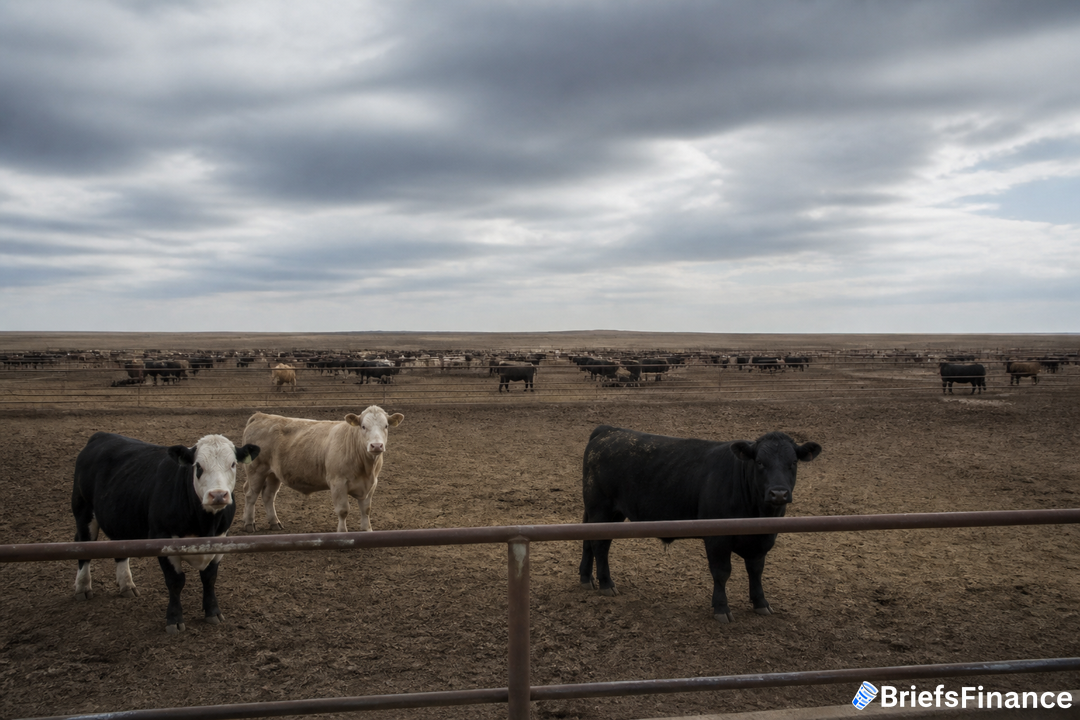
The company pointed to a combination of pressures in beef. Tyson said the update was driven by "significant margin compression" amid a severe shortage of cattle and by the expected effect of cheaper cattle on the value of its live-cattle holdings. The new adjusted operating income range is $1.85 billion to $2.05 billion, down from $2.1 billion to $2.3 billion set a month ago. "The fact that Tyson just reported earnings a month ago compounds the negative fallout from this update," wrote Adam Crisafulli of Vital Knowledge.
How the beef business is driving the cuts
Tyson projected its beef unit would lose between $625 million and $775 million, a deeper range than the previous $500 million to $650 million outlook. In August the company announced plans to close a beef plant in Illinois and a case-ready facility in Utah, and it is looking to sell another beef facility in Washington. The company expects those actions to start relieving operating cost pressure at the start of fiscal 2027. Earlier, Tyson had already shut a different beef plant and scaled back production at a Texas site, yet the beef division still racked up substantial operating losses.
JPMorgan analyst Thomas Palmer flagged the potential for losses on Tyson's own live-cattle inventory, since the company owns and raises some animals for months before slaughter. "The recent significant cattle price decline means that TSN will likely need to recognize losses on this inventory," he wrote, adding that lower prices should translate into cheaper inputs when those animals are processed next year.
Live cattle futures in Chicago had been hovering near last November's lows, then jumped as much as 2.5% after Tyson's announcement, the biggest one-day move since mid-June.
The money story behind the headlines is usually the part that matters. Join Market Briefs free and get it every morning.
Politics, imports, and a restless market
High beef prices have become a priority for President Donald Trump as the midterms approach. He has pushed to increase imports while loosening some rules for ranchers. The US has restarted bringing in live cattle from Mexico. Trump unveiled a plan that would permit up to 300,000 tons of ground beef to come in at reduced tariff rates.
Imported lean trimmings are typically mixed with domestic beef to hit the right fat ratios for ground product, which can bolster supplies for processors. Ranchers, prodded by the import push, have renewed calls for country-of-origin labels. Agriculture Secretary Brooke Rollins told Fox Business she planned to talk with Trump on Friday regarding rancher beef sales, and earlier in the week signaled a labeling announcement was coming soon.
The broader industry is also under the microscope. An antitrust investigation into meatpackers is ongoing, and the Justice Department broadened the probe earlier this week so that it now includes food retailers. At the same time, there are signs demand is settling, which is pressuring wholesale beef prices.
The rest of Tyson and why it matters to you
Poultry has been the offset, but even there Tyson lowered expectations. For poultry, the company's adjusted operating income outlook is $1.85 billion to $1.95 billion, a step down from $1.9 billion to $2.05 billion, and it blamed "consumer caution around discretionary spending" that is pressuring foodservice demand. "The beef pressures that have intensified this quarter reflect industry-wide cattle-cycle dynamics that required decisive action," Chief Executive Officer Donnie King said.
Bottom line for your wallet: Tyson is cutting guidance, beef losses are projected to be deeper, policy shifts are changing import flows, and futures are volatile. If you follow food costs or own consumer staples exposure, the next swing likely hinges on cattle prices, the pace of plant changes and asset sales, and whether poultry can keep carrying more of the load.