Free NewsletterPro Login

Warning: Undefined variable $stocks in /var/www/briefs.co/htdocs/wp-content/plugins/oxygen/component-framework/components/classes/code-block.class.php(133) : eval()'d code on line 448

Warning: foreach() argument must be of type array|object, null given in /var/www/briefs.co/htdocs/wp-content/plugins/oxygen/component-framework/components/classes/code-block.class.php(133) : eval()'d code on line 448

Warning: Undefined variable $funds in /var/www/briefs.co/htdocs/wp-content/plugins/oxygen/component-framework/components/classes/code-block.class.php(133) : eval()'d code on line 472

Warning: foreach() argument must be of type array|object, null given in /var/www/briefs.co/htdocs/wp-content/plugins/oxygen/component-framework/components/classes/code-block.class.php(133) : eval()'d code on line 472
/* the link was here */

USDA eases rules and launches 'Ranchers First' steps as beef imports expand

Published Aug 31, 2026
[tts_player]
Share:
Summary:
  • USDA unveiled actions Monday to aid ranchers and small processors while the administration pursues expanded beef imports.
  • New moves include two-year insurance for retaining breeding heifers, a guaranteed loan program to expand regional processing, and priority purchases of locally processed beef for government facilities.
  • Separately, the agency said last month it planned to make as much as $500 million available so midsize meatpackers can keep running.

What the USDA announced

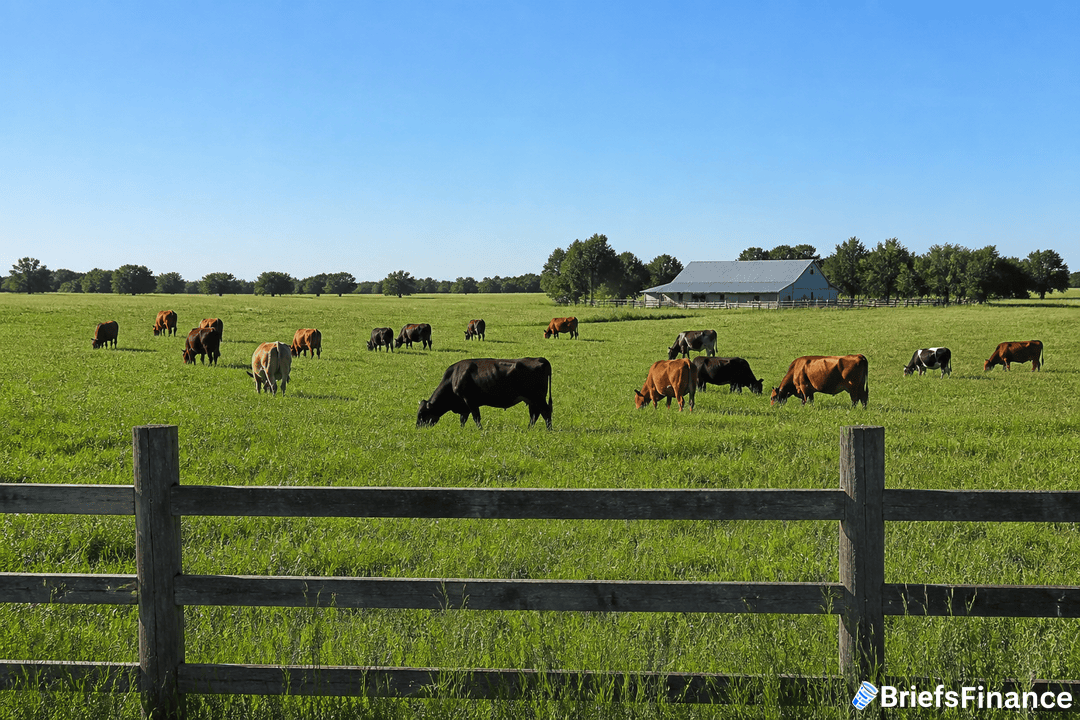
USDA rolled out a package of measures Monday aimed at supporting domestic producers. A fresh insurance product will offset the expense of retaining a breeding heifer during a two-year policy term, compensating producers if at any time in that window the cull value surpasses the value of keeping her as breeding stock.

Under the Ranchers First Initiative, USDA plans a guaranteed loan program to grow regional meat-processing capacity and will prioritize buying locally processed beef for federal and state institutions, including prisons and hospitals. The agency also said last month it could commit as much as $500 million to keep midsize meatpackers afloat.

A severe US cattle shortage has squeezed beef processing margins, leading to plant closures even among the largest companies. USDA said recent shutdowns by major packers mean nearly 20% of processing capacity will be available as the herd expands, calling it "a tremendous opportunity to shift this capacity toward American-owned independent small, midsize, and new co-ops."

Why officials and producers are reacting

The administration has moved to cool elevated beef prices by lowering tariffs on as much as 300,000 tons of imports. That move quickly provoked criticism from ranchers and Republican legislators representing rural states, who argue the additional supply undermines the US market and efforts to rebuild the cattle herd.

On Friday, Donald Trump hinted at the USDA's plans, claiming he had signed legal paperwork that would let farmers and ranchers handle food processing on their own. "Ranchers and Farmers have always been a number one priority for me," he said, acknowledging concerns about consolidation as the number of US ranchers has declined over time.

As policies change, steady investing still matters; download the free Always Be Buying E-Book to learn the approach

The administration has sharpened its focus on concentration in the industry, which includes an ongoing Justice Department investigation. Tyson Foods Inc., Cargill Inc., JBS NV and National Beef Packing Co. dominate the beef market.

Food safety, costs, and industry pushback

Both the National Cattlemen's Beef Association and The Meat Institute said last week that any new rule changes should not weaken food safety. The cattlemen's group urged the administration to "focus on reducing legitimate regulatory burdens" such as fuel and fertilizer prices and to safeguard the herd against animal disease.

Agriculture Secretary Brooke Rollins dismissed inspection worries as "scare tactics from some little shadier smoke-and-mirrors front groups." She told Glenn Beck, "At the end of the day, this is the most impressive, most robust food inspection safety system in the world and none of that will be compromised."

Producers contending with drought, high costs and uncertain markets have been culling animals for meat rather than breeding, leaving the US cattle herd at one of its lowest mid-year levels in roughly five decades. USDA's new insurance and financing tools are aimed at making herd rebuilding more feasible.

Health, pests, and cross-border cattle flows

Ranchers are still uneasy about the USDA's choice to restart live cattle imports from Mexico while the New World screwworm remains present. Since it was detected nearly three months ago, the parasite has spread only limitedly in US livestock. Texas currently has two active cases.

USDA said Monday it removed two Texas zones from New World screwworm-infested status, allowing producers there to move livestock without additional inspections. The areas cover portions of La Salle, Webb, Gillespie, Kerr and Kimble counties and are the first to be cleared since the parasite was found in Texas in early June. Mexico still has nearly 2,000 active cases.

Disclosure

Recent News

1 2 3 64

Get Market Briefs delivered to your inbox every morning for free!

No fluff. No noise. No politics. Just finance news you can read in 5 minutes.

Blogs

August 31, 2026
America Is Running Out of Debt Buyers. Treasury Bills Are the Government's Fix
  • The government took in about $5 trillion in taxes in 2025 and spent about $7 trillion, and the national debt is now over $40 trillion.
  • Investors, banks, and foreign countries are all lending less to the U.S., so starting September 9 the government plans to sell more short-term treasury bills and use that cash to buy back its long-term debt.
  • Government interest rates set the floor for your mortgage, your car loan, and your credit card, and short-term Treasury ETFs like SGOV are one way investors are playing it.
Read More
August 23, 2026
How to Get the Most From Your Guideline 401k
  • Guideline is a company that provides low-cost 401k plans, popular with small businesses and their employees.
  • A "Guideline 401k" follows the same core rules as any 401k: tax-advantaged growth, contribution limits, and often an employer match.
  • The biggest results come from capturing the full match, choosing low-cost funds, and picking Roth or traditional to fit your situation.
Read More
August 23, 2026
Principal 401k: What to Know About Your Plan
  • Principal is one of many companies that manage workplace 401k plans, so a "Principal 401k" is simply a 401k where Principal is the provider.
  • The rules of a 401k are the same no matter who runs it: pre-tax or Roth contributions, tax-advantaged growth, and often an employer match.
  • The biggest wins come from grabbing the full match, picking low-cost funds, and knowing whether Roth or traditional fits you.
Read More
August 23, 2026
What a Tariff Dividend Means for Your Money
  • A "tariff dividend" is the idea of taking money the government collects from tariffs and paying some of it back to citizens.
  • To judge the idea, you first need to know what a tariff is: a tax on imported goods, usually paid by the companies bringing them in.
  • Tariffs ripple through prices, businesses, and your investments, so the smart move is understanding those ripples, not just the headline.
Read More
August 23, 2026
No Tax on Overtime: How Overtime Pay Is Taxed
  • "No tax on overtime" refers to a tax break that lets certain workers deduct some overtime pay, lowering the income they get taxed on.
  • A deduction does not mean overtime is truly tax-free. It means part of that pay is subtracted before your tax is figured.
  • The bigger money lesson: how you earn money changes how it is taxed, and investors often get the friendliest treatment of all.
Read More
August 23, 2026
Reading the Silver Price Forecast for 2026
  • Nobody can honestly promise a specific silver price for 2026. Any exact number is a guess, so treat forecasts as opinions, not facts.
  • Silver is unusual because it is both a precious metal and an industrial metal, so its price answers to two very different forces.
  • Instead of chasing a forecast, learn the drivers - inflation, interest rates, recession fear, and industrial demand - so you can judge any prediction yourself.
Read More
August 23, 2026
What to Do When Reddit Stocks Go Viral
  • "Reddit stocks" usually means stocks getting hyped in online communities, where crowds can send a price soaring or crashing fast.
  • These tips can be entertaining and sometimes useful, but they are opinions, not research, and often come loaded with hype.
  • The safe move is to treat every online tip as a starting point, then do your own homework before risking a dollar.
Read More
August 23, 2026
Why Is Bitcoin Dropping Right Now?
  • Bitcoin drops for a mix of reasons: interest rates, big-picture money policy, regulation news, and simple shifts in how much risk investors want to take.
  • Bitcoin has a fixed supply and no earnings, so its price runs almost entirely on supply, demand, and sentiment.
  • Sharp drops are normal for bitcoin. Understanding the drivers matters more than reacting to any single day.
Read More
August 23, 2026
The Fidelity 500 Index Fund, Made Simple for Beginners
  • The Fidelity 500 Index Fund is a low-cost fund that tracks the S&P 500, an index of 500 large U.S. companies.
  • Buying it means owning a tiny slice of 500 businesses at once, which spreads your risk in a single purchase.
  • Index funds like this win over time mostly by keeping fees low and letting compounding do the work.
Read More
August 23, 2026
USA Penny Stocks: Risks and Rewards Explained
  • USA penny stocks are very low-priced shares of very small companies, often trading under $5 and sometimes under $1.
  • They dangle the dream of huge, fast gains, but carry brutal risks: low liquidity, wild swings, and high failure rates.
  • Most investors build wealth faster with quality companies and funds than by chasing cheap shares.
Read More
1 2 3 25
Share via
Copy link










