A Warning With a Timeline
Bill Gates has been talking about AI for years, but his latest warning lands harder than the rest. Gates called the shift "one of the most turbulent times in human history," even under the best circumstances, and added that "the challenge is monumental."
Who Loses Work First
The people most exposed, Gates says, are not just factory workers. He expects AI to replace human thinking faster than earlier technologies let workers move into new roles.
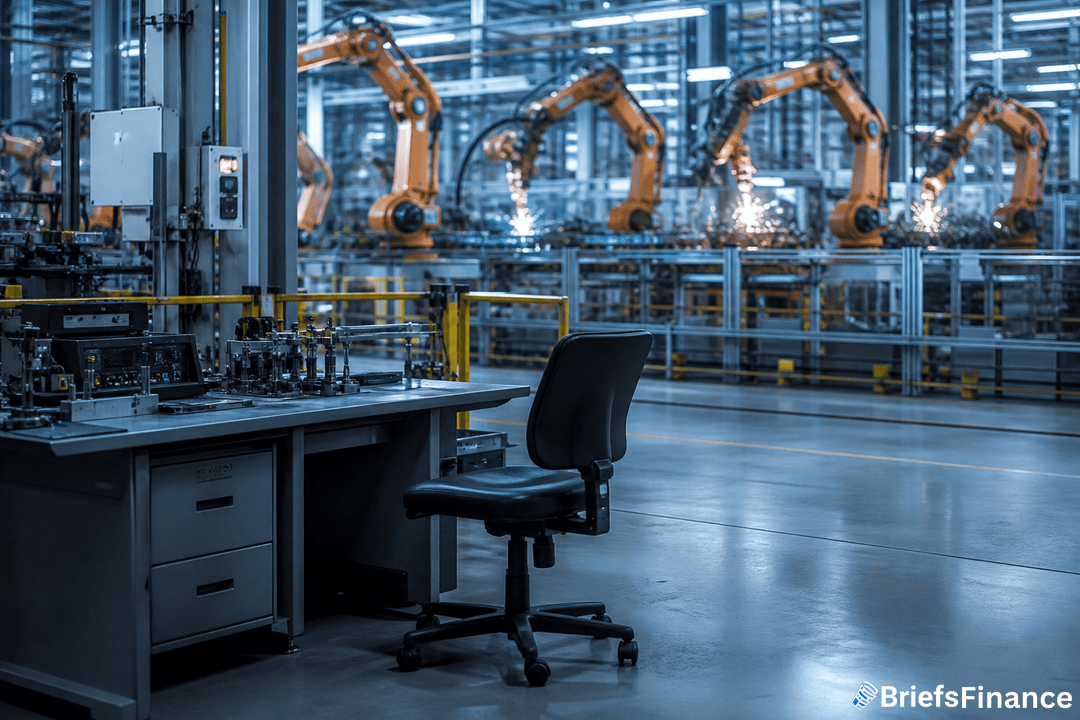
Sales, customer service, software engineering, and paralegal work are likely early casualties among office jobs, while manual jobs will feel the strain as the cost of robots keeps falling. Down the line, AI might also take over tasks like evaluating loans, analyzing data, and triaging patients.
Some workers will be hit before they have time to adjust. "The accounting worker who's replaced by a bot or the $20-an-hour worker who loses their job to a $10-an-hour robot" cannot wait for the system to catch up.
That price gap is the engine behind the whole shift. When a machine can do the work for half the price, businesses have a strong reason to make the switch, and competitive pressure will speed things up once one company does.
"Robots and AI combined can create a vicious cycle," he said. Younger workers may feel this early, too.
If entry-level jobs shrink, the usual on-ramps into a career get narrower. Re-skilling and hunting for a new job will bring considerable disorder, he cautioned.
What Gates Wants Done
His answer is not to slow AI down. He thinks AI can "accelerate innovation" on the world's "toughest technical challenges," including renewable energy, climate change, food production, and disease eradication.
The money story behind the headlines is usually the part that matters. Join Market Briefs free and get it every morning.
The problem is that no government is organized for what comes next. Gates wants new national agencies to coordinate policy on jobs, taxes, energy, elections, public health, finance, and national defense.
He also wants a fresh international body to handle risks that ignore borders. He points to existing frameworks like nuclear weapons inspection regimes, global aviation rules, and ozone protection treaties as models, and says any future international AI body should combine "elements of all three and more."
"But even a country that gets its own order will still be exposed to risks that cross borders," he wrote. "This is why an international organization will need to be built in parallel."
This warning does not come from an outsider. Gates concedes he still has financial connections to the tech sector.
What It Means for You
The preparation is not happening, and Gates said so plainly. A change this large will force policymakers to rethink jobs, schooling, and social protections from the ground up.
This is not a headline about a tech stock. It is a warning about work itself.
If you earn a paycheck, the question of which tasks a machine can do for less is not a distant one. The jobs on his list - sales, customer service, paralegal work - are the kinds of roles a huge number of people hold today.
Whether AI becomes the equalizer Gates hopes for or the injustice he fears will depend on choices leaders make now, while there is still time.