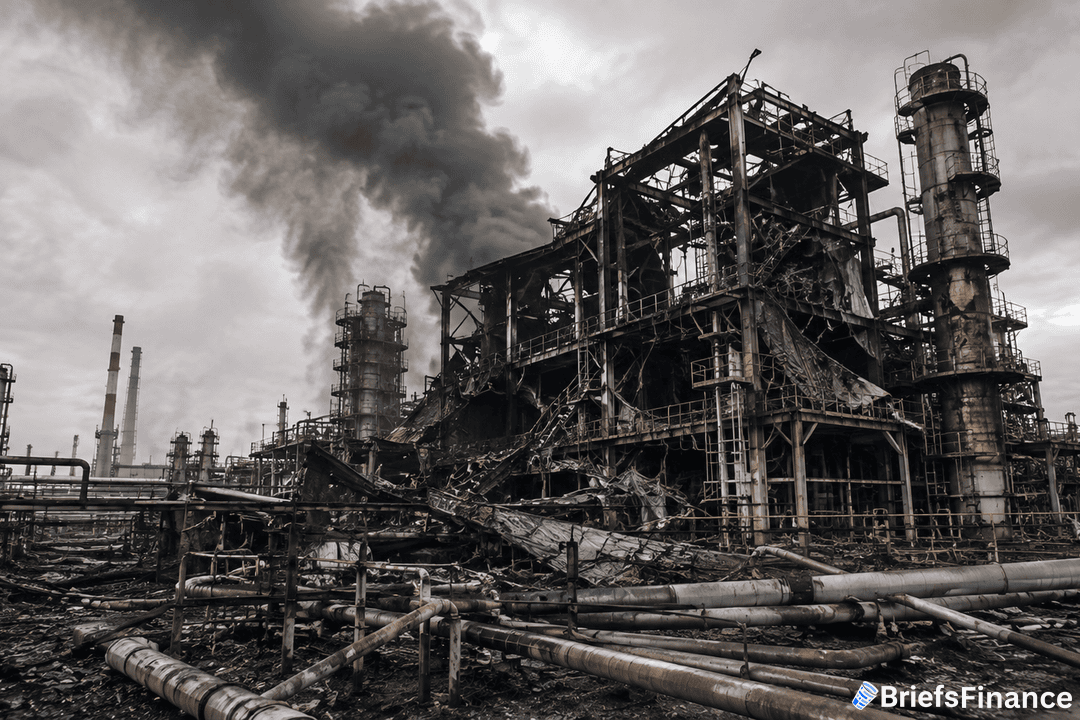
Picture this: you have a quota to meet, but someone keeps poking holes in your equipment. That is basically what is happening to Russia's oil industry right now.
Ukrainian attacks on refineries and ports have pushed Russia's crude production far below what it promised OPEC+ it would pump. In July, the country produced about 937,000 barrels per day less than its target - a gap almost the size of a mid-sized oil producer's entire output.
The Numbers Behind the Shortfall
Here is the odd part: July's output was only 6,000 barrels per day less than June's. In other words, production basically flatlined. The damage from the attacks is not getting dramatically worse month over month, but Russia also cannot seem to push output back up.
What the Attacks Actually Did
Early in the month, attacks focused on refineries. That forced Russian producers to ship near-record amounts of crude by sea because their processing plants could not handle the volume. Refinery runs fell to multiyear lows.
Get the free Always Be Buying eBook and learn the simple system for building wealth on any income
Then the strategy shifted. As July wore on, Ukraine's attacks aimed at vessels in the Black and Azov Seas. That change gave refineries a chance to catch their breath, make repairs, and boost processing. But it also meant crude exports declined.
An overnight attack on the Novorossiysk port damaged three grain terminals, showing that no part of Russia's export infrastructure is off limits.
Russia's crude output has fallen well short of its OPEC+ commitment because Ukrainian strikes have repeatedly damaged refineries and port facilities. That shortfall is not just a numbers game. OPEC+ has been trying to manage global supply and prices, and Russia's inability to meet its quota complicates that effort.
With Russian output stuck below target, other members may need to compensate, or the group could face internal tensions. Meanwhile, the ongoing attacks have kept oil markets on edge, with prices experiencing volatility as traders weigh the risk of further disruptions.
The gap between Russia's actual output and its quota is not merely a statistical anomaly. For months, OPEC+ has carefully calibrated production levels to balance global inventories and support prices. When one of its largest members consistently underdelivers, the group's ability to present a united front weakens.
Some members have already exceeded their own targets, and they may be reluctant to compensate for Russia's shortfall. Russia's own budget relies heavily on energy revenues, so the lost production also strains its fiscal position. The situation is fluid, and any escalation in the conflict could push output even lower.
What Happens Next
What does this mean for markets? Each barrel Russia fails to produce is one less that reaches global supply. That pressure helps keep oil prices supported, which shows up in what you pay at the pump.
If the attacks continue, Russia's ability to meet its OPEC+ quota - or even come close - looks doubtful for the rest of the year. For anyone watching energy prices, this is a story worth following.
Download the free Always Be Buying eBook and start putting your money to work today