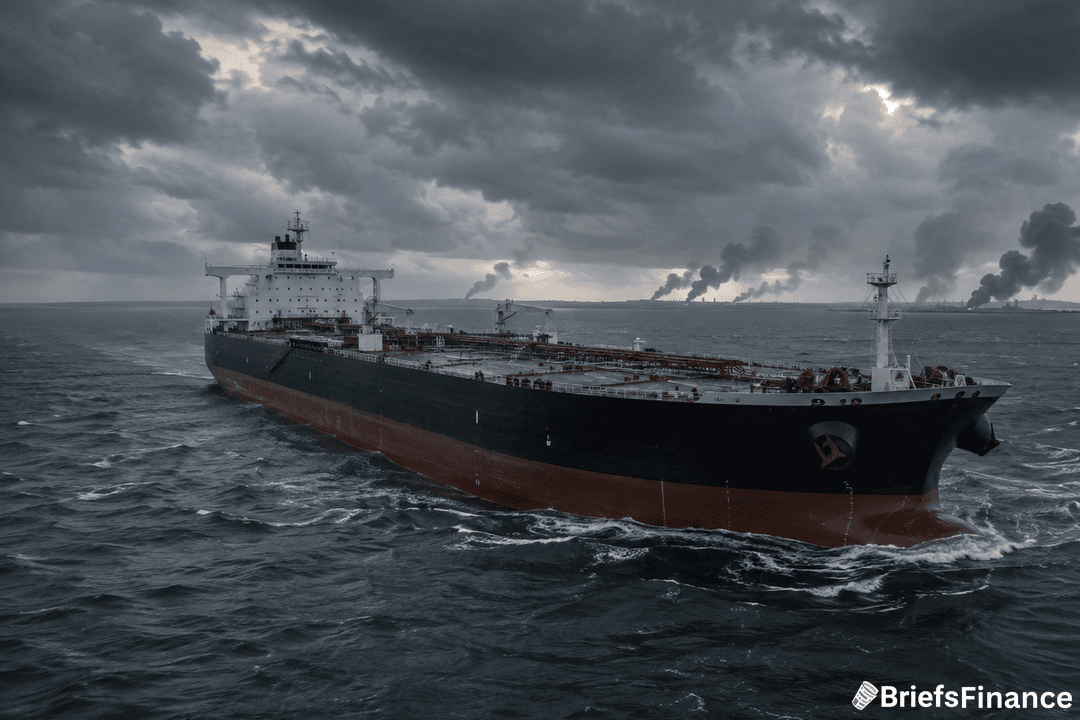
Why Shipping Costs Spiked
The attacks have made insurers wary, and they are raising their rates accordingly. The International Energy Agency's monthly report on Wednesday indicated that war-risk premiums in the region have approximately doubled. That extra cost gets passed down the line, pushing daily tanker rates up 140% since the latest drone attacks started in early July.
This shipping route is crucial as it transports CPC Blend, Kazakhstan's primary export crude. CPC Blend is delivered via a pipeline that terminates near Novorossiysk. When drones hit vessels in that area, loadings get suspended, and the whole schedule falls apart.
The Ripple Effect on Oil Prices
Here is where the story gets interesting for anyone watching oil markets.
The freight spike is pushing CPC Blend prices down. Buyers have to pay more to ship the stuff, so they want a discount on the crude itself to make up the difference.
Get the free Always Be Buying eBook and learn the simple system for building wealth on any income
On Tuesday, TotalEnergies SE agreed to buy 90,000 tons of CPC Blend from Gunvor, with loading scheduled for late August or early September, at $4.60 a barrel below Dated Brent. That is the lowest differential since January 2025, according to S&P Global Commodity Insights' Platts pricing window.
The softer pricing stems directly from the surge in freight and insurance costs, according to traders who asked not to be identified. Buyers are also holding back, expecting transport costs to fall significantly once the export hub resumes normal operations, according to those familiar with the matter.
What This Means for Your Money
The disconnect here is worth understanding.
Even as transportation costs soar, the crude itself is getting cheaper. Tuesday saw CPC Blend touch its weakest price in over twelve months, signaling that traders view the freight disruption as short-lived.
Ukraine has pledged to avoid striking certain tankers not linked to Russia as well as Black Sea facilities vital to moving Kazakhstan's oil. That agreement could help calm the situation, but it does not erase the risk.
The Bigger Picture for Energy Markets
This situation highlights just how fragile global energy supply chains remain. Even a single route disruption can send ripples through pricing structures worldwide, affecting not just regional buyers but anyone watching major crude benchmarks.
Kazakhstan's reliance on this one export artery leaves it particularly exposed to regional instability. While the country has explored alternative shipping options in the past, none offer the same capacity or cost efficiency as the CPC pipeline system. Until diversification efforts gain traction, producers and buyers alike will remain vulnerable to sudden freight spikes whenever tensions flare near Novorossiysk.
Those immediate consequences show how a single export hub's troubles can quickly ripple through freight and crude pricing.
Download the free Always Be Buying eBook and start putting your money to work today