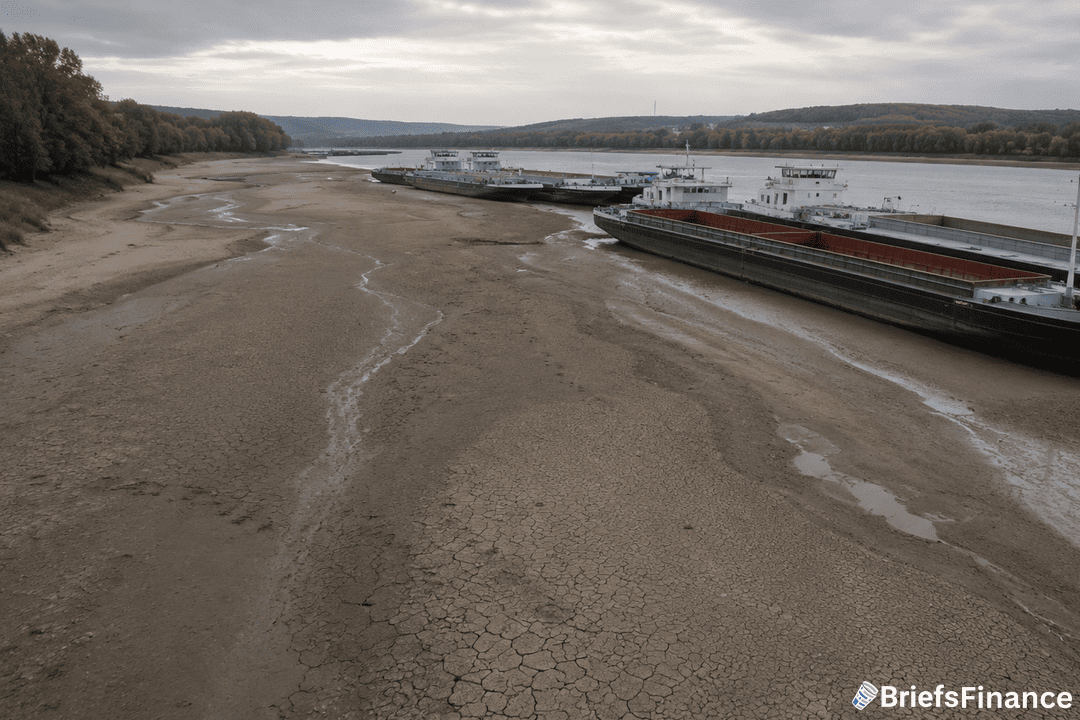
A Dry Danube Is Slowing the Grain Trade
Wheat prices have always answered to wars and weather. The Black Sea region is delivering both right now, and the combination is making grain buyers nervous.
When that route stumbles, food prices everywhere pay attention.
Russian strikes have already forced Ukrainian grain to reroute from Odesa and other Black Sea ports. The newest problem is a dry river.
The Danube has dropped to record-low levels after weeks of heat and very little rain. That matters because since the 2022 invasion, Constanta in Romania has emerged as a vital backup route for Ukrainian grain.
Grain reaches Constanta by rail, by road, and by barge along the Danube. With the river this shallow, barges have to load lighter, which makes each trip less efficient and more expensive.
Romanian farmers are feeling the pinch too. Romanian farmers can't get trucks, and shipping costs have soared, says Stan Tiberiu-Dan, the Forum of Professional Farmers and Processors of Romania's vice president.
Get the free Always Be Buying eBook and learn the simple system for building wealth on any income
Those cultivating wheat, sunflower, and rapeseed who rely on the Danube to reach Constanta face immediate consequences: barge rotations happen less often, waiting periods stretch longer, and freight rates on the Danube corridor are already exceeding what's normal for this time of year. The same problems are hampering Romania's own grain exports, which make up a major part of EU shipments.
The Backup Route Only Goes So Far
Constanta became Ukraine's Plan B. But Plan B has limits.
Viorel Panait, president of the Constanta Port Business Association and general director at Comvex SA, says his grain terminal could handle 20% more volume under the Solidarity Lane initiative with Ukraine.
In 2022, the European Commission created the Solidarity Lane initiative as a way to provide alternative export paths for Ukrainian farm goods that normally move through Black Sea ports.
"The fact that there isn't enough water affects the quantity of grain that arrives," Panait says. Grain shipments to the terminal depend on the Danube, and the shallow river is cutting into throughput.
Ukraine's national railway company has been negotiating with nearby nations to open additional export paths. The math is discouraging, though.
Attacks on grain infrastructure and vessels have intensified on both sides, raising concerns about how reliable Black Sea shipping really is. Every rerouted cargo adds time, cost, or both.
What It Means for Prices
These disruptions hit as markets grapple with a strong El Niño, climbing energy prices, and Middle East tensions that have tangled trade routes. In Paris, wheat and corn futures jumped last month.
This is not the first time the region's grain trade has been thrown into chaos. Since the collapse of the Black Sea Grain Initiative in mid-2023, Ukraine has leaned heavily on alternative corridors. Each new shock - whether from drone strikes on port infrastructure or from drought-depleted waterways - forces traders to recalculate risk and adjust premiums. The current combination of military aggression and climate-driven water shortages creates a compounding effect that no single mitigation strategy has fully solved.
"With no immediate relief in sight, either through an easing of hostilities in the Black Sea or a recovery in Danube water levels, prices could remain well supported".
Download the free Always Be Buying eBook and start putting your money to work today