A Big Profit Jump, Thanks to Better Production
Airbus just put up some numbers that should catch any investor's eye.
Revenue also came in strong at €20.53 billion, slightly above what analysts had expected. The main civil aircraft business alone delivered €1.91 billion in profit, up more than half from a year ago. Elsewhere, the space and defense division nearly doubled its earnings to €375 million, while the helicopters business was steady at €175 million.
The big question hanging over Airbus lately has been whether it could actually get planes out the door. So far the company answered yes. It delivered 351 aircraft in the first half of 2026. The official range is 850 to 890, which leaves room to do even better if the final weeks of the year go well.
How Airbus Got Past the Parts Problem
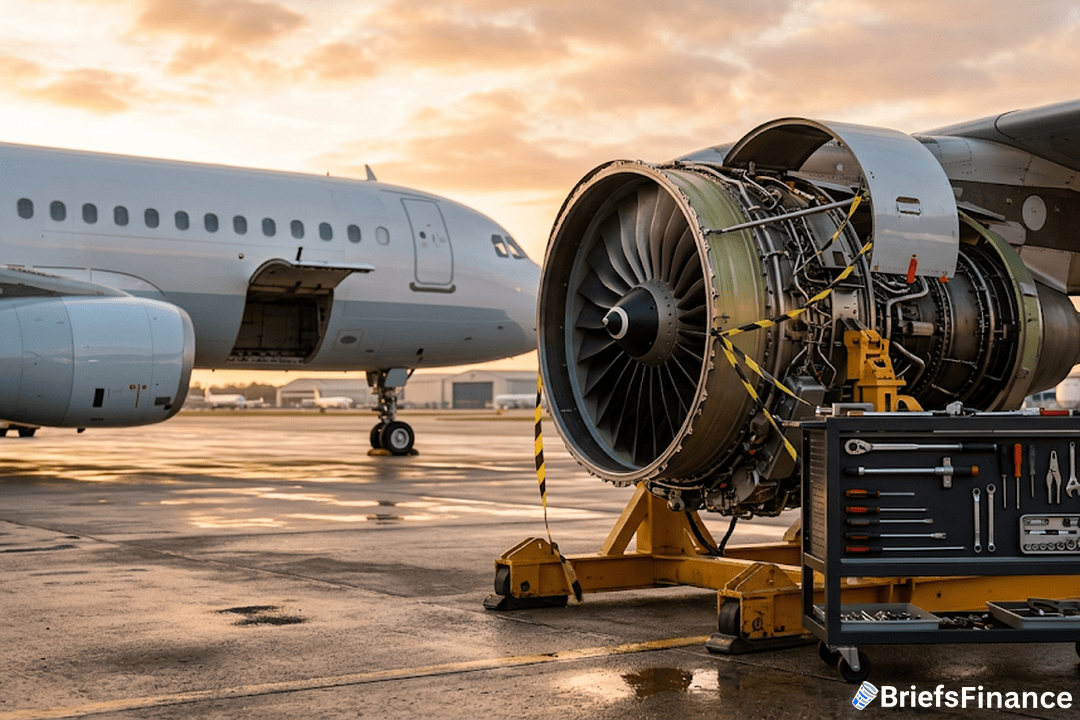
The profit surge did not come out of nowhere. Airbus spent much of the past year wrestling with a shortage of engines and other parts. The primary supply constraint was from Pratt & Whitney, the RTX-owned engine manufacturer. Earlier in the year, problems delivering jets to China, combined with those supply issues, had hampered production and reduced margins.
Get the market news that matters in a five-minute read with Market Briefs, our free daily newsletter
Then Airbus reached a deal with Pratt & Whitney for enough engine supplies. That agreement appears to have unlocked the factory floor. With parts flowing more freely, the company could ramp up production and push more planes out to customers.
CEO Guillaume Faury commented in a statement, "We are ramping up across all businesses to meet the growing demand for our civil and military solutions."
The share price reflects some of that optimism. Airbus stock is up 5.7% so far in 2026, following a 28% gain in 2025.
With a backlog of over 8,000 aircraft, Airbus has a multi-year production runway. The company's ability to resolve the engine bottleneck is critical for converting that backlog into revenue. Analysts will be watching second-half delivery numbers to gauge whether Airbus can maintain its momentum and achieve the 870-plane target, which would support the margin improvements needed to hit the 2029 profit goal.
What It Means for Investors
Beyond the quarterly beat, Airbus laid out an ambitious long-term profit target.
The guidance signals confidence that production will continue to scale up, supported by a massive backlog of more than 8,000 aircraft. Global demand for fuel-efficient planes remains strong, particularly from airlines in Asia and the Middle East that are expanding fleets. Airbus also expects its defense and space segment to contribute more as governments increase military spending.
While supply chain risks are not fully gone, the engine deal removes a major hurdle. Investors will watch delivery numbers closely in the second half to see if Airbus can hit that 870 target and keep margins improving.
Join Market Briefs, our free daily newsletter, for a quick daily rundown of the markets