Free NewsletterPro Login
S&P 500 6,287 +0.42%
DOW 44,521 -0.18%
NASDAQ 21,103 +0.71%
S&P 500 +12.4%
Briefs Finance Fund +24.8%
JOIN THE FUND →

Electric Vehicles Surge in UK's Pre-Owned Car Sales Rankings

Published Jul 20, 2026
[tts_player]
Share:
Summary:
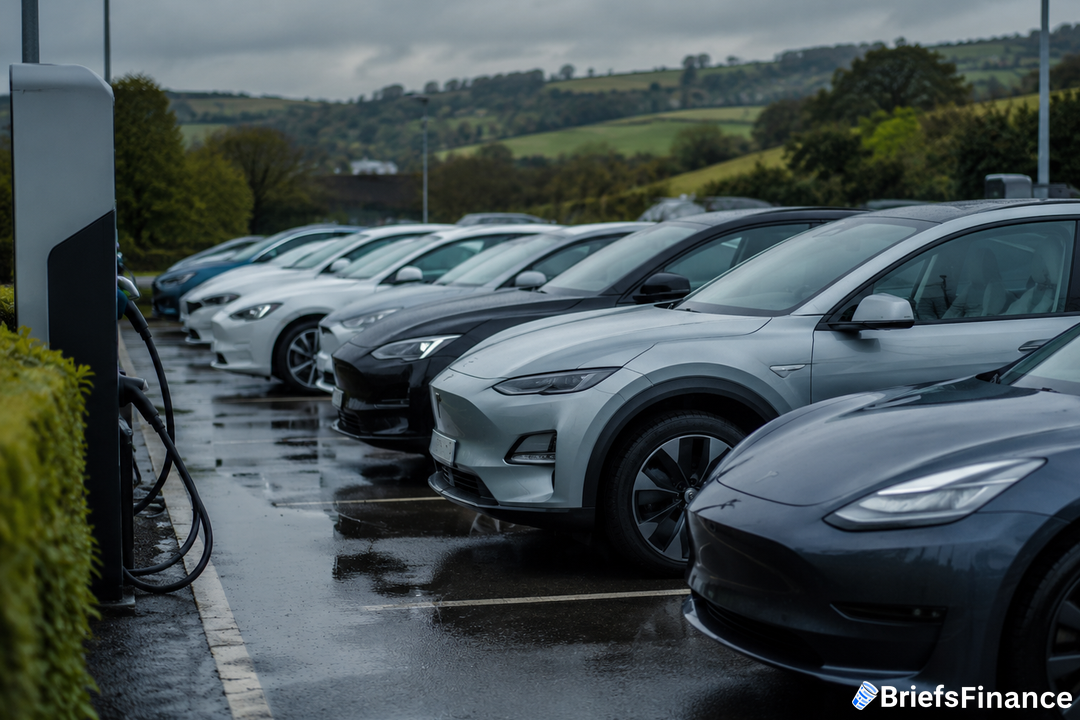
  • For the first time, all ten of the fastest-selling used cars in the UK in July were electric or hybrid models.
  • Used EVs sold in an average of 24 days, a full week faster than the 30-day average for all fuel types.
  • Escalating fuel costs, resulting from the conflict in the Middle East and the blockade of the Strait of Hormuz, are driving consumers towards electric vehicles.

The Numbers Tell a Clear Story

The UK's used car market just flipped a switch. Eight out of those ten were fully electric - double the share from a year earlier.

The average used EV cost £24,662 ($33,177) in July, up 1.6% from last year. That is the first price increase since December 2022, after a long stretch of declines. Tesla had three models on the top-ten list, and Chinese-owned MG claimed the speed crown.

Why Fuel Prices Matter More Than Ever

That makes an electric car - even a used one - look like a smarter daily choice.

Get the market news that matters in a five-minute read with Market Briefs, our free daily newsletter

Marc Palmer, head of strategy and insights at Autotrader, said the trend feels real this time. "We've seen in the past how external shocks, including fuel price volatility linked to the conflict in the Middle East, can create short-term surges in electric interest," he noted. "It feels significant to see demand being sustained beyond that initial reaction."

That matters because it is not just a flash in the pan. Buyers are making a longer-term bet on lower running costs. Meanwhile, petrol stalwarts like Volkswagen's Golf hatchback and Ford's EcoSport SUV landed on the list of the ten slowest-selling used cars.

The ZEV Mandate and Market Realities

The increasing demand for electric cars is also a positive sign for the UK's Zero Emission Vehicle mandate, which was implemented in 2024 and sets annual targets for automakers to produce new zero-emission cars until 2030.

However, UK regulators and car manufacturers have been at odds. In 2025, the government softened EV sales requirements following automakers' complaints that the targets did not align with actual consumer interest. The initial plan to ban new petrol and diesel car sales by 2030 has been revised; now manufacturers can continue selling hybrid vehicles until 2035.

Despite an increase in new EV sales, fully electric cars accounted for only 23% of the market in April, falling short of the 33% goal set by the ZEV mandate for this year. This indicates that although EV adoption is rising, it has not reached the levels anticipated by the mandate, likely leading to more disputes between policymakers and automakers over the regulations.

Gail Glazerman, a senior sustainable finance analyst at Bloomberg Intelligence, said: "Surging gasoline prices amid the Iran war could partially offset weaker government support for electric vehicles. Even before the war, auto sales trends suggested continued consumer interest, if not always the financial capacity, for more efficient vehicles despite waning government subsidies and policy support."

What the Used Market Signals

The rapid turnover of used EVs also bolsters residual values, which had been a weak spot for early adopters worried about depreciation. Faster sales mean dealers are more confident stocking electric models, creating a positive feedback loop that could accelerate the shift away from petrol. For consumers, the combination of lower running costs and stronger resale potential makes used electric cars an increasingly practical alternative, even as government incentives fade.

Join Market Briefs, our free daily newsletter, for a quick daily rundown of the markets
Disclosure

Recent News

1 2 3 39

Get Market Briefs delivered to your inbox every morning for free!

No fluff. No noise. No politics. Just finance news you can read in 5 minutes.

Blogs

June 29, 2026
Portfolio Diversification: Why Putting All Your Eggs in One Basket Destroys Wealth
  • Real diversification means spreading investments across all 11 economic sectors plus bonds, alternatives, and cash so no single bet can sink the portfolio.
  • Different sectors perform at different times, so a diversified portfolio captures upswings while smoothing the brutal drawdowns that wipe out concentrated bets.
  • Total market index funds offer the simplest path to diversification, and annual rebalancing is what keeps the structure working over time.
Read More
June 29, 2026
Non Taxable Income: What It Is and Why It Matters
  • Non taxable income is money you receive that you don't owe income tax on.
  • The tax code treats workers, investors, and business owners very differently, and investors often come out ahead.
  • Learning how income is taxed is a quiet superpower for keeping more of what you earn.
Read More
June 29, 2026
Semiconductor Stocks: A Simple Guide for Investors
  • Semiconductor stocks are companies that design and make computer chips, the brains inside nearly every modern device.
  • The AI boom has turned chips into one of the market's most important and most watched groups.
  • They offer big growth potential, but come with high valuations and a notoriously cyclical history.
Read More
June 25, 2026
How Stocks Work: A Simple Guide for Beginners
  • A stock is a slice of ownership in a company - buy one, and you own a piece of the business.
  • You make money two ways: the share price rising over time, and dividends paid to shareholders.
  • The simplest path for most beginners is buying into the whole market through a low-cost index fund.
Read More
June 25, 2026
Stop Loss vs Stop Limit: What's the Difference?
  • A stop loss order sells your stock once it hits a trigger price, prioritizing getting you out.
  • A stop limit order only sells within a price range you set, prioritizing price over a guaranteed exit.
  • The trade-off: a stop loss almost always executes; a stop limit might not if the price moves too fast.
Read More
June 25, 2026
Energy Stocks: A Simple Guide for Investors
  • Energy stocks are companies that produce and supply the power the world runs on, from oil and gas to newer sources.
  • They make up one of the 11 sectors of the market and tend to move with energy prices and big-picture shifts.
  • Like any sector, the key is diversification and understanding the forces driving demand.
Read More
June 18, 2026
What Is a Stop Loss Order? A Simple Guide
  • A stop loss order automatically sells a stock once it falls to a price you set.
  • It's a tool to cap losses or lock in gains without watching the market all day.
  • It works best for active strategies, and can backfire if used carelessly on long-term holdings.
Read More
June 18, 2026
Best S&P 500 Index Fund: How to Choose One
  • The best S&P 500 index fund for most investors is simply the cheapest, most established one that tracks the index well.
  • Funds like VOO, IVV, and SPY all hold the same 500 companies, so the biggest difference is the fee.
  • Pick one, automate your buys, and let time do the heavy lifting.
Read More
June 17, 2026
What Are Penny Stocks? Risks and Rewards Explained
  • Penny stocks are very low-priced shares of very small companies, often trading for just a few dollars or less.
  • They promise huge gains but carry huge risks: low liquidity, high failure rates, and wild price swings.
  • Most investors are better served by quality companies and funds than by chasing cheap shares.
Read More
June 17, 2026
Best Stocks for Beginners With Little Money
  • The best stocks for beginners with little money usually aren't individual stocks at all - they're low-cost index funds.
  • You can start with $100 or less and use small, regular investments to build wealth over time.
  • Focus on diversification and consistency, not on picking the next big winner.
Read More
1 2 3 24
Share via
Copy link











