Free NewsletterPro Login
S&P 500 6,287 +0.42%
DOW 44,521 -0.18%
NASDAQ 21,103 +0.71%
S&P 500 +12.4%
Briefs Finance Fund +24.8%
JOIN THE FUND →

Rare Storm System Puts Chile's Key Copper Region on Flood Alert

Published Jul 14, 2026
[tts_player]
Share:
Summary:
  • On July 14, 2026, Chilean officials met with copper mining companies to prepare for flooding from an approaching winter storm.
  • The storm, called an "atmospheric river," is expected to bring prolonged heavy rain that could damage open-pit mines, roads, and port operations.
  • With Chile supplying close to 25% of globally mined copper, even a minor disruption can have widespread effects on world markets.

Emergency Meeting as Storm Approaches

Earlier this week, Economy and Mining Minister Daniel Mas convened an urgent meeting with major copper miners such as Teck Resources Ltd., Codelco, and Antofagasta Plc to discuss flood contingency plans. The meeting included representatives from state-owned Codelco, private operators Antofagasta Plc and Teck Resources Ltd, along with Sernageomin, Chile's mining oversight body. The regulator has already activated a crisis committee to watch for landslides and mudslides. The whole group spent the meeting talking through emergency plans - making sure mines have the right equipment, enough staff, and clear procedures to protect workers, operations, and communities.

Why This Storm Is Different

This is not your typical winter rain squall. Forecasters are calling it an atmospheric river - basically a long, narrow band of very moist air that can dump huge amounts of water over days. The prolonged nature of the storm, not just one big downpour, is what has everyone worried.

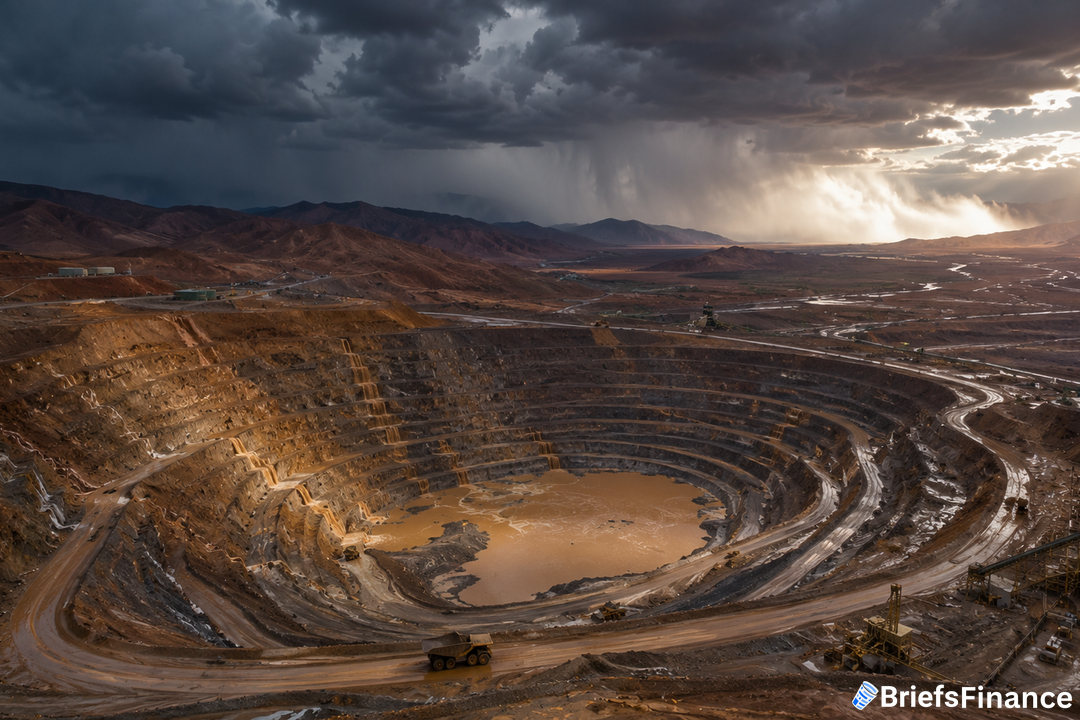
Open-pit mines are especially vulnerable. Heavy rain can flood them, damaging roads and interrupting concentrate shipments. And if port operations shut down, those shipments sit on the docks instead of heading to buyers. Since this nation extracts nearly one-fourth of the world's mined copper, a brief halt in operations carries significant weight.

Get the market news that matters in a five-minute read with Market Briefs, our free daily newsletter

The big unknown is how far north the storm will push. The main copper districts sit in the northern part of central Chile. If the rain stays farther south, the damage is limited. If it creeps north into areas that rarely see rain, the impact gets a lot bigger.

Atmospheric rivers are not uncommon in Chile's southern regions, but their occurrence in the central and northern mining zones is rare. The Andes mountains often trap moisture, leading to heavy orographic precipitation. Mining infrastructure in the arid north is not built to handle such intense and prolonged rainfall, raising the risk of flash floods and slope failures in open pits. Additionally, the timing of the storm during the Southern Hemisphere winter increases the likelihood of snowmelt exacerbating runoff.

Ongoing Challenges for Chile's Copper Industry

Chile's copper sector has long been strained by declining ore grades at major deposits, persistent water shortages in the Atacama Desert, and periodic labor strikes that have already curtailed output. These structural pressures make the industry acutely vulnerable to any additional disruption, such as the flooding from this atmospheric river. The combination of existing constraints and a sudden weather event could amplify the impact on both production and global supply chains.

The Stakes for Global Supply

Chilean mining operations have been facing production delays and declining mineral grades, prompting substantial capital expenditure merely to sustain current production levels. This storm is the latest threat.

The country's major mines, mostly in the Atacama Desert, are engineered for dry conditions, so sudden heavy rain can halt operations and damage infrastructure. A comparable storm in 2024 temporarily shut down several operations and drove a sharp increase in copper prices, illustrating how quickly weather events can ripple through global markets.

What It Means for Your Portfolio

Copper finds applications across a vast range, including cooling systems, electric cars, and server farms. A weather event that knocks out even part of Chile's production could shift the math for the whole market.

The bottom line: Keep an eye on copper prices in the coming days. If the storm hits the mining zones hard, the reaction could be sharp. But remember that the actual disruption depends on where the rain falls and how long it lasts. For now, miners are preparing for the worst and hoping for a miss.

Join Market Briefs, our free daily newsletter, for a quick daily rundown of the markets
Disclosure

Recent News

1 2 3 35

Get Market Briefs delivered to your inbox every morning for free!

No fluff. No noise. No politics. Just finance news you can read in 5 minutes.

Blogs

June 29, 2026
Portfolio Diversification: Why Putting All Your Eggs in One Basket Destroys Wealth
  • Real diversification means spreading investments across all 11 economic sectors plus bonds, alternatives, and cash so no single bet can sink the portfolio.
  • Different sectors perform at different times, so a diversified portfolio captures upswings while smoothing the brutal drawdowns that wipe out concentrated bets.
  • Total market index funds offer the simplest path to diversification, and annual rebalancing is what keeps the structure working over time.
Read More
June 29, 2026
Non Taxable Income: What It Is and Why It Matters
  • Non taxable income is money you receive that you don't owe income tax on.
  • The tax code treats workers, investors, and business owners very differently, and investors often come out ahead.
  • Learning how income is taxed is a quiet superpower for keeping more of what you earn.
Read More
June 29, 2026
Semiconductor Stocks: A Simple Guide for Investors
  • Semiconductor stocks are companies that design and make computer chips, the brains inside nearly every modern device.
  • The AI boom has turned chips into one of the market's most important and most watched groups.
  • They offer big growth potential, but come with high valuations and a notoriously cyclical history.
Read More
June 25, 2026
How Stocks Work: A Simple Guide for Beginners
  • A stock is a slice of ownership in a company - buy one, and you own a piece of the business.
  • You make money two ways: the share price rising over time, and dividends paid to shareholders.
  • The simplest path for most beginners is buying into the whole market through a low-cost index fund.
Read More
June 25, 2026
Stop Loss vs Stop Limit: What's the Difference?
  • A stop loss order sells your stock once it hits a trigger price, prioritizing getting you out.
  • A stop limit order only sells within a price range you set, prioritizing price over a guaranteed exit.
  • The trade-off: a stop loss almost always executes; a stop limit might not if the price moves too fast.
Read More
June 25, 2026
Energy Stocks: A Simple Guide for Investors
  • Energy stocks are companies that produce and supply the power the world runs on, from oil and gas to newer sources.
  • They make up one of the 11 sectors of the market and tend to move with energy prices and big-picture shifts.
  • Like any sector, the key is diversification and understanding the forces driving demand.
Read More
June 18, 2026
What Is a Stop Loss Order? A Simple Guide
  • A stop loss order automatically sells a stock once it falls to a price you set.
  • It's a tool to cap losses or lock in gains without watching the market all day.
  • It works best for active strategies, and can backfire if used carelessly on long-term holdings.
Read More
June 18, 2026
Best S&P 500 Index Fund: How to Choose One
  • The best S&P 500 index fund for most investors is simply the cheapest, most established one that tracks the index well.
  • Funds like VOO, IVV, and SPY all hold the same 500 companies, so the biggest difference is the fee.
  • Pick one, automate your buys, and let time do the heavy lifting.
Read More
June 17, 2026
What Are Penny Stocks? Risks and Rewards Explained
  • Penny stocks are very low-priced shares of very small companies, often trading for just a few dollars or less.
  • They promise huge gains but carry huge risks: low liquidity, high failure rates, and wild price swings.
  • Most investors are better served by quality companies and funds than by chasing cheap shares.
Read More
June 17, 2026
Best Stocks for Beginners With Little Money
  • The best stocks for beginners with little money usually aren't individual stocks at all - they're low-cost index funds.
  • You can start with $100 or less and use small, regular investments to build wealth over time.
  • Focus on diversification and consistency, not on picking the next big winner.
Read More
1 2 3 24
Share via
Copy link











