When the limit could bite
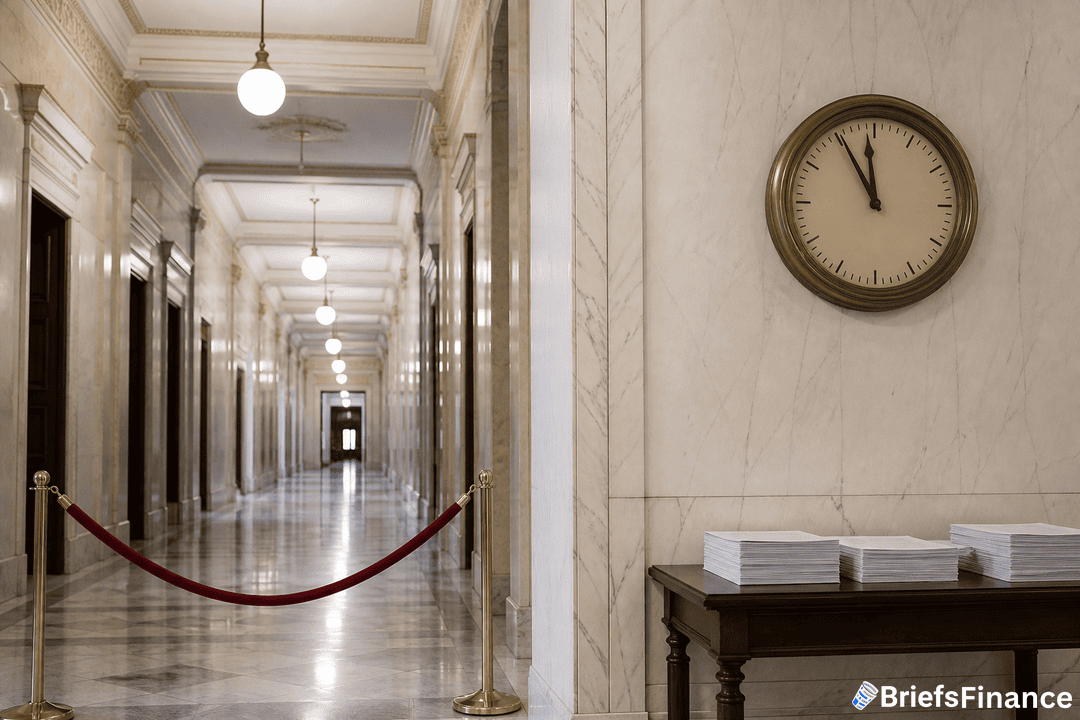
Analysts expect the U.S. to run into the $41.1 trillion debt ceiling sometime in 2027, implying Congress must act to lift or pause the limit ahead of the Treasury running out of the "extraordinary measures" that stave off a default. Some Republicans are floating the idea of moving early by tackling the ceiling this year, potentially in the lame-duck session right after the election, while others are already balking unless it comes with sizable spending cuts as the national debt tops $40 trillion, a record.
Who holds the leverage after November
If Democrats win one or both chambers in November's midterms, a showdown is likely as they try to secure policy concessions from Republican President Donald Trump in exchange for sidestepping a messy trip to the brink. "If they're going to try to jam us in the lame duck, we are not going to go along with it," said Rep. Suhas Subramanyam, D-Va., adding he wants to see what Republicans propose and weigh it against what Democrats could do if they have the majority. The vote math is tight: Speaker Mike Johnson, R-La., can afford only three GOP defections on a party-line House vote, and in the Senate, Majority Leader John Thune, R-S.D., will need Democratic votes to clear the 60-vote filibuster threshold. In Washington, DC, on May 21, 2026, House Democratic Leader Hakeem Jeffries and Senate Democratic Leader Chuck Schumer delivered remarks at an event from the steps outside the U.S. Senate.
The Republican split on how to raise it
Fiscal conservatives are pushing back on a simple hike. Rep. Eric Burlison, R-Mo., who has put forward a constitutional amendment mandating a balanced federal budget and advocated limits on future borrowing, said "a blanket raise is not going to get my vote." He argued that "if you're a fiscal conservative, we should be using every opportunity that we can to reduce the deficit anytime we have a vote to raise the debt ceiling," and noted "there are already discussions like if we lose the midterms, it would probably need to happen in the lame duck," because he doesn't think "the president wants to have a pound of flesh extracted by the Democrats." Rep. Chip Roy, R-Texas, a member of the House Freedom Caucus, said he would not support a year-end increase "not without massive spending restraint and reforms," adding, "If we're going to sit down and do the debt ceiling or sit down and talk about anything tax-related, then we're going to have to be real about spending restraint, so we'll see." Other conservatives point to recent increases in Treasury yields as further reason to cut spending instead of greenlighting more borrowing.
Recent history, credit risks, and your money
The playbook is familiar. In 2023, then-Speaker Kevin McCarthy led House Republicans to the brink in negotiations, after which they reached an agreement with then-President Joe Biden to combine spending reductions with an increase in the debt ceiling. Even with just the House, Republicans secured multiple policy wins.
Across uncertain headlines, steady strategies help preserve and grow your hard earned savings. Join Briefs Finance CEO Jaspreet Singh on September 29th for a FREE live investor workshop, How to Profit From A Dollar That's Losing its Value, where he shows how we're spotting investment opportunities as the dollar falls. Save your spot.
Close calls still carry consequences: after that standoff, Fitch cut the U.S. rating from AAA to AA+, citing that "repeated debt-limit political standoffs and last-minute resolutions have eroded confidence in fiscal management." Some Democrats are urging caution. Rep. Richard Neal, D-Mass., the top Democrat on the House Ways and Means Committee, said Democrats "always want to consider responsible financing." He added, "But I think that we need to remember that the tax cut in 2017 and the tax cut last year, it's contributing mightily to this problem," while warning that "playing with this thing is dangerous." Neal said, "We'd have to have an open conversation about it," and underscored, "I know we don't want debt default." For broader context, recent CNBC coverage has highlighted hot inflation setting up a possible Fed rate hike, Kevin Hassett holding up to $5 million in Coinbase stock as Trump reshaped crypto policy, and Trump's energy investments climbing as the Iran war roiled oil markets.
A calm, long-term approach can protect purchasing power and support future goals. Our CEO Jaspreet Singh is hosting a FREE live investor workshop, How to Profit From A Dollar That's Losing its Value, on September 29th. Sign up free to join him live.