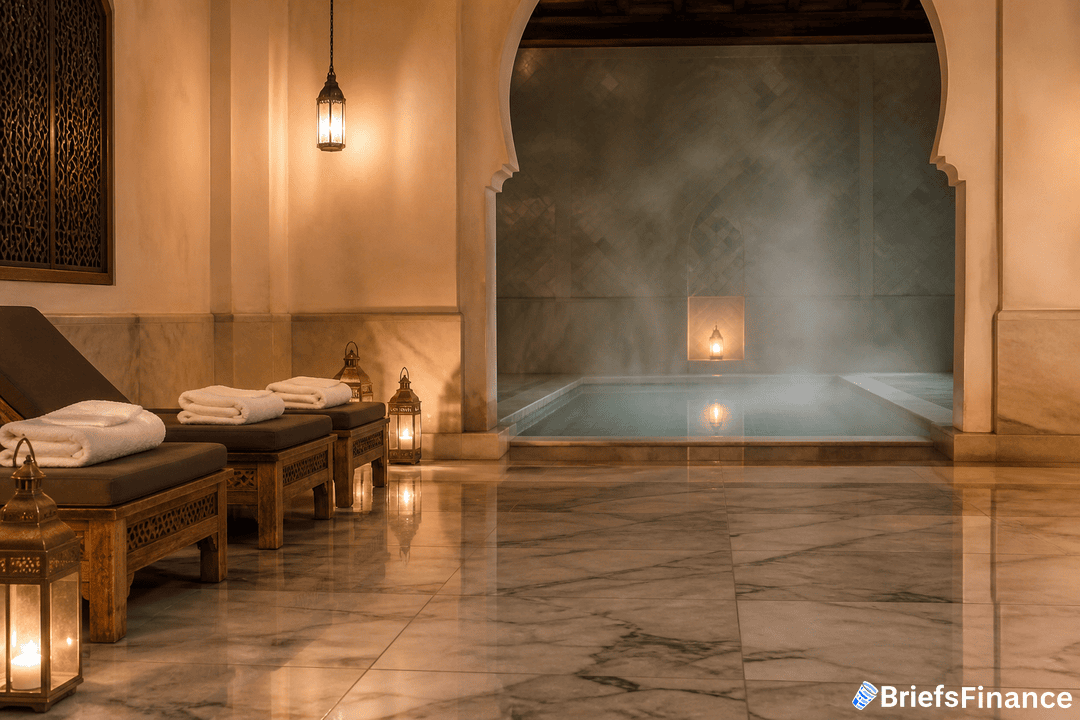
After a long workday, Fatou Mbacke flew into Guangzhou, China, and made a beeline for a spa.
Mbacke, 31, runs a content business and hair-care brand in Dallas; she came across Yoma Space on TikTok and went there at 10 p.m. After applying complimentary Dior and Lancôme cosmetics, she wound through the dimly lit, labyrinthine sleeping quarters to reach her cot. The following day, she toured the 215,280-square-foot, four-story facility, soaked in several pools, tried a body scrub, and feasted on a free spread of lobster, sushi, crab, and Peking duck. She skipped the bottomless caviar dinner because she had a flight to catch.
What a 24-Hour Pass Includes
Yoma Space opened in 2023 and can accommodate 700 guests. It targets "the young, fashionable elite group," as the company describes its clientele. Yoma's design includes arched corridors, a photogenic modern aesthetic, a warm soaking pool, 24-hour fruit counters, and a gaming lounge equipped with PlayStation 5 and Xbox consoles.
Guests can book traditional treatments such as Sichuan ear cleaning, moxibustion, and gua sha, or use the karaoke suites, mahjong tables, generous dining spreads, and quiet sleep pods. Yoma is as much a social club as it is a place to relax, a place for friends and family.
Why Travelers Are Booking
Su Shen Ooi, a 24-hour no rest turn international college student, paid roughly $40 to $45 to enter a bathhouse earlier this year and saw several foreign visitors inside.
The money story behind the headlines is usually the part that matters. Join Market Briefs free and get it every morning.
PandaStroll, a travel company, added more expensive spas in Chengdu to its packages in September 2025, and overseas bookings jumped from around 50 to 100 a month to roughly 1,000 a month.
The viral "Chinamaxxing" TikTok trend that took off in 2025 helps explain the appeal - turning things like ordering hot water, having congee, and wearing house shoes into viral content for travelers.
These visits are not just about pampering. The bathhouse format lets travelers sample a wide range of Chinese leisure culture - from ear cleaning and moxibustion to karaoke and pattering - without planning a separate trip for each activity.
These bathhouses also serve as social hubs where locals gather to celebrate, conduct business, or simply unwind after work. For international visitors, the experience offers a window into modern Chinese urban life, blending traditional wellness practices with contemporary entertainment. The accessibility of these venues - often open around the clock - makes them convenient stopping points for travelers with tight itineraries.
What This Means for Tourism
The bathhouse boom is part of a larger shift in how tourists are spending things. In 2026, Meituan's bathhouse report referred to this era as one of exceptional growth for the industry, and operators are expanding to keep up with demand.
According to the National Immigration Administration, China saw 21.3 million international visitors from January through March 2026, a 22.3% jump year over year. Spas are becoming a genuine reason to book a flight, not just a stop along the way.
In May, Yoma expanded its Guangzhou location by 53,820 square feet, adding a restaurant and a children's playground, and is stopping sites for new branches.
For travelers, a full day of food, relaxation, entertainment, and a bed for less than the price of a good hotel room is a hard deal to beat. For investors, it signals that experience spending is reshaping travel and that China's tourism economy is finding new ways to attract visitors.
Understanding what moved a market beats knowing that it moved. Get the free Market Briefs daily newsletter and follow the drivers.