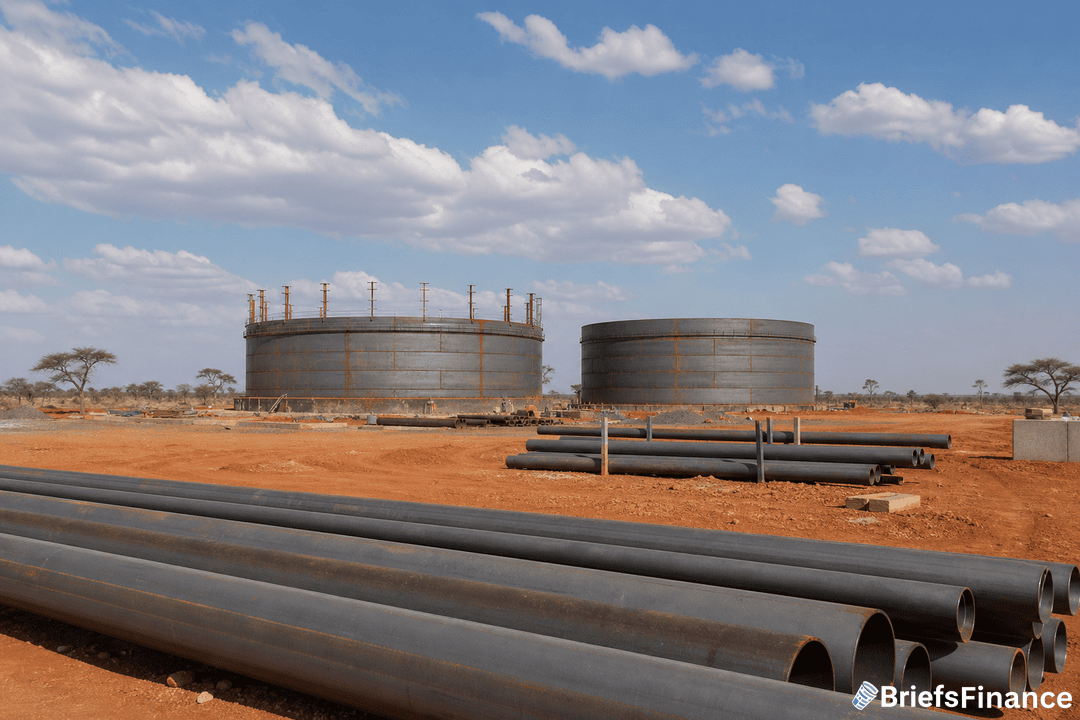
Countries in East Africa may soon hold a share of the region's most ambitious industrial undertaking. David Ndii, the top economic adviser to Kenya's President William Ruto, has detailed the proposal from Dangote Group.
The plan would let individual nations buy into the project. The full 30% regional stake is priced at about $1.5 billion. Kenya's own portion, roughly 10% of the total, would cost about $500 million. Ethiopia and Rwanda have shown interest in participating as well.
Dangote plans to build a facility in Kenya that mirrors its existing 700,000-barrel-per-day refinery. The Kenyan version is expected to have a capacity of about 600,000 barrels per day of crude oil. The total investment, including port infrastructure, is estimated to land near $20 billion. The scale is unprecedented for East Africa, a region that currently imports most of its refined petroleum products.
The project would process crude from Kenyan and other regional oil fields, with an initial capacity of 600,000 barrels per day. Construction is slated to begin in September, and the facility is designed to supply not just Kenya but also neighboring countries, potentially turning the region into a net exporter of refined fuels.
The Ownership Proposal
Dangote Group is offering regional governments the chance to buy up to 30% of the refinery's equity. The offer gives East African nations a rare opportunity to participate in a project of this scale. For countries that rely on imported fuel, owning part of a refinery could insulate them from global price swings and supply disruptions.
The best financial decisions come from understanding the whole picture. Join Market Briefs free and get the full brief each morning.
Competing Refinery Plans
Not everyone is convinced. Uganda, which holds significant oil reserves, is already planning its own smaller 60,000-barrel-per-day refinery with Vitol and other partners, including UAE-based Alpha MBM Investments. That project, along with separate pipeline plans, could compete for funding and government attention.
But Ndii downplayed any conflict. He said that countries that don't take their share of refined products can be backstopped by other buyers. "The total for the region is about $1.5 billion," Ndii noted. "I don't actually see a challenge in doing that, and if some of them are not off-taking, we can backstop."
Ndii said there is room for both, because the Kenyan refinery will process a broader slate of regional crude, not just from Uganda. The offer is structured to allow each country to buy in according to its appetite. Rwanda, for instance, has no significant oil reserves but could benefit from refined products. If a country chooses not to take its share, other buyers will step in, according to Ndii.
Why This Matters for the Region
Currently, East Africa imports nearly all of its refined fuel, leaving it vulnerable to global price swings and supply disruptions. A refinery of this size would not only meet domestic demand but also allow the region to export petrol, diesel, and jet fuel to other African markets. Ndii argues that the investment could add as much as 10% to Kenya's GDP once other industrial projects in the pipeline are included.
The broader economic impact is hard to exaggerate. For every dollar spent on construction, there are ripple effects for suppliers, transporters, and local contractors. Over the lifetime of the project, thousands of permanent jobs would be created. And for a country like Kenya, which has struggled with debt and currency pressures, a steady stream of export revenue would offer a buffer against future shocks.
The Bottom Line
The proposed refinery represents a bet on regional integration and self-sufficiency. It also tests whether African governments can cooperate on large-scale infrastructure - a challenge that has often derailed similar projects in the past. If the September construction start happens and the project stays on schedule, East Africa could transform from an importer of refined fuels into a refining hub.
For investors, the question is whether the political will holds up. The payoff, however, is enormous: a new industrial base that could reshape the region's economy for decades.
Markets move every day, and most of it never reaches you in time. Get the free Market Briefs daily newsletter and stay ahead of it.