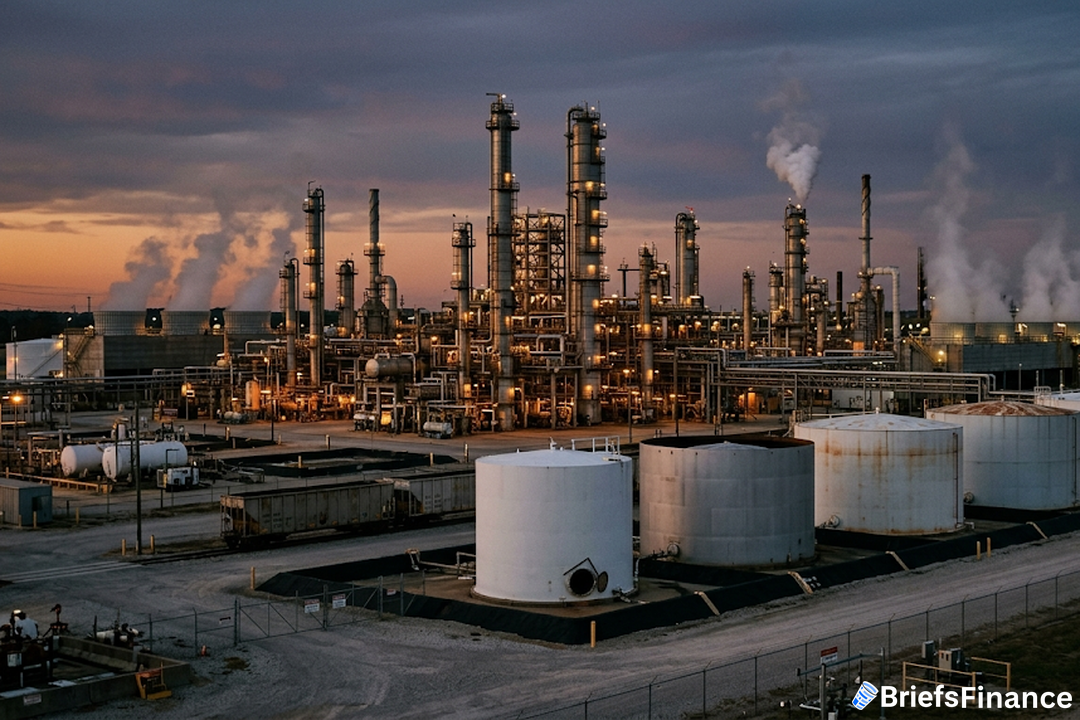
Record Profits at the Pump's Back End
The companies that convert crude oil into gasoline, diesel, and jet fuel are enjoying a lucrative stretch.
HF Sinclair saw its profit jump to $892 million, roughly four times what it earned in the same period last year.
PBF processed 890,000 barrels of crude oil per day last quarter and expects to hit as much as 960,000 barrels per day next quarter. Valero and HF Sinclair each said their daily crude processing would drop only slightly in the coming months.
Phillips 66 and Marathon Petroleum are scheduled to report their own earnings next week, with investors anticipating blockbuster results.
Get the market news that matters in a five-minute read with Market Briefs, our free daily newsletter
What Caused the Squeeze
A sequence of refinery closures over the past several years had removed any slack in global fuel markets. The conflict with Iran then cut off fuel shipments from the Middle East. At the same time, Ukrainian strikes on Russian processing plants reduced the flow of gasoline and diesel for export.
As demand remains fairly constant, inventories of gasoline and diesel show minimal recovery, indicating that markets will stay constrained and costs elevated. Although production typically declines during autumn, US refiners signal they will keep pursuing near-record profits.
Matthew C. Lucey, CEO of PBF Energy, said on an earnings call: "Product inventories will be slow to rebuild, and the restocking that ultimately must occur should provide a favorable backdrop for refining margins over the quarters to come."
Gary Simmons, Valero's COO, told equity analysts during a conference call, "The margin environment thus far is stronger than what we saw in the second quarter," citing cheaper crude oil costs.
Simmons said there is scant evidence that fuel prices will decline soon. After declining somewhat this summer from all-time peaks, jet fuel prices are expected to climb once more. Diesel costs stay high because supply disruptions from Russia have boosted the need for American exports.
Prices should remain buoyant as consumers start replenishing stocks before the winter heating period. At the same time, shipping gasoline from Europe to the US is not profitable due to high European prices, whereas selling it to Latin America works because a price gap allows profit. This situation continues to keep US gasoline prices high.
Broader Context for the Earnings Surge
The extraordinary profits seen by refiners stem from a multiyear erosion of processing capacity. Prior to the pandemic, many aging refineries in the United States and Europe were shuttered permanently, reducing the industry's ability to respond quickly to supply shocks. The Russia-Ukraine war then reshuffled global trade flows, forcing European buyers to scramble for diesel and jet fuel from alternative sources.
These structural changes, combined with the recent geopolitical disruptions, have created a situation where even a modest uptick in demand sends margins soaring. Refiners now operate their plants at high utilization rates, and any unplanned outage at a major facility can instantly tighten regional markets. This backdrop explains why executives remain confident that profit levels will stay elevated for the foreseeable future.
Join Market Briefs, our free daily newsletter, for a quick daily rundown of the markets