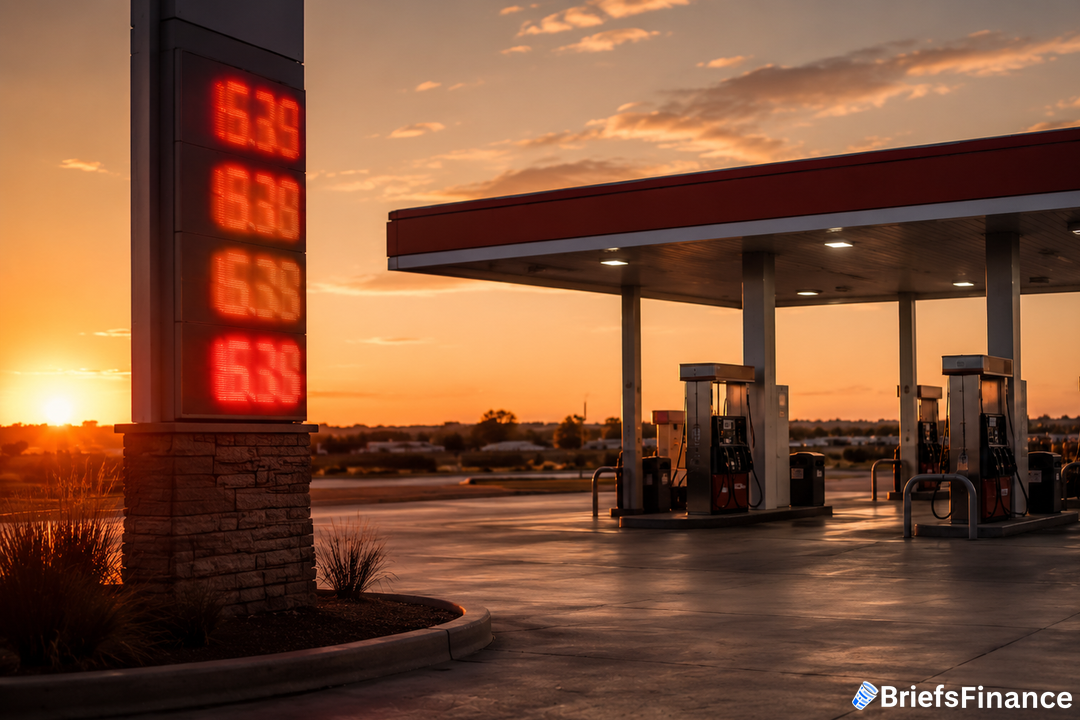
The Price at the Pump Is Headed the Wrong Way
Drivers are getting an unwelcome flashback this summer. The average cost of a gallon of regular gas crossed back above $4.003 on July 20, according to AAA, after hovering for a month below that threshold.
That is still below the $4.50 peak from May. But the trend matters more than the level. Prices bottomed out at $3.79 in June before starting to climb again in early July. Now they are back above a psychological line that tends to grab attention at the kitchen table and on the campaign trail.
Diesel is in even worse shape. It moved above $5 a gallon in the week before July 20.
The Real Squeeze Is in Refineries, Not Oil Wells
The trigger for the price jump is straightforward. The conflict between the US and Iran has caused the largest disruption to global oil supply on record. Last week, Brent crude - the global oil benchmark - saw its largest weekly gain since April, climbing 16%.
Early on Monday, July 20, futures traded above $91 a barrel before giving back some gains.
Get the market news that matters in a five-minute read with Market Briefs, our free daily newsletter
Consider this: Brent crude is up 45% from the start of the year.
But the story does not stop at the oil well. Morgan Stanley analysts including Martijn Rats put it bluntly in a note. They said the "real bottleneck" is not crude oil itself.
It is the lack of refineries that can turn that crude into gasoline, diesel, and jet fuel. "For now, there isn't enough refining capacity running to turn the available crude into product," they wrote.
A few things are piling on top of each other. Ukrainian attacks have sharply reduced Russian refining capacity. US imports of finished fuel are low.
Stockpiles are tight. And consumer demand for fuel has held up well throughout the busiest months of summer travel. That combination pushes prices higher even when crude oil is not the problem.
What This Means for Your Portfolio
Prices could keep climbing from here. The possibility of prolonged interruptions to oil shipments via the Strait of Hormuz is increasing amid escalating US and Iranian military actions. That narrow waterway is a chokepoint for a huge share of the world's oil.
Meanwhile, US refineries are already running at very high rates to capture profits. That increases the chance of mechanical breakdowns or forced shutdowns. And if a hurricane hits the Gulf Coast during this stretch, it could cause a price spike that is unusually large. There is simply no spare capacity in the system to absorb a disruption.
Why does it matter? Fuel prices do not stay at the pump. Higher diesel costs raise the price of almost everything on store shelves, from food to furniture. Transportation companies, airlines, and delivery services all burn through fuel at a staggering rate.
Companies that can pass those costs along will do so, which feeds inflation. The Federal Reserve is watching that closely.
On the other side, energy companies with refining assets benefit when margins stretch this thin. That is worth paying attention to if you own stocks in that sector.
The bottom line: a shortage of refining capacity is the hidden hand behind the price at the pump, and it will take time - and luck with the weather - for that hand to loosen its grip.
Join Market Briefs, our free daily newsletter, for a quick daily rundown of the markets