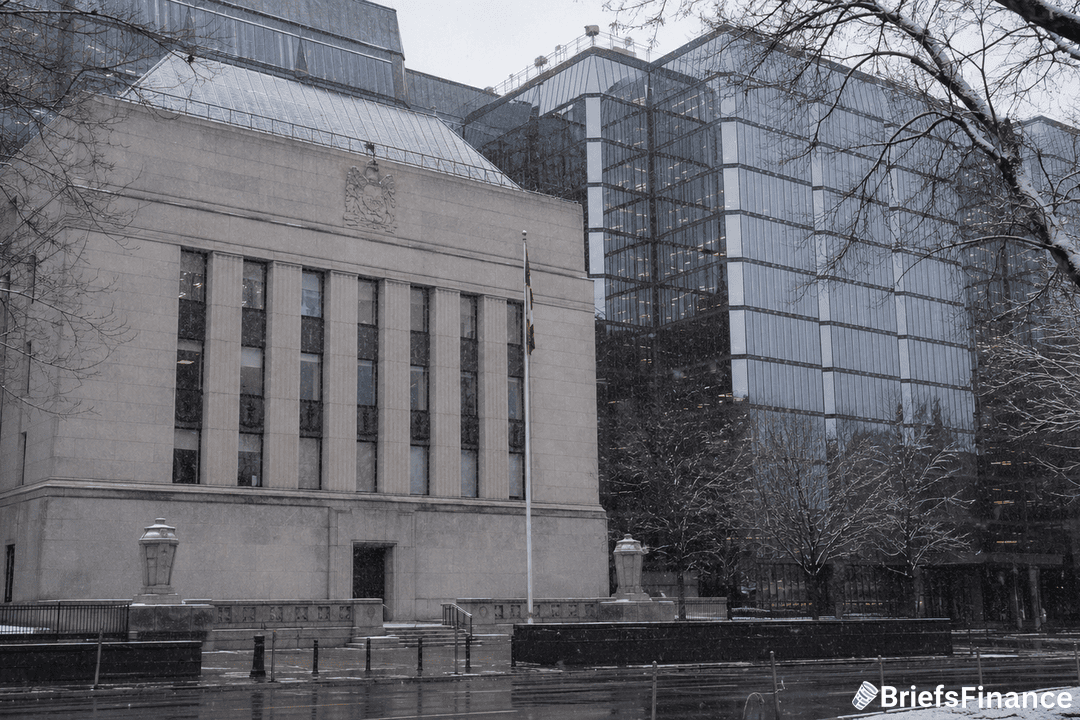
Canada has stopped cutting rates. The jobless rate keeps drifting higher anyway.
Now the Bank of Canada is admitting something that should change how investors read the slump. Rate cuts may not fix the real problem.
Hiring Has Crashed, But Firing Hasn't
Deputy Governor Nicolas Vincent gave the speech in Montreal on Tuesday. He calls it a "low hire, low fire" job market.
Layoffs have stayed low. Hiring has fallen off a cliff.
The country added about 6,000 jobs a month since early 2025. That's down from 34,000 a month in 2024.
The jobless rate has climbed from 5% in early 2023 to 6.9% last month. The jump came from firms not hiring, not from firms firing.
The chance of finding a new job is near a 30-year low. Workers are changing jobs less often too, which Vincent says points to a less dynamic market.
Markets like this are where smart investors split signal from noise. Every weekday morning, Market Briefs breaks it down in five minutes, plus you get a free investing masterclass when you sign up.
Young Workers Are Getting Crushed
Vincent flagged three trends that look deep, not short-term. Each one suggests the slump is more than a passing dip.
Long-term joblessness is the highest since the early 2000s, outside the pandemic. Workers stuck without a job for more than six months are piling up.
Young people are taking the worst of it. Youth jobless rates jumped from 9% in 2022, a record low, to over 14% now. Teens got hit hardest.
Almost a quarter of Canada's long-term jobless are under 25. That share has more than doubled since 2022.
Vincent also flagged AI. The jobs losing the most hiring are the ones most at risk of being done by AI tools.
The same trend is showing up in the US, where AI-driven layoffs hit a 21-year high last fall.
Why This Matters For Rates
If the problem is short-term (a dip in demand), rate cuts can fix it. Cheap money pushes hiring up.
If the problem is deeper (skills gaps, aging, trade, AI), rate cuts won't fix it. They'll just feed inflation.
"If we were to stimulate demand when the issue is more structural, we could create inflationary pressures while also delaying necessary restructuring in the economy," Vincent said.
In plain English: more cuts may not help, and could make prices rise.
The Bank of Canada is also looking south. US jobs data has shown big gaps between the top numbers and what workers feel.
What To Watch
Some traders still see more cuts from the Bank of Canada this year. Vincent's speech is a warning that the bar is higher than they think.
If next month's hiring data stays soft and prices drift up, the path to more cuts gets a lot tighter. A central bank that thinks the problem is deep is a central bank with less to work with.
Want this kind of breakdown on macro moves every morning? Join 350,000+ investors reading Market Briefs. It's a five-minute read, and you also get a 45-minute investing course as a bonus.