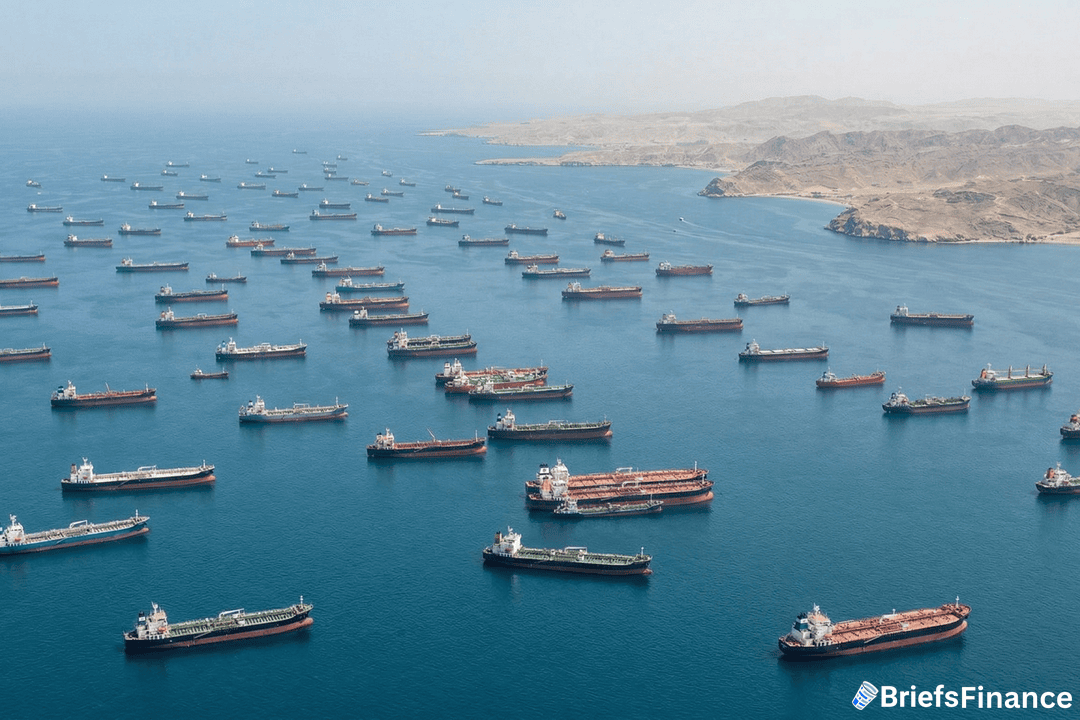
The world's most important oil chokepoint is still closed. The Strait of Hormuz normally handles 135 ships per day. This week, just 3 made it through. A ceasefire was announced - the ships didn't move.
A Maritime Traffic Jam on a Global Scale
Roughly 800 freighters are stuck inside the Persian Gulf with nowhere to go. Another 1,000+ are anchored outside in the Gulf of Oman, clustered around Dubai and Khor Fakkan - nearly 1,800 vessels frozen in place.
Iran claims that ships now need explicit permission from the Islamic Republic to transit. Crews on vessels have reported hearing radio warnings that navigation requires Iranian authorization.
Iran is also finalizing a joint maritime protocol with Oman to formalize coordinated management of tanker traffic. That would essentially embed Iranian authority over the strait into a standing agreement.
The Human Cost
The International Maritime Organization counts roughly 20,000 civilian seafarers stuck aboard these vessels.
They're facing dwindling food supplies, fatigue, and mounting psychological stress. What started as a temporary delay has stretched into weeks of uncertainty with no clear end date.
Worth Noting
The longer ships remain stranded, the higher costs climb for everyone downstream.
Shipping insurance rates are spiking, delivery costs are jumping, and goods that were supposed to arrive months ago remain somewhere in the Arabian Sea.
When that Oman-Iran protocol goes live, the blockade could ease quickly - but the timeline remains unknown.