What Happened on the 13th Flight
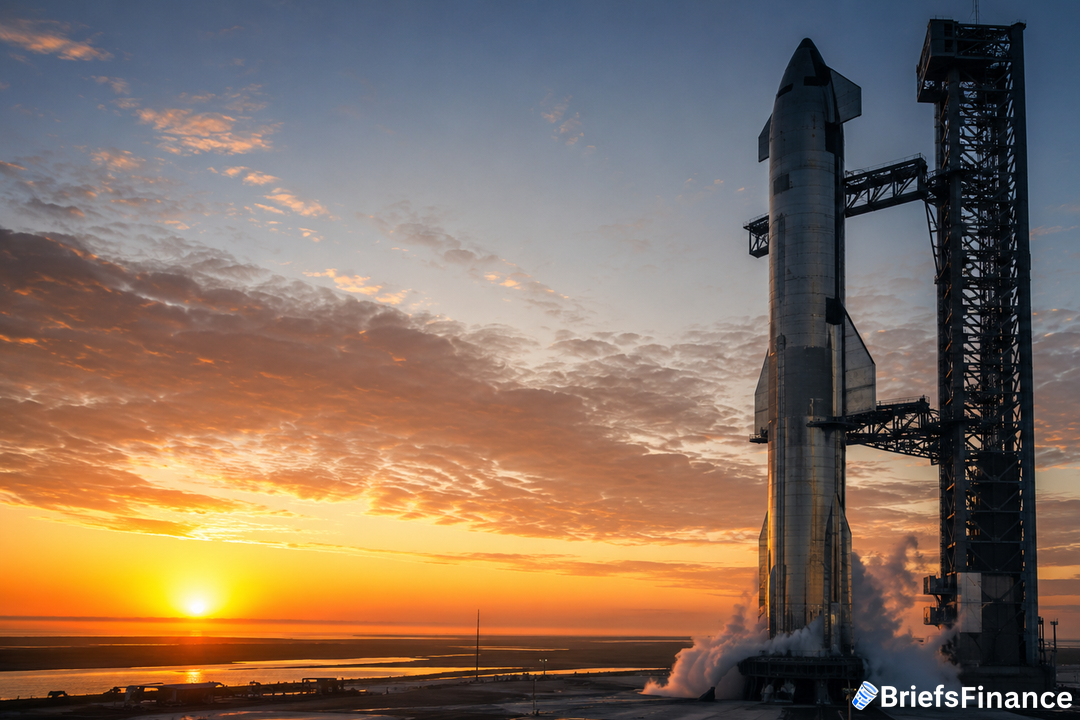
The latest Starship test, which SpaceX employees called "lucky number 13" during the livestream, combined advances with setbacks. The launch took place on July 24, 2026, and approximately two minutes into the flight, the Super Heavy booster separated from the Starship as expected. That part worked.
Difficulties started to appear as the booster descended. SpaceX said in a statement that the booster "attempted to relight its engines for the landing burn," however, just a portion of the engines fired properly ahead of the "hard splashdown." The booster executed a guided water landing in the Gulf, though it was far from flawless.
The Starship upper stage continued its trajectory.
Get the market news that matters in a five-minute read with Market Briefs, our free daily newsletter
The company nevertheless characterized the mission as a success. SpaceX said the Starship came down in a "soft splashdown" in the Indian Ocean, "coming to rest intact in the Indian Ocean and providing critical views of an intact heatshield for the first time." This information will be vital for perfecting future landing procedures.
Why This Flight Matters More Than the Others
This was not just another test. It was the first Starship launch after SpaceX went public in a record initial public offering last month. The company trades under the ticker SPCX, and the stock market has been watching closely.
The Starship is central to SpaceX's business plan. The rocket's core design is full reusability, enabling lower-cost launches and larger cargo capacities. That matters for three big things: vastly expanding the Starlink satellite network, bringing U.S. astronauts back to the moon's surface, and eventually powering manned missions to Mars. Every test flight brings SpaceX closer to making those goals real.
But the landing failure is a reminder that rapid reusability is still a long way off. Tim Farrar, an industry analyst at TMF Associates specializing in satellite services, commented that the company "remains a long way from achieving rapid reusability of the entire ship." He also warned that "any similar failure during an attempted landing at the company's launch site could cause severe damage to the launchpad."
Each test flight provides hard data that either narrows or widens the gap between promise and reality. SpaceX is now readying Starship for a significant NASA test flight scheduled for next year. Additionally, the firm is developing Starmind satellites, intended for deployment in space where they will function as orbital data centers.
Impact on SpaceX's Stock and Future Plans
The record IPO, which raised billions and valued SpaceX at over $200 billion, has placed intense scrutiny on the company's ability to meet ambitious timelines. The 43% drop in SPCX shares reflects investor concerns over technical setbacks like the booster landing failure, even as SpaceX touts progress on satellite deployment and heatshield data. With a NASA lunar mission on the horizon and Starmind satellites in development, each Starship test carries outsized weight for both the company's technological credibility and its stock performance.
Join Market Briefs, our free daily newsletter, for a quick daily rundown of the markets