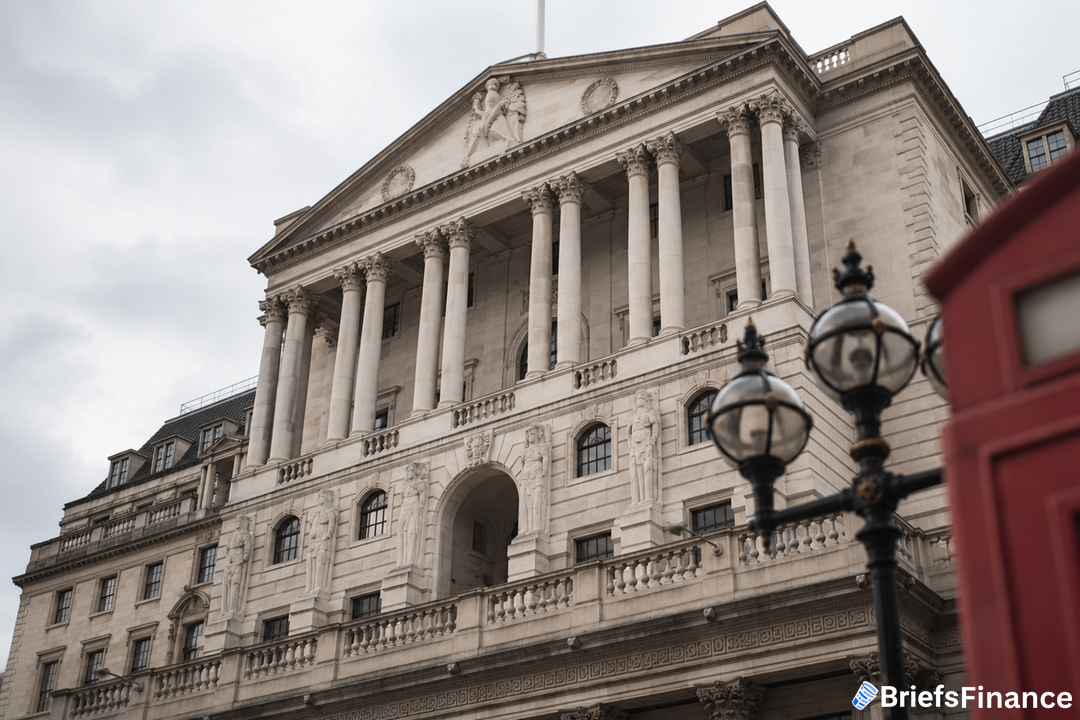
Bond Yields Tumble After Dovish Message
Short-term UK government bonds had their best day in months after the Bank of England made clear it is not moving toward raising interest rates.
That was the biggest one-day fall since June 12. When bond prices go up, yields go down, and the move was sharp enough to catch many traders off guard.
Governor Andrew Bailey told reporters after the decision that the BOE was not "edging toward a hike."
The surprise showed up in trading data.
Inflation Easing Changes the Story
The reason for the shift comes down to one thing: the Bank now sees clear signs that domestic inflation is cooling.
Get the market news that matters in a five-minute read with Market Briefs, our free daily newsletter
The Bank stated that, up to now, there have been few indications that the energy crisis has driven up wage demands or broader price increases. The committee said it stands prepared to respond to ongoing risks such as Middle East tensions and fluctuating energy costs, but noted "clear signs" that domestic inflationary pressures are easing.
Aegon Asset Management portfolio manager James Lynch commented that Bailey's remarks were "more explicit than I thought he would have been." He added that "there is a high bar to them raising interest rates." Lynch confirmed he maintains his steepener position, purchasing short-term gilts and selling longer-dated UK debt.
The yield on 10-year UK bonds also fell, dropping four basis points to 4.99%. Longer-term bonds moved less. The 30-year yield barely budged, sitting at 5.73%.
The contrasting movements in short and long-dated gilts highlight a key dynamic: the two-year yield is a direct gauge of monetary policy expectations, while longer-term yields are heavily influenced by fiscal policy and supply concerns. The BOE's updated estimate that its quantitative tightening program has added 20 to 30 basis points to 10-year yields further complicates the outlook. With the government's Autumn budget looming, investors demand a risk premium for holding long-term debt, a factor that is unlikely to dissipate until the fiscal plans are unveiled. This split between a dovish central bank and uncertain fiscal policy may persist as the dominant theme in UK bond markets.
What's Next for Longer-Term Bonds
BMO Capital Markets' head of EMEA rates strategy Laurence Mutkin pointed to Prime Minister Andy Burnham's upcoming tax and spending plans. "There's so much uncertainty around the whole package. Until budget day we're going to keep that risk premium," he said on BTV.
That risk premium is the extra yield investors demand for holding long-term UK debt when they do not know what the government will do next. Market observers anticipate that long-term gilts will keep underperforming in the near term, given there's little chance of clarity before the Autumn budget.
The Bank of England also updated its estimate of how much its quantitative tightening program - selling off bonds it bought during the pandemic - has pushed up yields. It said the program added 20 to 30 basis points to 10-year yields, five basis points more than its estimate last year. In September, the Bank of England plans to release an updated outlook for the program.
The bottom line: Short-term bonds are pricing in a central bank that is done tightening. Longer-term bonds remain weighed down by uncertainty over the government's fiscal plans. That split could define the UK bond market for the rest of the year.
Join Market Briefs, our free daily newsletter, for a quick daily rundown of the markets