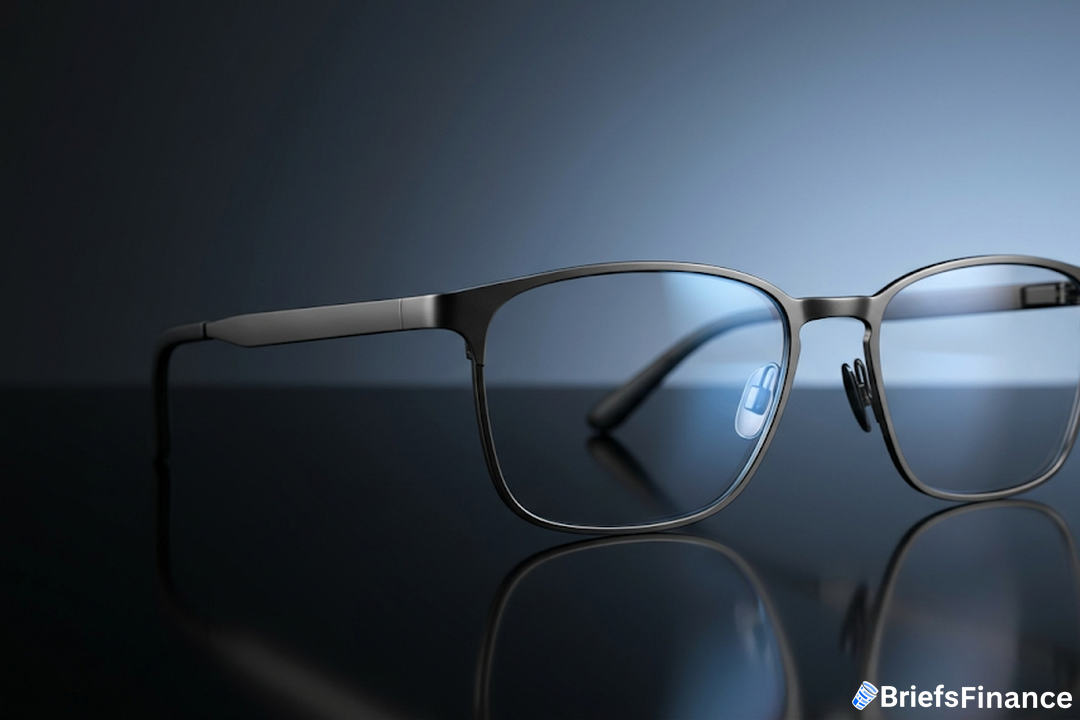
Samsung Lays Out Its Smart Glasses Plans
Samsung just pulled back the curtain on its smart glasses. The company described the features of the device in detail for the first time, signaling it is ready to enter a market that Meta has owned for years.
The glasses are set to launch in the fall of 2026. Samsung is working with two design partners - Gentle Monster and Warby Parker - to get the look right, and it plans to offer more color and style options than what it has shown so far. Inside the frame, the glasses will run on a chip from Qualcomm, the Snapdragon AR1 Gen1.
The device's built-in camera can capture video and also extract text from a whiteboard or presentation slide, plus it can condense lengthy smartphone messages. It includes built-in speakers and requires a connection to a smartphone to function. It also comes with a portable charging case.
Get the market news that matters in a five-minute read with Market Briefs, our free daily newsletter
James Choi, the Samsung executive vice president in charge of the research division that built the glasses, said Samsung has "just started" in smart glasses and predicted the market would remain niche, never hitting 100 million units sold during the company's initial period. However, he declined to provide Samsung's sales expectations.
Choi also noted that Samsung is experimenting with gesture-based commands using its smartwatches. For instance, someone using a Samsung smartwatch could perform a hand gesture to activate a function on the glasses. Additionally, wearers might use the Galaxy Ring - released in 2024 - to make similar gestures.
According to IDC, Meta controlled 69.2% of the smart-glasses market during Q1 2026. The company has been broadening its device lineup lately. It introduced a $299 entry-level pair last month, and in 2025 it revealed the $799 Meta Ray-Ban Display model featuring an integrated display.
Samsung has not announced a price yet. Choi declined to reveal the cost of Samsung's glasses, though he stated they would be marketed as a premium item.
"We want to make it reasonable, but as I mentioned ... the quality of the product itself, we want to position as premium. It doesn't mean that it's crazy expensive," Choi said. He also mentioned that the glasses would be available through partner retail outlets.
IDC analyst Francisco Jeronimo commented that he "wouldn't be surprised" if Samsung set the price from $600 to $700 as a way to "strengthen their premium brand." However, he warned that setting a high price carries risk, especially if the product does not deliver additional value beyond Meta's Ray-Ban lineup. "That is going to be quite a difficult move to sell that kind of device," Jeronimo said.
PP Foresight founder Paolo Pescatore commented to CNBC: "Samsung's arrival represents a serious challenge to Meta, but success is far from guaranteed. Ray-Ban Meta already enjoys strong awareness and growing adoption, while Samsung has historically struggled to convert its vast smartphone base into users of complementary Galaxy devices. Eyewear represents another valuable upsell opportunity, but Samsung must deliver compelling everyday use cases and prove it can persuade consumers to buy into more than just the smartphone."
Samsung has long been a major player in consumer electronics, from smartphones to wearables like the Galaxy Watch and Galaxy Ring. Its entry into smart glasses marks a strategic push to integrate its ecosystem further, leveraging existing devices for gesture control. However, breaking into a market led by Meta's Ray-Ban partnership will require convincing consumers of unique value beyond style and basic functionality.
Join Market Briefs, our free daily newsletter, for a quick daily rundown of the markets