Another Quarter, Another AI Chip Boom
The AI boom keeps writing the same story. Companies that make the guts of data centers are printing money, and Samsung Electronics is the latest to prove it.
The year-over-year numbers are absurd. Operating profit soared 1,814% compared to the same quarter last year. Revenue jumped 130%. Even compared to the previous quarter, profit was up 56% and revenue rose 28%.
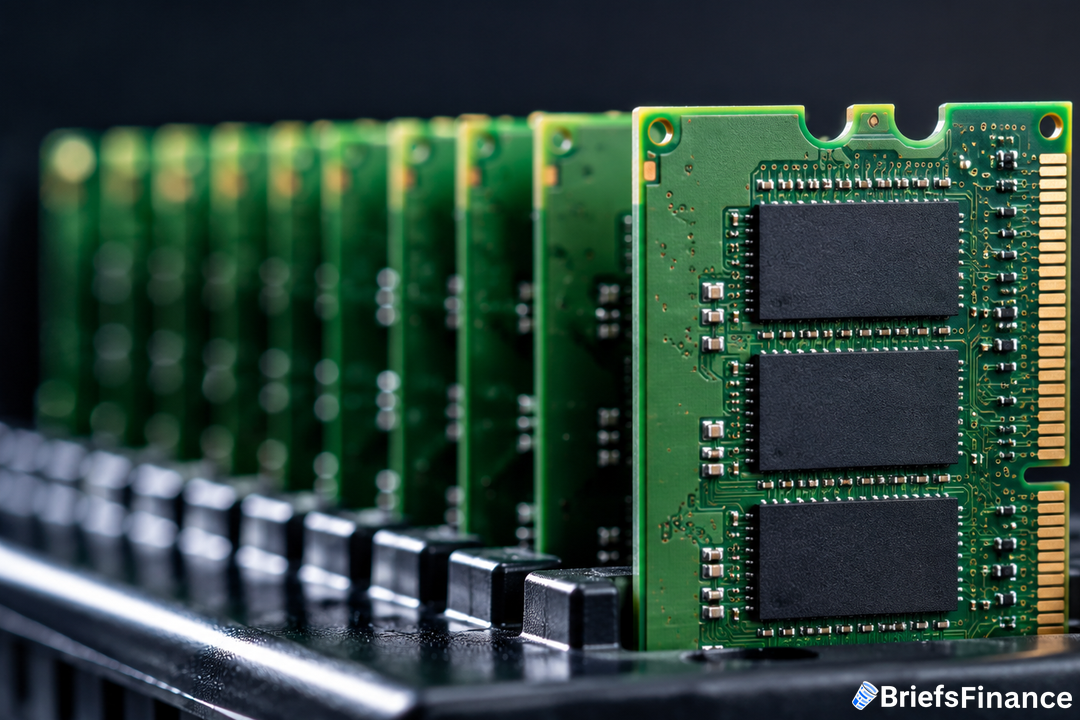
The reason? AI servers need a lot of memory. Samsung sells two main types - DRAM and NAND - and both saw record demand.
The company also started shipping samples of its newest high-bandwidth memory, called HBM4E, to major customers. Samsung's HBM4 is its newest high-bandwidth memory, engineered to run cutting-edge AI processors such as Nvidia's Vera Rubin Platform.
"The AI infrastructure buildout is still paying its suppliers handsomely, and Samsung expects more to come, pointing to strong memory demand in the second half as agentic AI adds another layer of appetite for its chips," said Josh Gilbert, who serves as lead analyst for APAC at eToro.
Get the market news that matters in a five-minute read with Market Briefs, our free daily newsletter
One Weak Spot in a Strong Picture
Not every part of Samsung is on fire. The mobile and networks business segment lost 700 billion won. That is a meaningful chunk of change, but it gets dwarfed by the memory chip operation, which is carrying the whole company.
The danger is that Samsung might be leaning too hard on one leg. "The strength of the memory business is remarkable, but so is Samsung's dependence on it," Gilbert pointed out.
It is not like Samsung is ignoring that risk. The company set up a dedicated robotics division that reports directly to the CEO. It is also looking at potential partnerships and acquisitions to speed things up in that area. But for now, chips are the story.
Broader Market Context
The AI chip boom has lifted all major memory makers. Domestic rival SK Hynix also reported a record quarterly profit, though it missed analyst estimates, highlighting Samsung's ability to outperform. Meanwhile, Samsung and Broadcom have deepened their partnership, working together on memory and foundry tech. To keep up with AI demand, Samsung is pouring more money into building a factory in Pyeongtaek and additional infrastructure.
What the Supply Outlook Means for Investors
Here is the part that matters for your portfolio. Samsung says memory supply will start to tighten in 2027. The company has already signed multi-year supply agreements with its top five global data center customers. Those deals lock in revenue for years and suggest the big tech companies see no slowdown coming.
The bottom line: When a key supplier says demand will outrun supply for years, the stocks that benefit from that trend tend to keep attracting money. Nvidia's Vera Rubin Platform uses Samsung's HBM4, and Broadcom is collaborating with Samsung on memory and foundry technologies. Samsung and its memory rivals are well positioned.
There is one more thing to watch. Samsung said it is not currently reviewing an ADR issuance for a U.S. listing but considers it a possible option. If it eventually goes that route, American investors would get direct access to shares without dealing with over-the-counter tickers like SSNLF.
For now, the message is simple. AI demand is not fading, and the companies that make the components are cashing in. Samsung's numbers prove that boom is still in full swing - and likely has years left to run.
Join Market Briefs, our free daily newsletter, for a quick daily rundown of the markets