Free NewsletterPro Login

Putin Just Left Beijing Without The Pipeline Deal He Came For

Published May 21, 2026
Share:
Summary:
  • Russia and China made no breakthrough on the Power of Siberia 2 gas pipeline this week.
  • The two countries still signed more than 40 other deals on trade, education, tech, and military cooperation.
  • Russia's gas exports to Europe have dried up since the 2022 Ukraine invasion, leaving China as its only real backup buyer.

Vladimir Putin flew to Beijing this week. He came for a giant gas deal. He flew home without it. The visit says more about the balance between Russia and China than any speech could.

Moscow had flagged the Power of Siberia 2 pipeline as a top item. The summit ended with no pipeline and no clear path to one.

The Pipeline That Wasn't

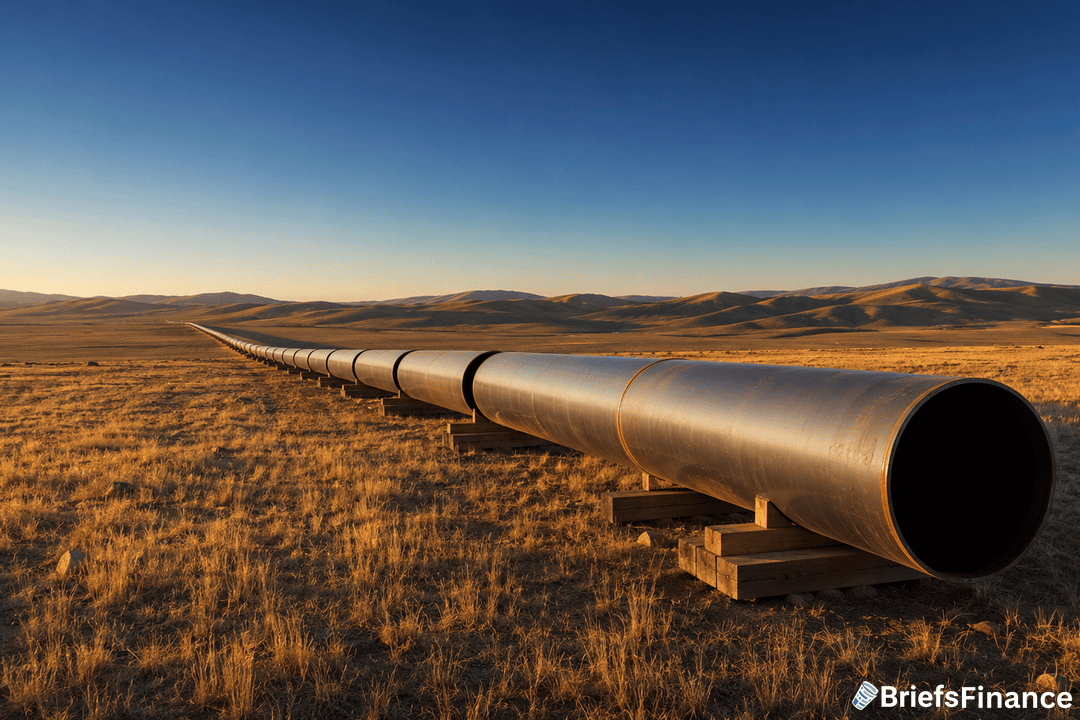
Power of Siberia 2 would carry up to 50 billion cubic meters of gas a year. That gas would move from Russia to China through Mongolia. It would also sit on top of Power of Siberia 1, which already delivers about 38 billion cubic meters a year.

Russia and China signed a legally binding memo to advance the project back in September 2025. Talks have been stuck ever since. The sticking points are pricing, financing, and timing.

After this week's summit, Russian Press Secretary Dmitry Peskov said the two sides had agreed on the project's main parameters. But "some nuances remain to be ironed out," Peskov said. China's President Xi Jinping skipped the topic in his public remarks.

"There is no way to sugarcoat it," said Lyle Morris of the Asia Society Policy Institute. "Putin was embarrassed by the failure to agree to the pipeline."

Market Briefs reads geopolitics through a market lens every morning in five minutes, with a free investing masterclass thrown in when you sign up.

Forty Other Deals, One Big Snub

The summit did produce a lot of paper. Just not the page Russia wanted.

The two sides signed more than 40 deals on trade, schools, tech, and nuclear safety. They also agreed to do more joint exercises, air patrols, and sea patrols. Xi called ties the strongest "in history."

None of it added up to the deal Russia came to Beijing to close.

Who Has The Leverage

The deeper story is about power.

China is Russia's biggest trading partner. Russia is only about 4% of China's total trade. That gap puts Beijing in the driver's seat.

Russia needs a new buyer for the gas it used to send to Europe. Beijing knows it. And Beijing is in no rush to commit on terms it does not like.

The optics told a story too. Trump came to Beijing this month with the CEOs of Apple, Tesla, and Nvidia. Putin came with deputy premiers and oil and gas chiefs.

Even Russia's other energy lever is fading. Europe's LNG imports have dropped as Asia outbids for cargoes. That makes the gas Russia wants to sell less special than it used to be.

What To Watch

Russia keeps shipping more crude to China after the Strait of Hormuz mess. But the pipeline is still the bigger prize.

Power of Siberia 2 would lock China in as a long-term gas buyer for decades. That is a much bigger deal than a few extra barrels of oil. Russia knows it. Beijing knows it too. That is exactly why the talks keep stalling.

Until Russia agrees to Beijing's terms, the leverage stays right where it is.

Get the daily read on how stories like this hit markets delivered every weekday, with a 45-minute investing course as a bonus.

Disclosure

Recent News

1 2 3 … 106

Get Market Briefs delivered to your inbox every morning for free!

No fluff. No noise. No politics. Just finance news you can read in 5 minutes.

Blogs

October 16, 2026
How Boring Math Makes You Rich: The Briefs Money Spreadsheet, Explained
  • Briefs Money shows you what to do with every paycheck, and in what order: how much to spend, save, and invest, when to build an emergency fund, and which debt to pay off first.
  • The Climb to Wealth course walks you through the system step by step, and the Personal Finance Spreadsheet is where you track your own numbers.
  • Investing is one piece of building wealth. The system that gets money to your investments, and keeps it there, decides the outcome.
Read More
October 16, 2026
Common Investing Mistakes: Why a Stock Grade Is One Tool, Not the Whole Toolkit
  • The Briefs Score shows growth, income, and wealth preservation investors how well a stock fits their goal, with a separate letter grade for each one.
  • The most common mistake is treating the letter as an instruction. An A tells you a stock scores well for one goal, not that you should buy today.
  • Research works best as one input in a process you own. The grade shows how a stock stacks up. You supply the goal, the timeline, and the rules for being wrong.
Read More
October 16, 2026
How to Read a Company's Numbers Without a Finance Degree (Using Briefs Terminal)
  • Briefs Terminal lets you size up any public company in about ten minutes: what the stock costs, what it earns, how fast sales are growing, and what it pays you, all on one page.
  • It lines those numbers up against the company's closest competitors for you, so you can tell if a number is impressive or just average.
  • Below that are the income statement, balance sheet, and cash flow statement from the company's SEC filings, the latest news, and transcripts of its earnings calls.
Read More
October 16, 2026
What Type of Investor Am I? The Three Investor Archetypes, Explained
  • Briefs sorts its stock grades and monthly reports by three investor goals: growth, income, and wealth preservation. Pick yours and you know which report and which grade to read first.
  • Growth investors want stocks that beat the S&P 500. Income investors want to get paid in cash. Wealth preservation investors want stocks that hold up when the market drops.
  • The same stock can score an A- for one goal and a D- for another, so picking your goal comes before picking any stock.
Read More
October 16, 2026
How to Build a Stock Watchlist That Isn't Just Stocks You Heard About
  • A watchlist on Briefs Terminal lets you group stocks by the idea you're tracking and follow each one's price, one-day move, and 52-week high and low in one place.
  • Each list has its own name and description, so you always know why a stock is on it, and you can make as many lists as you have ideas.
  • The monthly growth, income, and wealth preservation reports under the Briefs Research tab hand you new themes to track that you didn't hear about online.
Read More
October 16, 2026
How to Choose an ETF That Matches Your Idea (Using the ETF Planning Tool)
  • The ETF planning tool takes an idea like "I want to invest in fast food companies," asks what you mean, and finds the ETFs that match, with the reasons, the holdings, and the sources.
  • Build a Plan then shows what your money could grow to in those ETFs over the years you choose, with conservative, expected, and optimistic estimates next to the S&P 500.
  • It gets you from an idea to an actual plan without researching dozens of companies one at a time.
Read More
October 16, 2026
Is This Stock a Good Buy? How to Use the Briefs Score to Tell If a Stock Fits the Way You Invest
  • The Briefs Score shows growth, income, and wealth preservation investors how well a stock fits their goal, with a separate letter grade for each one.
  • One stock can score very differently for each. Nvidia showed an A- for growth and a D- for income, because it grows fast and pays almost no dividend.
  • Seven sub scores under each grade show what earned the letter, so you can see exactly where a stock is strong or weak for your goal.
Read More
October 16, 2026
How to Tell an Asset From a Liability: The One Question to Ask Before You Buy Anything
  • The typical American household earned more in 2025 than in any year on record, yet only 30% of Americans say they could pay a surprise $1,000 bill from savings, so the problem isn't income but what the income gets spent on.
  • An asset puts money in your pocket and a liability takes money out, and the wealthy buy assets first, then let the assets pay for the fun stuff.
  • Before you buy anything, ask one question: does this put money in my pocket, or take money out of my pocket? Then you need a plan for the money you keep.
Read More
October 16, 2026
How to Build Your First $2,000 Emergency Fund and Wipe Out Every Debt Over 10%
  • Your first money goal isn't investing, it's $2,000 in its own account named Do Not Touch, built by moving 10% of every paycheck into it automatically.
  • More than a third of American adults couldn't cover a $400 surprise bill with cash or savings, according to the Federal Reserve, and that's how one bad day turns into years of credit card payments.
  • Once the $2,000 is there, attack every debt charging more than 10% interest, highest rate first, because you can't out-invest a 22% credit card so paying it off is the investment.
Read More
October 16, 2026
How to Invest Through a Crash: 3 Rules From the Worst-Timed Investor Alive
  • Meet Bunty, a fictional investor with the worst timing in history: he put $100,000 into the market in four chunks right before four crashes, never sold, and by 2025 it had grown to more than $500,000.
  • Investors who jump in and out of the market miss its best days, and missing just a handful of those days can cut your final result roughly in half.
  • The fix is ABB, Always Be Buying: you buy on a schedule through booms, crashes and scary headlines, which matches the market, and beating it takes knowing where the money is moving first.
Read More
1 2 3 … 29
Share via
Copy link