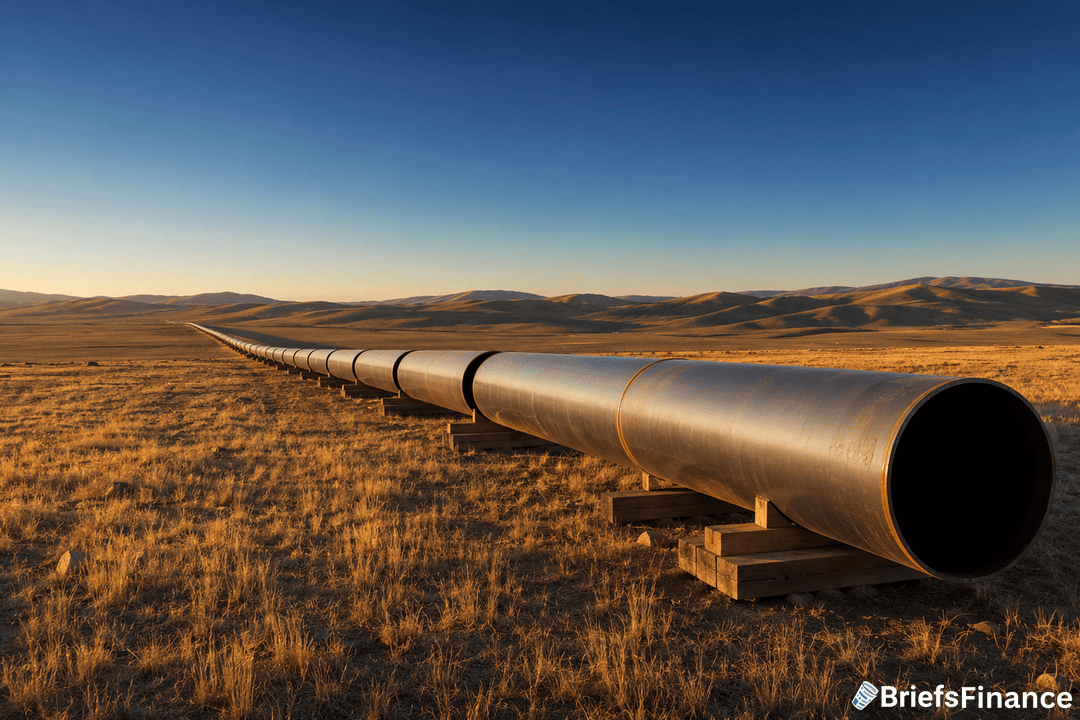
Vladimir Putin flew to Beijing this week. He came for a giant gas deal. He flew home without it. The visit says more about the balance between Russia and China than any speech could.
Moscow had flagged the Power of Siberia 2 pipeline as a top item. The summit ended with no pipeline and no clear path to one.
The Pipeline That Wasn't
Power of Siberia 2 would carry up to 50 billion cubic meters of gas a year. That gas would move from Russia to China through Mongolia. It would also sit on top of Power of Siberia 1, which already delivers about 38 billion cubic meters a year.
Russia and China signed a legally binding memo to advance the project back in September 2025. Talks have been stuck ever since. The sticking points are pricing, financing, and timing.
After this week's summit, Russian Press Secretary Dmitry Peskov said the two sides had agreed on the project's main parameters. But "some nuances remain to be ironed out," Peskov said. China's President Xi Jinping skipped the topic in his public remarks.
"There is no way to sugarcoat it," said Lyle Morris of the Asia Society Policy Institute. "Putin was embarrassed by the failure to agree to the pipeline."
Market Briefs reads geopolitics through a market lens every morning in five minutes, with a free investing masterclass thrown in when you sign up.
Forty Other Deals, One Big Snub
The summit did produce a lot of paper. Just not the page Russia wanted.
The two sides signed more than 40 deals on trade, schools, tech, and nuclear safety. They also agreed to do more joint exercises, air patrols, and sea patrols. Xi called ties the strongest "in history."
None of it added up to the deal Russia came to Beijing to close.
Who Has The Leverage
The deeper story is about power.
China is Russia's biggest trading partner. Russia is only about 4% of China's total trade. That gap puts Beijing in the driver's seat.
Russia needs a new buyer for the gas it used to send to Europe. Beijing knows it. And Beijing is in no rush to commit on terms it does not like.
The optics told a story too. Trump came to Beijing this month with the CEOs of Apple, Tesla, and Nvidia. Putin came with deputy premiers and oil and gas chiefs.
Even Russia's other energy lever is fading. Europe's LNG imports have dropped as Asia outbids for cargoes. That makes the gas Russia wants to sell less special than it used to be.
What To Watch
Russia keeps shipping more crude to China after the Strait of Hormuz mess. But the pipeline is still the bigger prize.
Power of Siberia 2 would lock China in as a long-term gas buyer for decades. That is a much bigger deal than a few extra barrels of oil. Russia knows it. Beijing knows it too. That is exactly why the talks keep stalling.
Until Russia agrees to Beijing's terms, the leverage stays right where it is.
Get the daily read on how stories like this hit markets delivered every weekday, with a 45-minute investing course as a bonus.