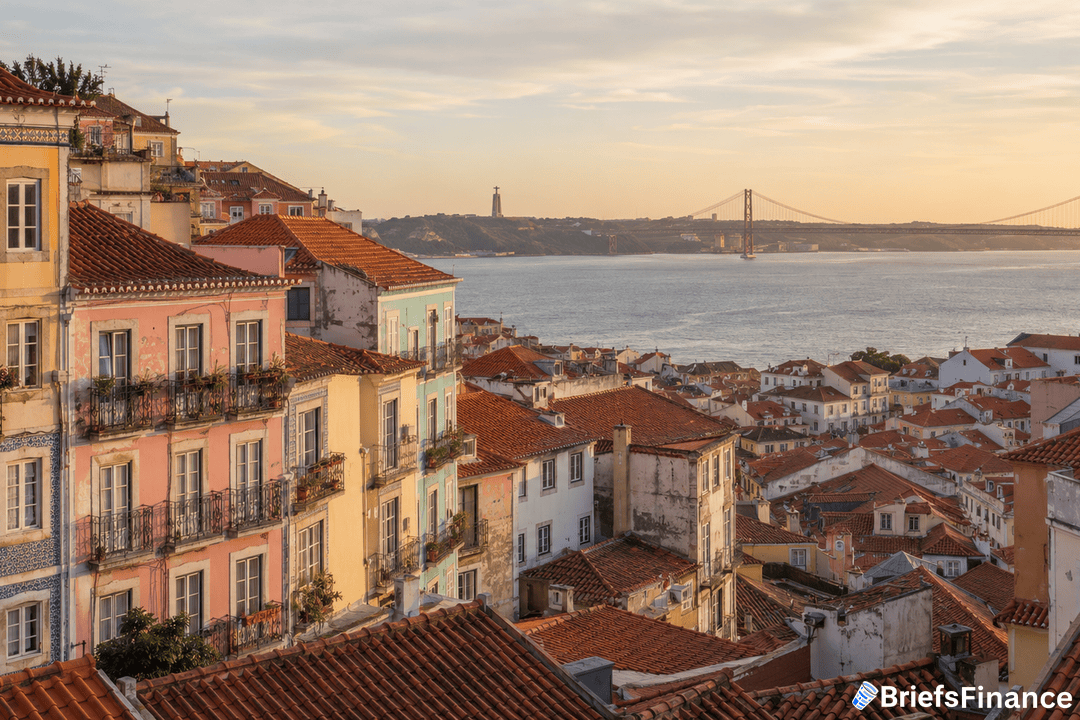
Portugal used to be Europe's quiet recovery story, and now it has the hottest housing market in the eurozone. The country's own central bank is the one saying that's a problem.
Governor Alvaro Santos Pereira told a Lisbon conference that pressure in the real estate market is the main domestic risk facing Portugal's financial system. That's a striking flag from a central bank that usually saves its strongest language for inflation or banks.
The Numbers Behind The Warning
Home appraisals are running hotter than almost anywhere else in the bloc, with the median bank valuation for a Portuguese home hitting €2,146 per square meter in January. That figure marks an 18.7% jump from a year earlier and a new record.
Greater Lisbon apartments are now running at €3,269 per square meter, while the Algarve sits at €2,796. The Setubal Peninsula posted the steepest annual gain at 27.1%.
The pace is also picking up rather than cooling, with annual price growth running 16.1% in the third quarter of 2025 before accelerating to 17.5% in the fourth. That's the kind of real estate curve a central bank tends to lose sleep over.
Market Briefs walks investors through stories like this every weekday morning - and a free investing masterclass comes with sign-up.
Why The Central Bank Is Worried Now
The real concern isn't the price tag, it's the borrowing piling up underneath it. Portugal's mortgage book grew 10.4% year-over-year in January, the fastest expansion since February 2006.
Total household borrowing rose 9.8%, which is the sharpest pace since February 2008. Both of those reference points sit just before the global financial crisis, and that's not a comfortable comparison for a central bank to be staring at.
Household debt is now rising in Portugal after years of moving the other way. Combine that with new mortgage stock growing at pre-2008 speeds, and the regulator is essentially saying out loud that this can't keep going at the same pace without consequences.
Worth Noting
Portugal is forecasting GDP growth of about 2.3% for 2026, which sits well above the broader eurozone, and that strong economy is part of what's fueling the housing demand. The hard part for policymakers is cooling the property market without breaking the rest of the recovery.
If you want clear daily takes on macro stories like this one, sign up for Market Briefs and grab a free 45-minute investing course while you're at it.