Free NewsletterPro Login

Iran Just Sent Its Response To The U.S. Peace Plan As The Strait Of Hormuz Cracks Open

Published May 10, 2026
Share:
Summary:
  • Iran sent its response to the U.S. plan to end the war via Pakistani mediation, according to Iran's IRNA news agency on Sunday.
  • Washington's 14-point plan would force Iran to stop enriching uranium for at least 12 years and not build a nuclear weapon.
  • A Qatari LNG tanker crossed the Strait of Hormuz on Sunday for the first time since the war started on February 28.

Two ships moved through the Strait of Hormuz on Sunday.

That's the kind of news that should be ordinary. Right now, it isn't.

The Strait has been mostly closed since late February, after carrying about one-fifth of the world's oil supply before the war.

The Response

Iran's IRNA news agency said Sunday that Tehran sent its formal response to the U.S. peace plan through Pakistan, which is acting as a middleman.

No details have been shared so far.

The American plan is 14 points and asks Iran to stop enriching uranium for at least 12 years and to drop its nuclear weapons goals.

Washington also wants Iran to allow ships through the Strait, in exchange for the U.S. lifting its blockade on Iranian ports.

Tehran has not publicly said whether it will accept the plan.

U.N. Ambassador Michael Waltz told ABC's "This Week" the Trump administration hadn't seen Iran's reply yet.

Waltz also said Mojtaba Khamenei - the new Ayatollah and son of the previous one - is in hiding after being severely hurt, which is slowing the talks down.

For a five-minute read on how energy markets are pricing all of this, Market Briefs lands in your inbox every weekday, and you also get a free investing masterclass when you join.

The Strait Cracks Open

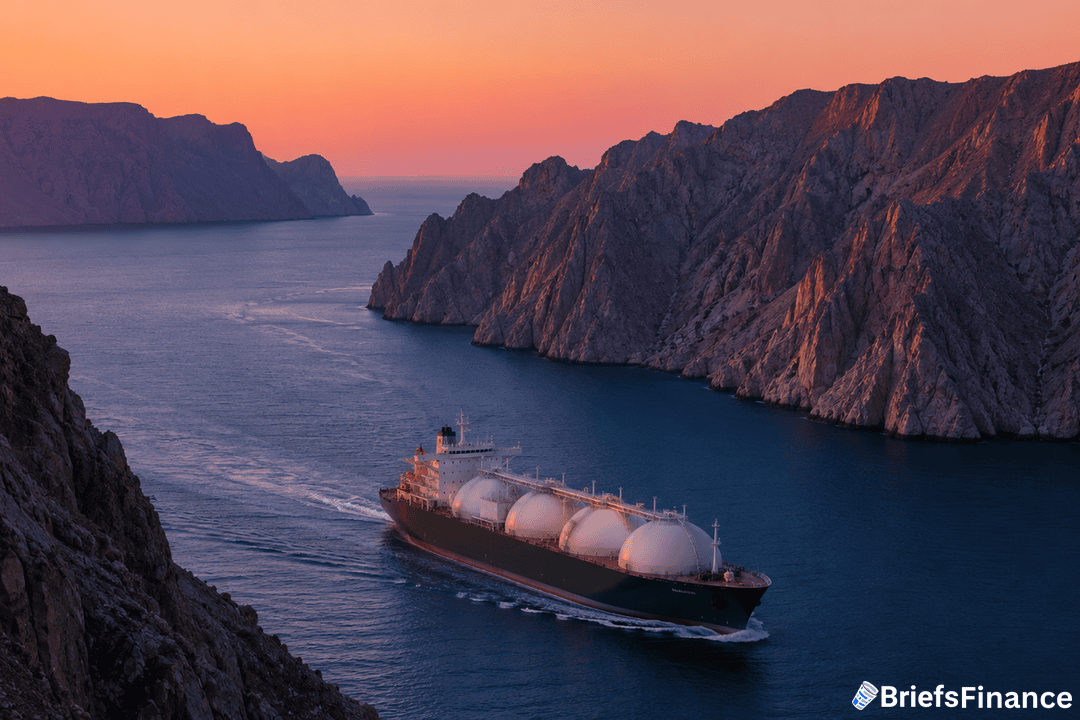
A Qatari natural gas tanker called the Al Kharaitiyat passed through the Strait of Hormuz on Sunday on its way to Pakistan's Port Qasim.

That makes it the first Qatari LNG tanker through the Strait since the U.S. and Israel started the war on Feb. 28, per shipping data firm Kpler.

Sources told CNBC that Iran approved the transfer to build trust with Qatar and Pakistan, both of whom are mediating the war.

A Panama-flagged bulk carrier headed for Brazil also got through, using a route Iran's armed forces designated.

That's two ships in one day. It's not a reopening - it's a test.

Still, it's the first signal in two months that the most important shipping lane on Earth might function again.

What To Watch

Trump is heading to China this week, and pressure to draw a line under the war is building, with the war triggering a global energy crisis and U.S. voters paying for it at the pump.

Drone activity hasn't stopped.

The UAE intercepted two drones from Iran on Sunday, while Qatar said a drone hit a cargo ship in its waters and Kuwait's air defenses dealt with hostile drones in its airspace.

The investor math is simple: a working Strait of Hormuz lowers oil prices, while a closed one lifts them.

Sunday's two transits don't end the standoff, but they're the most concrete signal yet that the standoff has a finish line.

Iranian lawmakers are also drafting a bill to formalize Iran's control of the Strait, with clauses including blocked passage for vessels of "hostile states."

Britain has said it's deploying a warship to the Middle East to prep for a multinational mission once a deal is in place.

Want this kind of read on geopolitics meeting markets every morning? Sign up for Market Briefs and grab a 45-minute investing course as a free bonus.

Disclosure

Get Market Briefs delivered to your inbox every morning for free!

No fluff. No noise. No politics. Just finance news you can read in 5 minutes.

Blogs

May 30, 2026
Financial Literacy Books That Actually Build Wealth
  • The best financial literacy books don't just teach budgeting, they shift how you think about money.
  • Two classics stand out: The Intelligent Investor for valuing investments, and Rich Dad Poor Dad for the owner's mindset.
  • Reading is only step one. The real wealth comes from acting on what you learn.
Read More
May 30, 2026
What Is a Roth Conversion? A Simple Guide
  • A Roth conversion moves money from a traditional retirement account into a Roth account.
  • You pay taxes on the money now, in exchange for tax-free growth and withdrawals later.
  • It can pay off if you expect higher taxes or more income in the future, but the timing and tax hit matter a lot.
Read More
May 30, 2026
Trailing Stop Loss: How to Protect Your Gains
  • A trailing stop loss is an order that automatically sells a stock if it falls a set percentage from its recent high.
  • As the stock rises, the sell point rises with it, locking in gains while capping losses.
  • It's most useful for active strategies like momentum investing, not for long-term buy-and-hold.
Read More
May 30, 2026
5 Types of Wealth: Why Money Is Only One of Them
  • Real wealth is more than a bank balance. It spans your finances, health, mind, purpose, and freedom.
  • Money is powerful, but it amplifies the life you already have rather than fixing a broken one.
  • True financial wealth means your cash flow covers your expenses, so your money works while you live.
Read More
May 30, 2026
How to Invest in Private Equity: A Beginner's Guide
  • Private equity means investing in companies that aren't listed on the stock market.
  • Traditional private equity is built for experienced, high-net-worth investors with large amounts to invest.
  • New rules have opened more accessible paths, like startup crowdfunding and real estate deals, often starting around $100.
Read More
May 30, 2026
What Is a Call Option? A Simple Guide With Examples
  • A call option gives you the right to buy a stock at a set price by a set date.
  • Investors buy calls when they expect a stock to rise, using less money than buying the shares outright.
  • The most you can lose buying a call is the premium, but time works against you, so it's an advanced tool.
Read More
May 30, 2026
EBITDA Formula: How to Calculate It Step by Step
  • EBITDA stands for Earnings Before Interest, Taxes, Depreciation, and Amortization, a measure of a company's core profit.
  • The formula adds those four items back to net income to show what the underlying business earns.
  • Investors use EBITDA to compare companies and to judge how many times earnings a stock is selling for.
Read More
May 30, 2026
What Is a Stock Option? A Plain-English Guide
  • A stock option is a contract giving you the right, but not the obligation, to buy or sell a stock at a set price by a set date.
  • There are two types: calls (the right to buy) and puts (the right to sell).
  • Options are powerful but risky, so they suit investors who already have the basics down.
Read More
May 30, 2026
Put Option: What It Is and How It Works
  • A put option gives you the right to sell a stock at a set price by a set date.
  • Investors use puts to bet a stock will fall, or as insurance to protect shares they own.
  • The most you can lose buying a put is the premium you paid, which makes it a defined-risk tool.
Read More
May 30, 2026
Operating Margin: What It Is and How to Calculate It
  • Operating margin shows how much profit a company keeps from its core business after paying its running costs.
  • The formula is operating income divided by revenue, shown as a percent.
  • A strong, steady operating margin signals a well-run business that controls its costs.
Read More
1 2 3 22
Share via
Copy link










