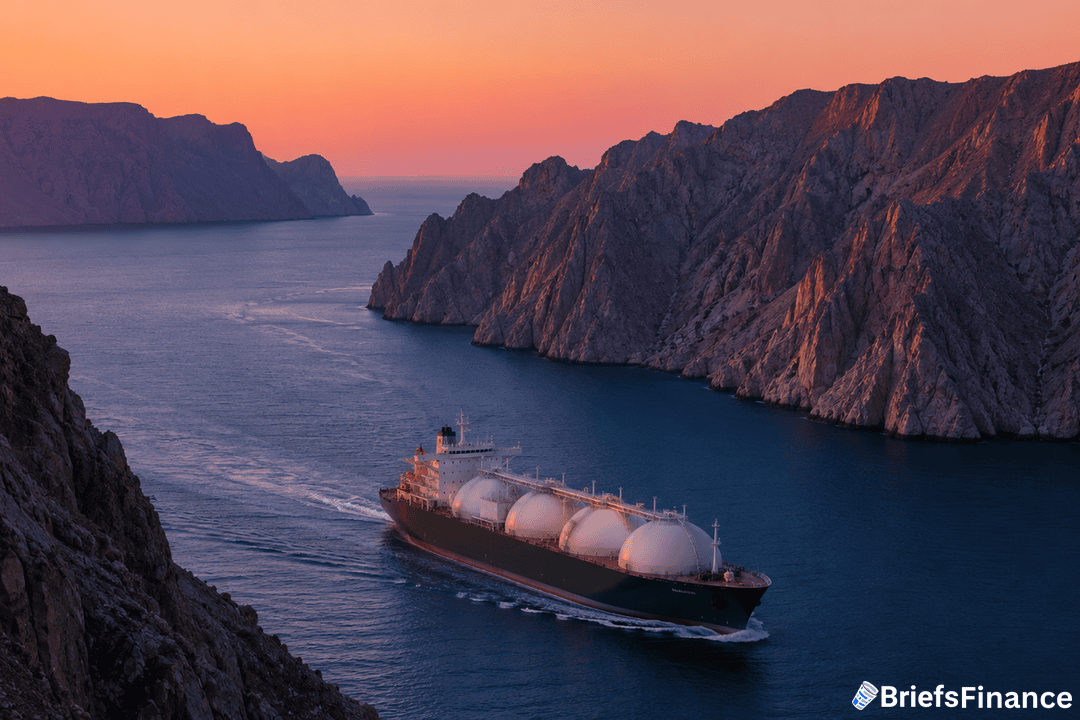
Two ships moved through the Strait of Hormuz on Sunday.
That's the kind of news that should be ordinary. Right now, it isn't.
The Strait has been mostly closed since late February, after carrying about one-fifth of the world's oil supply before the war.
The Response
Iran's IRNA news agency said Sunday that Tehran sent its formal response to the U.S. peace plan through Pakistan, which is acting as a middleman.
No details have been shared so far.
The American plan is 14 points and asks Iran to stop enriching uranium for at least 12 years and to drop its nuclear weapons goals.
Washington also wants Iran to allow ships through the Strait, in exchange for the U.S. lifting its blockade on Iranian ports.
Tehran has not publicly said whether it will accept the plan.
U.N. Ambassador Michael Waltz told ABC's "This Week" the Trump administration hadn't seen Iran's reply yet.
Waltz also said Mojtaba Khamenei - the new Ayatollah and son of the previous one - is in hiding after being severely hurt, which is slowing the talks down.
For a five-minute read on how energy markets are pricing all of this, Market Briefs lands in your inbox every weekday, and you also get a free investing masterclass when you join.
The Strait Cracks Open
A Qatari natural gas tanker called the Al Kharaitiyat passed through the Strait of Hormuz on Sunday on its way to Pakistan's Port Qasim.
That makes it the first Qatari LNG tanker through the Strait since the U.S. and Israel started the war on Feb. 28, per shipping data firm Kpler.
Sources told CNBC that Iran approved the transfer to build trust with Qatar and Pakistan, both of whom are mediating the war.
A Panama-flagged bulk carrier headed for Brazil also got through, using a route Iran's armed forces designated.
That's two ships in one day. It's not a reopening - it's a test.
Still, it's the first signal in two months that the most important shipping lane on Earth might function again.
What To Watch
Trump is heading to China this week, and pressure to draw a line under the war is building, with the war triggering a global energy crisis and U.S. voters paying for it at the pump.
Drone activity hasn't stopped.
The UAE intercepted two drones from Iran on Sunday, while Qatar said a drone hit a cargo ship in its waters and Kuwait's air defenses dealt with hostile drones in its airspace.
The investor math is simple: a working Strait of Hormuz lowers oil prices, while a closed one lifts them.
Sunday's two transits don't end the standoff, but they're the most concrete signal yet that the standoff has a finish line.
Iranian lawmakers are also drafting a bill to formalize Iran's control of the Strait, with clauses including blocked passage for vessels of "hostile states."
Britain has said it's deploying a warship to the Middle East to prep for a multinational mission once a deal is in place.
Want this kind of read on geopolitics meeting markets every morning? Sign up for Market Briefs and grab a 45-minute investing course as a free bonus.