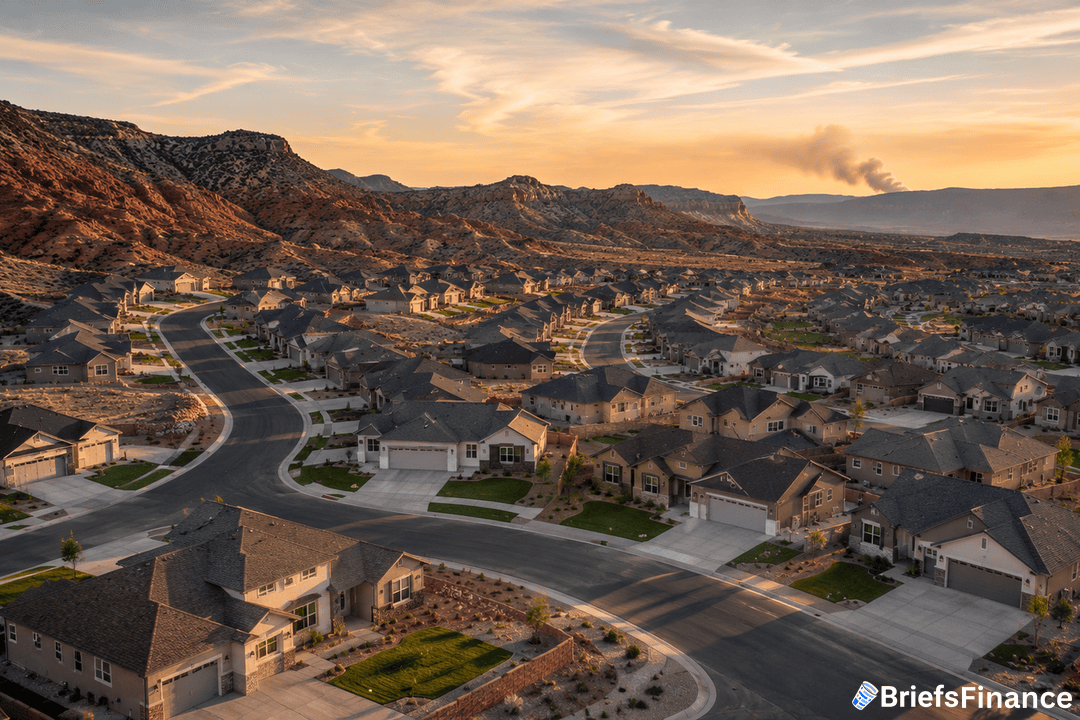
When you hear about rising home insurance, you probably think Florida or California.
But the biggest jumps are in Utah. Bills there rose 59% between 2021 and 2024. Illinois, Arizona and Pennsylvania weren't far behind.
The Bill Has Climbed In Almost Every ZIP Code
From 2021 to 2024, the typical US owner saw their yearly bill rise $648 to $3,303. That's a 24% jump, per the Consumer Federation of America.
Bills rose in 95% of US ZIP codes over that span. So very few owners got off easy.
A Pew Research poll of 3,524 US adults found 71% of owners say their bill has climbed. 42% say it has climbed "a lot."
The US Treasury said bills rose 8.7% faster than inflation from 2018 to 2022.
That's a steep gap to open up over four years.
Amy Bach of United Policyholders, a consumer group, put it plain. "At this point, rates have been going up by so much, it just feels unfair."
We break down the trends moving your stocks and your wallet each morning in Market Briefs - in five minutes a day, with a free investing course thrown in.
Climate, Costs And Tech
A few drivers are doing most of the work.
Climate is the big one. Peter Kochenburger - a law professor at Southern University - called climate the main cause of rising bills.
Big disasters cause more than $1 billion in damage. They hit more than five times as often from 2018 to 2022 as in the 1980s.
That holds even after pricing in higher costs.
The data comes from Treasury, citing NOAA and FEMA.
Then there's the cost to rebuild homes. It's shot up too.
Repair costs jumped 45% on average from 2020 to 2023. Labor for home building rose 45% from 2014 to 2023.
Insurers also score risk a new way. They've moved off old playbooks based on past claims. They now use models that try to guess what's next.
Drones and data scans flag homes with old wiring or worn pipes. A bad "risk score" means fewer firms want your business. So your next bill jumps.
A Hidden Driver: State Rules
A 2025 paper points to a less clear cause: state rules.
The team came from Arizona State, Columbia and Harvard.
Home cover is set state by state. Rate hikes need state sign-off.
The team found something odd. Homes in lax states pay for the losses in strict states. The reverse isn't true.
In plain English: your state may not be on a coast or in fire country. You can still pay for someone else's risk.
What To Watch
Almost 1 million new homes went up in high-risk areas from 2018 to 2022.
More homes in more risky spots means more claims down the line.
Reinsurance - the cover insurers buy - is in a "hard market," per the Treasury. That means insurers pay more too.
Names like Chubb are some of the few that win when bills climb.
The dollars are moving from owners to insurers. And the gap isn't closing.
Want the trends that hit your money each morning? Join 350,000+ investors reading Market Briefs - the daily news you also get a 45-minute investing course alongside as a bonus.