Free NewsletterPro Login
Free Live Investors Workshop
Seats limited
Tue, Sep 29.
The dollar is losing value.
Here’s how investors can still profit.
Hosted By
Jaspreet Singh
Founder, Briefs Finance
X

Warning: Undefined variable $stocks in /var/www/briefs.co/htdocs/wp-content/plugins/oxygen/component-framework/components/classes/code-block.class.php(133) : eval()'d code on line 448

Warning: foreach() argument must be of type array|object, null given in /var/www/briefs.co/htdocs/wp-content/plugins/oxygen/component-framework/components/classes/code-block.class.php(133) : eval()'d code on line 448

Warning: Undefined variable $funds in /var/www/briefs.co/htdocs/wp-content/plugins/oxygen/component-framework/components/classes/code-block.class.php(133) : eval()'d code on line 472

Warning: foreach() argument must be of type array|object, null given in /var/www/briefs.co/htdocs/wp-content/plugins/oxygen/component-framework/components/classes/code-block.class.php(133) : eval()'d code on line 472
/* the link was here */

Family Offices Stayed Active in July as Clean Energy Led the Month

Published Aug 6, 2026
Share:
Summary:
  • Family offices completed 57 direct deals in July, matching June's total despite a steep market selloff.
  • Clean energy and sustainability companies took more than 15% of July's investments, while AI startups still led by deal count.
  • Blue Origin's $10 billion raise led the month, including $2 billion from Bezos Expeditions.

July Deal Count Held Steady While Markets Wobbled

Family offices are private teams that manage money and investments for wealthy families. They can afford to think in decades, so their monthly deal activity is a good look at where patient money is heading.

During July, those offices completed 57 direct deals in companies, according to Fintrx, which shared the data with CNBC on August 6, 2026. That matched June's total and held up even as a steep market selloff and rising energy prices made the month feel messy.

A direct investment means the family office buys into a specific company instead of handing money to a fund.

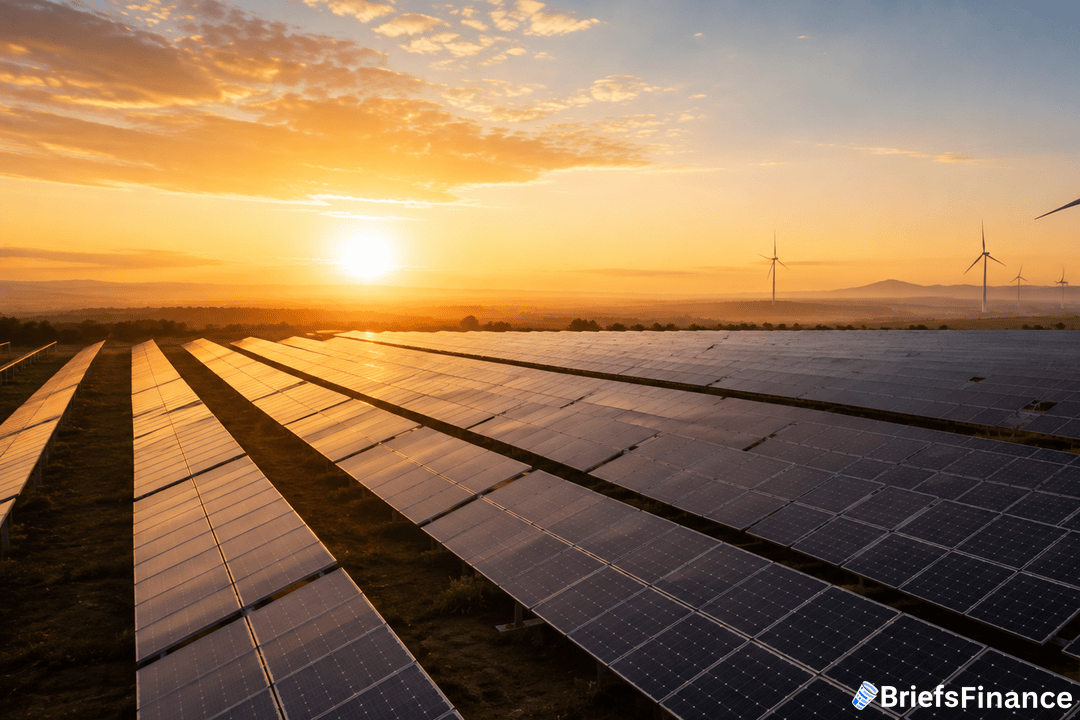
Clean energy and sustainability companies pulled in more than 15% of July's investments.

AI startups still collected the largest share of deals. Bezos Expeditions has been especially busy this year, making the most family-office investments so far in 2026 and putting money into five AI startups in June alone.

A Rocket Deal and a Battery Bet Led the Month

July's most prominent deal was in space. Blue Origin, Jeff Bezos' rocket company, raised $10 billion.

$2 billion of that total came from Bezos Expeditions, his family office.

Antora Energy, a company building thermal batteries, raised $550 million in a Series C round, a later-stage funding round, with John Doerr among the investors.

Doerr's private venture firm, Foris Ventures, has also invested in Panthalassa, Pacific Fusion, and Rondo Energy. John Arnold went in a different direction, backing Hephae Energy Technology through a $17.8 million early-stage round, called a Series A, that closed in July.

Get the free Always Be Buying eBook and learn the simple system for building wealth on any income

Hephae focuses on next-generation geothermal drilling. Arnold told CNBC in February that he likes advanced geothermal because it can unlock more of that resource and provide steady, always-on power, known as baseload power, at a price that looks close to market.

Clean Energy Is Back in Favor

This corner of investing had gone cold. A few years ago, backlash to ESG, which stands for environmental, social and governance investing, plus the Trump administration's rollback of climate policies, pushed a lot of money away.

Then the math changed. AI's electricity demand exploded, and the Iran war disrupted energy supplies, making clean energy look practical again.

Family offices mostly stuck with renewables and sustainability even while conventional investors walked away. That patience is starting to show up in the overall numbers.

Morningstar found that U.S. sustainability funds attracted $3 billion during Q2 2026.

That ended a stretch of 14 consecutive quarters in which more money left than entered those funds.

Walmart heir Lukas Walton's family office, Builders Vision, is built around environmental and sustainability investing and philanthropy. In July, it joined Lydian's $43 million Series A round.

Grok Ventures, the investment firm of Atlassian CEO Mike Cannon-Brookes, was in that round too. Lydian makes synthetic aviation fuel.

Doerr said in April that "roaring demand for electricity, shifting geopolitics, and disruptive market forces" are reshaping the world. He has argued that "only clean energy can meet the surging demand for affordable, durable, and sustainable energy."

A September Citi Private Bank survey of 346 family offices found that more than half said they would likely make sustainable investments over the next five years. A November Bank of America survey found most family-office leaders predicted heirs would keep or increase money in sustainable or impact investments.

What This Means for Your Money

Family offices are not a perfect guide. They can make mistakes, and they manage money on a much longer clock than most people do.

Their July ledgers and the surveys around them point in the same direction. Patient money still sees clean energy as a growth story, not a charity case.

For your portfolio, that helps explain the $3 billion that flowed into sustainability funds in one quarter.

A shift that big does not guarantee future returns. It does show what some of the longest-lived portfolios in the world are betting on.

When money that plans to stay invested for generations starts moving, it tends to leave a trail. That is the story July's deal ledgers told.

Download the free Always Be Buying eBook and start putting your money to work today
Disclosure

Recent News

1 2 3 83

Get Market Briefs delivered to your inbox every morning for free!

No fluff. No noise. No politics. Just finance news you can read in 5 minutes.

Blogs

September 22, 2026
Will Interest Rates Go Down in 2026? Where the Money Moves Either Way
  • The Fed is leaning toward higher rates to fight 4% inflation, while the White House and a cracking job market push the other way.
  • If rates rise, money has tended to move toward short-term Treasuries, floating-rate loans, energy, banks and dividend payers.
  • If rates fall, it has tended to move toward gold, silver and Bitcoin, real estate, small caps, the S&P 500 and speculative bets.
Read More
September 21, 2026
How the Federal Reserve Makes Money - and Why It Just Posted Its Biggest Loss Ever
  • For 109 years the Federal Reserve created money, lent it to the U.S. government and handed the interest it collected back to Washington - almost $1 trillion in the decade starting in 2011.
  • Pandemic-era lending locked the Fed into earning about 2% on trillions of dollars while it now pays banks around 4%, producing a record loss of hundreds of billions in 2026.
  • The Fed covers its losses by creating money and the government covers its lost revenue by borrowing, and both feed the inflation that eats at the dollars in your account.
Read More
September 18, 2026
Kevin Warsh Just Defied Trump: What the Fed Rate Hike Means for Your Money
  • The Fed raised rates for the first time since 2023 in a unanimous vote led by Kevin Warsh, the chairman President Trump appointed to cut them.
  • Higher rates make the $40 trillion national debt, business loan resets and mortgages more expensive, but they strengthen the dollar and pay investors holding cash.
  • The war with Iran is pushing up oil, grocery and chip prices, another hike is likely in 2026, and recession talk is about to get louder.
Read More
September 17, 2026
Why America Bailed Out the Yen: The Japan Carry Trade, the Dollar and Your Mortgage Rate
  • In July 2026 the US sent money to steady the yen because Japan is the largest foreign owner of US debt, and Washington needs Japan to keep lending.
  • For decades the Japan carry trade let Wall Street borrow yen at essentially 0% and pour it into US stocks, real estate and Treasuries, and rising Japanese rates are shutting that off.
  • A weaker yen means fewer buyers for the dollar and for US debt, which pushes Treasury rates up and drags mortgage, car loan and credit card rates up with them.
Read More
September 16, 2026
Treasury Yields Are Spiking Because Lenders Are Backing Away From U.S. Debt
  • The U.S. is paying its highest 30-year borrowing rate in about two decades because its biggest lenders, the Fed, foreign governments, and banks, are all pulling back from Treasuries.
  • Every mortgage, car loan, credit card, and business loan is priced off the 10-year Treasury yield, so when Washington pays more to borrow, so do you.
  • With about $40 trillion of debt against a $32 trillion economy, the country either outgrows its debt or slides into a doom loop, and investors need a plan for both.
Read More
September 15, 2026
Fiat Currency Runs on Trust, and the World Just Stopped Trusting the Dollar
  • Gold has overtaken US treasuries as the world's top reserve asset, and central banks are now buying less US debt and more gold.
  • The US dollar is a fiat currency, meaning it's backed by a promise rather than gold, so it loses value when fewer countries want to hold it.
  • Whether the US economy or its national debt grows faster from here decides which assets stand to benefit next.
Read More
September 14, 2026
Why RAM Prices Are Soaring - and Where the Money Is Moving
  • Memory chips - the RAM inside phones, laptops, fridges, and trucks - are in a shortage Tim Cook called a 100-year flood, and some memory prices have climbed about 90% in a single quarter.
  • Four forces hit at once: AI demand, a production shutdown in 2023, build times that push any fix to 2028 at the earliest, and a bombed helium plant in Qatar.
  • The last two supply shocks ended in aggressive Fed rate hikes and market drops of around 45% and 20%, and this time Washington is spending heavily to bring memory production home.
Read More
September 11, 2026
How Is the Economy Doing? Washington Says It's Fixed, but the Numbers Don't Agree
  • Treasury Secretary Scott Bessent says the economy is fixed because lower earners' incomes are now rising faster than top earners'.
  • The Atlanta Fed and Bank of America show different numbers, and Hilton, Marriott, and McDonald's can't agree on what they're seeing either.
  • Whichever side is right, the economy is built to make investors rich, and inflation is how it does it.
Read More
September 10, 2026
US National Debt Hits $40 Trillion: Why the Economy Hasn't Collapsed Yet
  • The US national debt crossed $40 trillion in 2026 and is growing faster than the economy. The debt to GDP ratio now sits at 125%, the highest outside the pandemic and higher than World War II.
  • On September 9, 2026, Treasury Secretary Scott Bessent rolled out an emergency plan for the government to lend money to itself. Ray Dalio now says the dollar has roughly three years before real pain.
  • Empires rarely default. They debase. Since 1971, median household income grew about 8x while houses grew 17x and the S&P 500 grew 360x, so investors got richer while workers fell behind.
Read More
September 9, 2026
Your 401k Is Fueling the AI Bubble
  • About $10 trillion of 401k money sits in a $77 trillion stock market, mostly through target date funds and S&P 500 funds. Roughly 30% of every S&P 500 dollar lands in five AI-heavy tech stocks.
  • Four bubble signals run hotter today than before the 2000 crash: top-ten concentration, tech's share of the index, the Buffett Indicator, and how much of the market index funds own.
  • You only lock in an AI bubble loss if you sell. The 2022, 2020, 2008, and 2000 crashes were all buying windows for long-term investors, and the US-China AI race means government money could keep flowing in.
Read More
1 2 3 27
Share via
Copy link












