Free NewsletterPro Login

Estée Lauder Files Lawsuit Against Walmart Over Counterfeit Products

A stylized illustration of a cylindrical cup with blue arrows and lines indicating a swirling or rotational motion inside the cup.
Published Feb 10, 2026
Share:
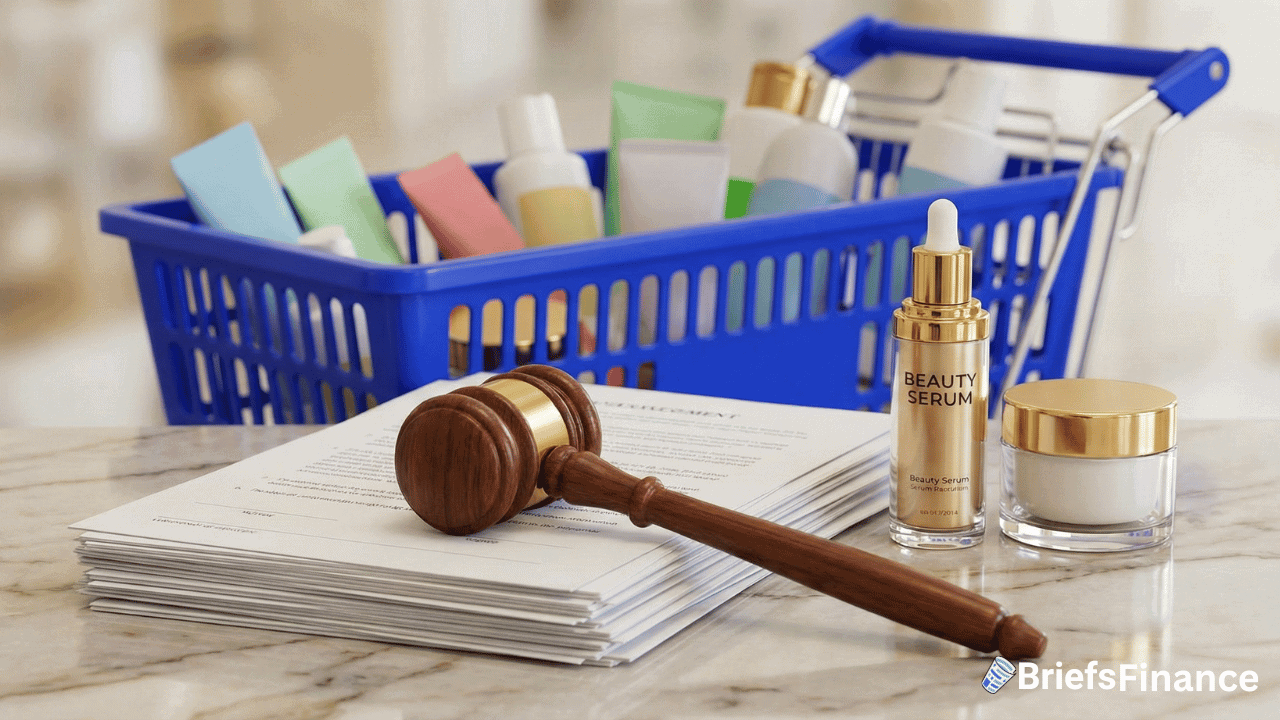
A gavel rests on documents beside beauty products, with a blue shopping basket filled with cosmetics—including Estée Lauder—highlighting concerns about counterfeit products in retail settings.
Summary:

  • Estée Lauder has sued Walmart for allegedly selling counterfeit beauty products online.
  • The lawsuit involves brands like La Mer, Clinique, and Tom Ford, claiming Walmart's actions were 'despicable.'
  • Specific products cited include Estée Lauder's Advanced Night Repair serum and Clinique's eye cream.

Allegations Against Walmart

Estée Lauder filed a lawsuit against Walmart in California federal court, claiming the retailer sold counterfeit beauty products through its online marketplace.

The lawsuit, filed on Monday, alleges that products using the trademarks of La Mer, Le Labo, Clinique, Aveda, and Tom Ford were sold as authentic but were actually fakes, according to the complaint.

Details of the Counterfeits

The complaint details various counterfeit items, including Estée Lauder's Advanced Night Repair serum, Clinique Smart Clinical Repair Wrinkle Correcting Eye Cream, and other popular beauty products.

Estée Lauder conducted tests on these products, which confirmed they were not genuine, as mentioned in the lawsuit. This legal action follows a CNBC investigation that exposed the sale of these counterfeit products on Walmart.com.

Walmart's Role in the Sales

Although the counterfeit products were sold by third-party sellers, Estée Lauder argues that Walmart played an active role in facilitating those sales. The company described Walmart's conduct as 'extreme, outrageous, fraudulent, and despicable.'

The lawsuit claims that shoppers on Walmart.com might have mistakenly believed they were purchasing items directly from Walmart instead of third-party sellers, causing confusion.

Walmart's Response and Policies

Walmart has made statements regarding its commitment to customer safety, asserting that 'trust and safety are non-negotiable' and that it enforces a 'zero-tolerance policy for prohibited or noncompliant products.' This statement emphasizes the retailer's intention to maintain a secure shopping environment for consumers. However, the lawsuit suggests that Walmart has not done enough to ensure the authenticity of the products sold on its platform.

The Broader Context of Online Marketplaces

The lawsuit against Walmart highlights concerns regarding the safety of online marketplaces, especially regarding counterfeit products.

Walmart's online marketplace has been a crucial part of its strategy to increase profits and compete with rivals like Amazon. Recently, Walmart reached a market capitalization of $1 trillion, demonstrating its significant growth in the retail sector. However, the presence of counterfeit goods on the platform could undermine customer trust and brand reputation.

Legislative Efforts to Combat Counterfeits

The Shop Safe Act is a bipartisan federal bill aimed at curbing the sale of counterfeit products on online marketplaces. The legislation proposes to incentivize platforms to better vet their sellers and the products they offer.

However, this bill has failed to pass multiple times, partly due to lobbying efforts from Walmart and other online marketplaces like Amazon and eBay. The failure to enact such legislation raises questions about the responsibilities of online platforms in preventing the sale of counterfeit goods.

What's Next for Estée Lauder and Walmart?

As the lawsuit progresses, both Estée Lauder and Walmart are likely to face scrutiny regarding their practices.

The outcome could influence how online marketplaces manage third-party sellers and the authenticity of products sold on their platforms. For now, Estée Lauder seeks accountability from Walmart for the alleged sale of counterfeit products, which could have lasting implications for both companies.

Disclosure

Get Market Briefs delivered to your inbox every morning for free!

No fluff. No noise. No politics. Just finance news you can read in 5 minutes.

Blogs

May 30, 2026
Financial Literacy Books That Actually Build Wealth
  • The best financial literacy books don't just teach budgeting, they shift how you think about money.
  • Two classics stand out: The Intelligent Investor for valuing investments, and Rich Dad Poor Dad for the owner's mindset.
  • Reading is only step one. The real wealth comes from acting on what you learn.
Read More
May 30, 2026
What Is a Roth Conversion? A Simple Guide
  • A Roth conversion moves money from a traditional retirement account into a Roth account.
  • You pay taxes on the money now, in exchange for tax-free growth and withdrawals later.
  • It can pay off if you expect higher taxes or more income in the future, but the timing and tax hit matter a lot.
Read More
May 30, 2026
Trailing Stop Loss: How to Protect Your Gains
  • A trailing stop loss is an order that automatically sells a stock if it falls a set percentage from its recent high.
  • As the stock rises, the sell point rises with it, locking in gains while capping losses.
  • It's most useful for active strategies like momentum investing, not for long-term buy-and-hold.
Read More
May 30, 2026
5 Types of Wealth: Why Money Is Only One of Them
  • Real wealth is more than a bank balance. It spans your finances, health, mind, purpose, and freedom.
  • Money is powerful, but it amplifies the life you already have rather than fixing a broken one.
  • True financial wealth means your cash flow covers your expenses, so your money works while you live.
Read More
May 30, 2026
How to Invest in Private Equity: A Beginner's Guide
  • Private equity means investing in companies that aren't listed on the stock market.
  • Traditional private equity is built for experienced, high-net-worth investors with large amounts to invest.
  • New rules have opened more accessible paths, like startup crowdfunding and real estate deals, often starting around $100.
Read More
May 30, 2026
What Is a Call Option? A Simple Guide With Examples
  • A call option gives you the right to buy a stock at a set price by a set date.
  • Investors buy calls when they expect a stock to rise, using less money than buying the shares outright.
  • The most you can lose buying a call is the premium, but time works against you, so it's an advanced tool.
Read More
May 30, 2026
EBITDA Formula: How to Calculate It Step by Step
  • EBITDA stands for Earnings Before Interest, Taxes, Depreciation, and Amortization, a measure of a company's core profit.
  • The formula adds those four items back to net income to show what the underlying business earns.
  • Investors use EBITDA to compare companies and to judge how many times earnings a stock is selling for.
Read More
May 30, 2026
What Is a Stock Option? A Plain-English Guide
  • A stock option is a contract giving you the right, but not the obligation, to buy or sell a stock at a set price by a set date.
  • There are two types: calls (the right to buy) and puts (the right to sell).
  • Options are powerful but risky, so they suit investors who already have the basics down.
Read More
May 30, 2026
Put Option: What It Is and How It Works
  • A put option gives you the right to sell a stock at a set price by a set date.
  • Investors use puts to bet a stock will fall, or as insurance to protect shares they own.
  • The most you can lose buying a put is the premium you paid, which makes it a defined-risk tool.
Read More
May 30, 2026
Operating Margin: What It Is and How to Calculate It
  • Operating margin shows how much profit a company keeps from its core business after paying its running costs.
  • The formula is operating income divided by revenue, shown as a percent.
  • A strong, steady operating margin signals a well-run business that controls its costs.
Read More
1 2 3 22
Share via
Copy link









