The Insurance Problem Slowing Down the Comeback
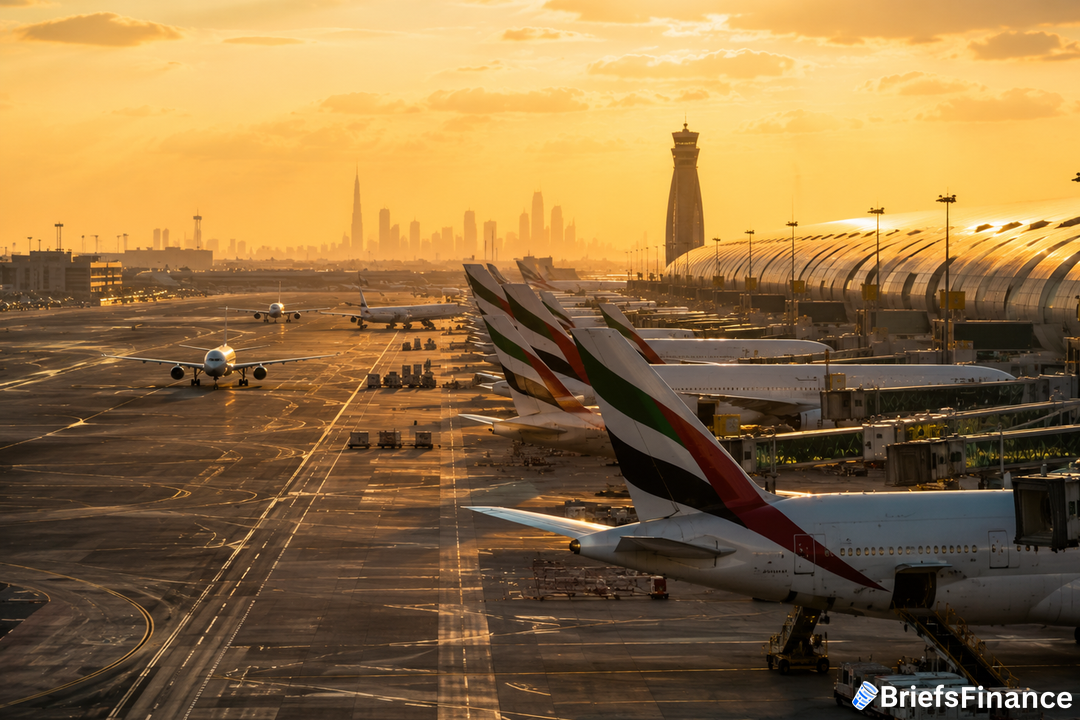
Dubai's airport is busy again. Planes are landing and taking off at nearly full capacity. But not all the airlines that used to fly there are back.
The reason has nothing to do with passenger demand. It is insurance. Paul Griffiths, the CEO of Dubai Airports, said some foreign carriers are having trouble getting coverage for flights into the region. Griffiths told reporters, "They are having difficulty getting insurance for operations."
The trouble traces back to the military fighting between the US and Iran. Insurers have grown wary due to travel warnings issued by governments about the area. That has kept several European carriers on the ground even though the airport itself is running smoothly.
Get the market news that matters in a five-minute read with Market Briefs, our free daily newsletter
Earlier this year, tensions between the US and Iran intensified, leading several Western nations to advise against non-essential trips to the Gulf area. For airlines, these advisories trigger higher risk assessments from underwriters, making war-risk insurance prohibitively expensive or outright unavailable. Without that coverage, carriers cannot legally operate into affected airspace, regardless of the airport's safety record.
Inside the Airport: Full Capacity, But Some Empty Planes
At one point, Emirates was flying near-empty planes back to its Dubai hub. Travelers were avoiding the region altogether.
Emirates, Qatar Airways, and Etihad Airways reduced their services and redesigned their global routes to match the needs of the conflict period.
Dubai International pushed back its passenger forecast months ago because the conflict reduced travel appetite across the Middle East and closed airspace, compelling carriers to find alternative paths. A majority of European carriers have halted flights to broad areas of the Middle East, such as Bahrain and Israel. Airlines are also being extra careful with their routing, steering clear of potential war zones, which limits the number of viable paths they can use when flying over the region on their way to Asia.
Despite the insurance hurdles, Dubai International remains a critical hub for global travel, serving as a major connection point between East and West. The airport's resilience is partly due to the dominance of Emirates, which is backed by the Dubai government and has the financial strength to manage war-risk insurance costs. Emirates' decision to offer war travel insurance to passengers is a strategic move to maintain customer confidence, while competitors like Qatar Airways and Etihad have been forced to scale back.
The situation underscores how geopolitical tensions can disrupt the aviation industry far beyond the immediate conflict zones. In practice, this means that even a well-run airport with strong safety protocols can suffer from external risks that are entirely outside its control, affecting everything from route planning to passenger numbers across the region.
Join Market Briefs, our free daily newsletter, for a quick daily rundown of the markets