The Hidden Fuel That Moves Your Groceries
Drivers pay close attention to gasoline prices every time they stop at a gas station. Yet the price of diesel, the fuel that powers freight trucks, matters more for household expenses.
Diesel runs the tractors that plant and harvest crops. It powers the irrigation pumps that keep fields watered. And it also powers the vehicles that transport produce from farms to supermarket shelves. Bernard Yaros, lead U.S. economist at Oxford Economics, told Fox News Digital: "We all focus on gasoline because, ultimately, we're consumers and pump prices are very visible. But what we don't think about is the price of diesel, which is the workhorse fuel for the U.S. economy and especially for key sectors."
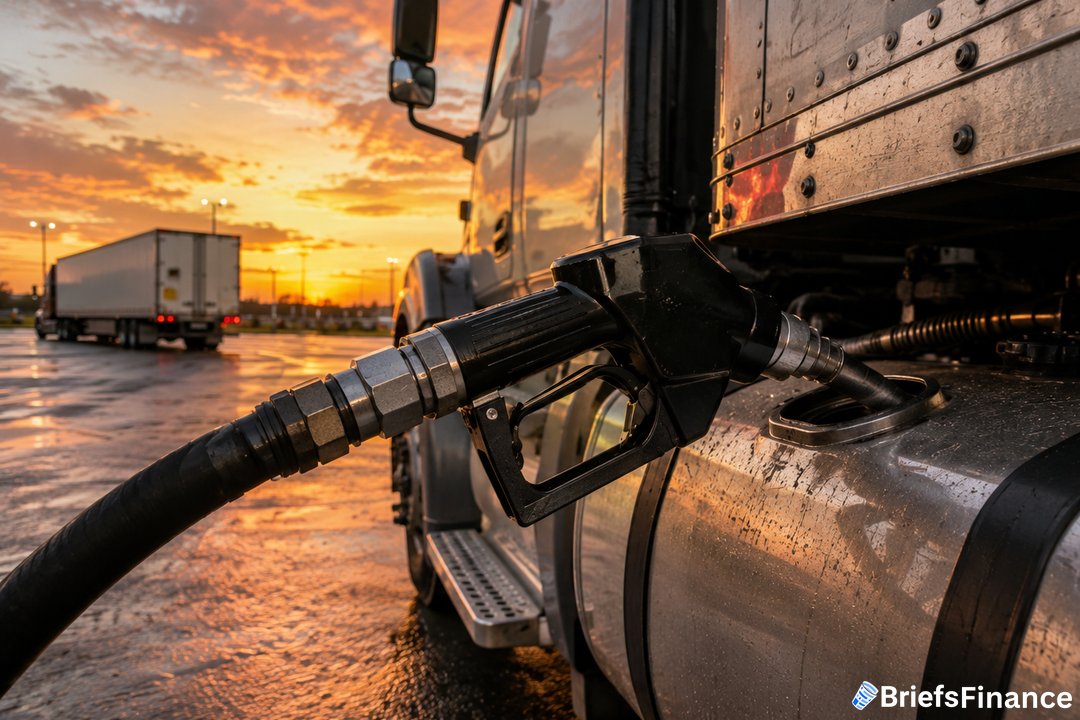
A fully loaded semitruck gets only 6 to 7 miles per gallon, according to Department of Energy data. Its tank holds about 250 gallons. At the current diesel price of $5.13, filling that tank costs more than $1,280.
Get the market news that matters in a five-minute read with Market Briefs, our free daily newsletter
A Key Waterway Gets Shut Down
Approximately 20 million barrels of crude traverse that vital channel daily. With the strait effectively closed, global fuel supplies tightened fast. An energy industry source, who was not authorized to speak publicly, told Fox News Digital: "The great majority of the price movement that you've seen in diesel markets over the last five months has been the direct result of the conflict in Iran and specifically the closure of the Strait of Hormuz."
Diesel does not just move food. It powers the bulldozers and cement mixers that build new homes. When diesel gets expensive, construction costs rise too. That means higher prices for groceries and housing at the same time.
The Lag That Keeps Prices High
Even if the conflict ends tomorrow, diesel prices may not drop quickly. The same anonymous source explained: "Refineries don't process crude instantaneously. A lot of times what you're filling up your car with today was refined a week and a half ago and was produced two months before that."
That lag means the higher costs are already baked into the supply chain for weeks ahead. Consumers will likely keep paying more for groceries, deliveries, and other goods long after the headlines about Iran fade.
The price increase touches nearly every sector that relies on transportation. Online deliveries become more expensive when diesel costs climb, as shipping companies add fuel surcharges. Manufacturing costs also rise because raw materials are moved by diesel-powered trucks and trains. This ripple effect ensures that the sting of higher diesel prices is felt well beyond the gas station.
Join Market Briefs, our free daily newsletter, for a quick daily rundown of the markets