What Nationalbanken did and why it matters
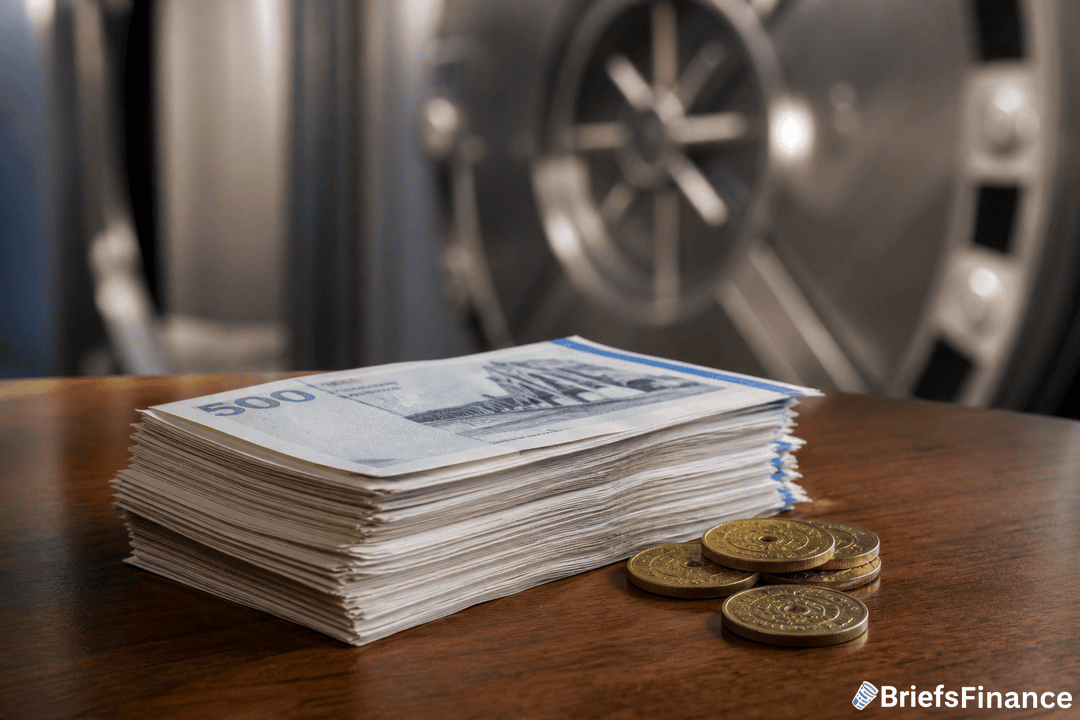
Denmark's central bank stepped into the currency market in August, buying a net 5.6 billion kroner to shore up the krone. That follows a smaller June move of 0.7 billion kroner. The bank runs a fixed exchange-rate regime against the euro and formally keeps the currency within a 2.25% band centered on 7.46038 per euro, while in practice steering a tighter range. The fresh intervention underscores that pressure on the krone has not gone away.
How the krone got under pressure
The currency has been drifting lower for years. Big public investment plans and record levels of overseas spending by Danish companies have weighed on demand for kroner. Analysts have also pointed to tensions with the US over Greenland earlier this year as another reason some investors leaned against Danish assets. The market pushed the exchange rate to 7.4761 per euro on Aug. 7, the softest level since the euro arrived in 1999.
Will rates move next, and what should you watch?
Denmark usually mirrors European Central Bank decisions, but it can move on its own if markets get too rowdy for interventions to handle. The policy rate stands at 1.85%, which is 40 basis points below the ECB. Several analysts still see no immediate hike as their base case.
Even so, Danske Bank A/S's chief economist, Las Olsen, noted that an independent 0.1 percentage-point hike "can't be ruled out" in the coming months. In July, Totalkredit's chief analyst, Sune Malthe-Thagaard, argued that any shift would probably be modest - about 0.1 to 0.15 percentage points - and he judged that the central bank might have to build up no less than 40 to 50 billion kroner of interventions before contemplating a rate change. For now, the bank appears willing to tolerate more currency slippage than it used to before stepping in.
A few minutes a day is enough to stay genuinely informed about your money. Join Market Briefs free and start tomorrow.
What does all of this mean for your money? Keep an eye on two signals that filter into everyday rates in Denmark and the broader region: how much more the central bank is willing to spend propping up the krone, and whether it blinks first with a small, independent rate bump. Those clues will tell you how the currency story might show up in your mortgage, your savings yield, and the price of imported goods.