What happened in markets
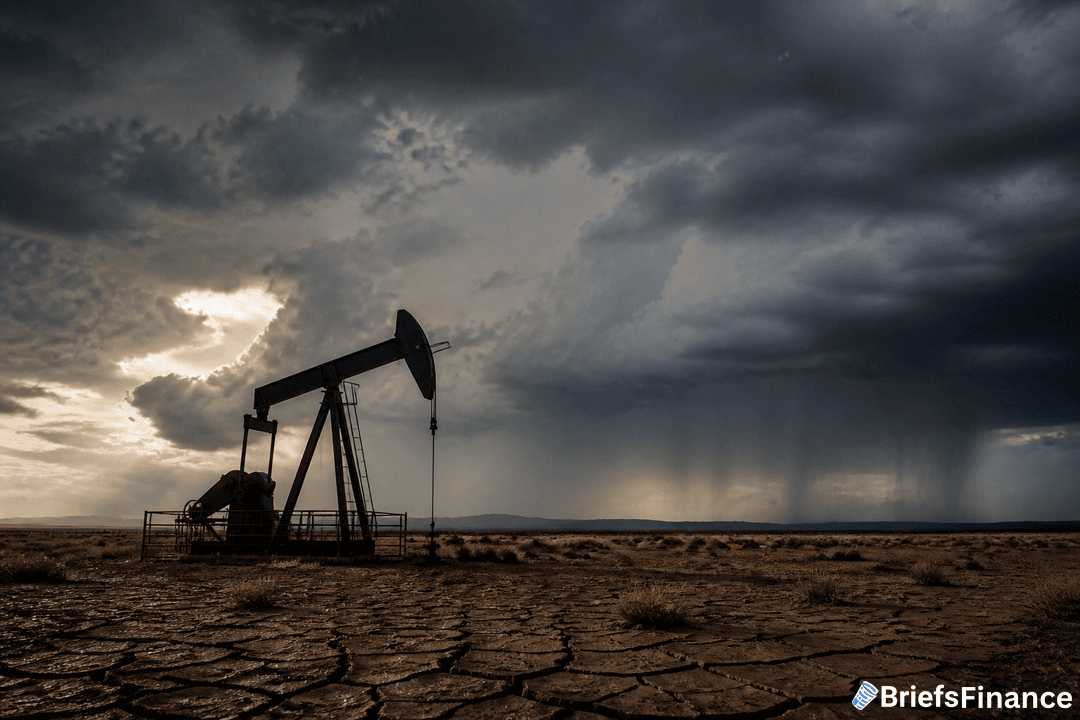
Oil took the wheel and drove the day. Brent advanced 1.6% to $96.20 per barrel as clashes between the US and Iran rekindled worries about traffic through the Strait of Hormuz. That put investors on edge and knocked risk assets.
Equities across Asia followed Wall Street lower. MSCI's Asia Pacific gauge fell 1.2%, while benchmarks in Japan and South Korea each slid 2.5%. In the US, the S&P 500 notched a third straight decline and the Nasdaq 100 lost 1.3%.
There were outliers. Dell Technologies jumped 8% in late trading after lifting its full-year sales outlook. And Nvidia is said to be deep into talks to buy AI platform Hugging Face for about $14 billion, keeping Big Tech squarely in the spotlight.
Bonds, yields and safe havens
Higher crude fed inflation fears and weighed on bonds, pushing global yields to territory last seen in 2008 as traders upped the odds of tighter policy. In New York, the 10-year US Treasury yield climbed by five basis points to 4.80%. Australian government bonds fell at the open, and New Zealand debt declined as markets largely priced in a rate hike by the RBNZ later Wednesday.
Gold, which tends to suffer when rates rise, held the prior session's drop and traded near $4,330 an ounce. Over the last three sessions, bullion shed nearly 6% and touched a two-week low. Bitcoin ticked down to roughly $77,300.
A few minutes a day is enough to stay genuinely informed about your money. Join Market Briefs free and start tomorrow.
The geopolitical trigger and policy backdrop
The US military said it had wrapped up the strikes, while Iran said it fired missiles at a US air base in Jordan. Earlier, President Donald Trump said the US strikes answered Iran's effort to lay mines in the strait and an earlier assault on a military installation in Jordan. The back-and-forth came after several weeks of relative calm, a period when the Trump administration had leaned away from military action and toward economic pressure on Tehran. Since an interim peace deal fell apart, neither side has shown much eagerness to restart talks.
The policy picture is tightening too. Federal Reserve Chair Kevin Warsh's Jackson Hole remarks last week reinforced expectations for more restraint, with markets putting the odds of a September hike near 70%. Friday's US payrolls report is the next big data point, with inflation still above the Fed's 2% goal.
Why this matters for your money
Energy's rebound is piling onto inflation pressures already linked to government outlays and the heavy borrowing behind the AI buildout. That cocktail lifts yields, which tends to compress equity valuations, particularly for growth names.
According to Homin Lee, a senior macro strategist with Lombard Odier Singapore Ltd., said, "This morning session's weak sentiment is clearly driven by the challenging combination of renewed Hormuz worries and rising global bond yields." He added, "We still think this is just part and parcel of a volatile boom phase, with higher beta markets exhibiting wilder swings." Lee remains upbeat on Asia Pacific, especially North Asia, noting "the underlying earnings picture is solid."
Rajeev De Mello, who manages global macro portfolios for Gama Asset Management, said, "Bond yields were already rising and the renewed US-Iran attacks and their impact on oil prices have made investors more concerned about bonds." He added, "At these levels, higher yields are clearly a headwind to Asian equities, especially longer duration tech stocks." Translation for your wallet: keep an eye on oil and yields - that duo is setting the tone for how far stocks can run in the near term.