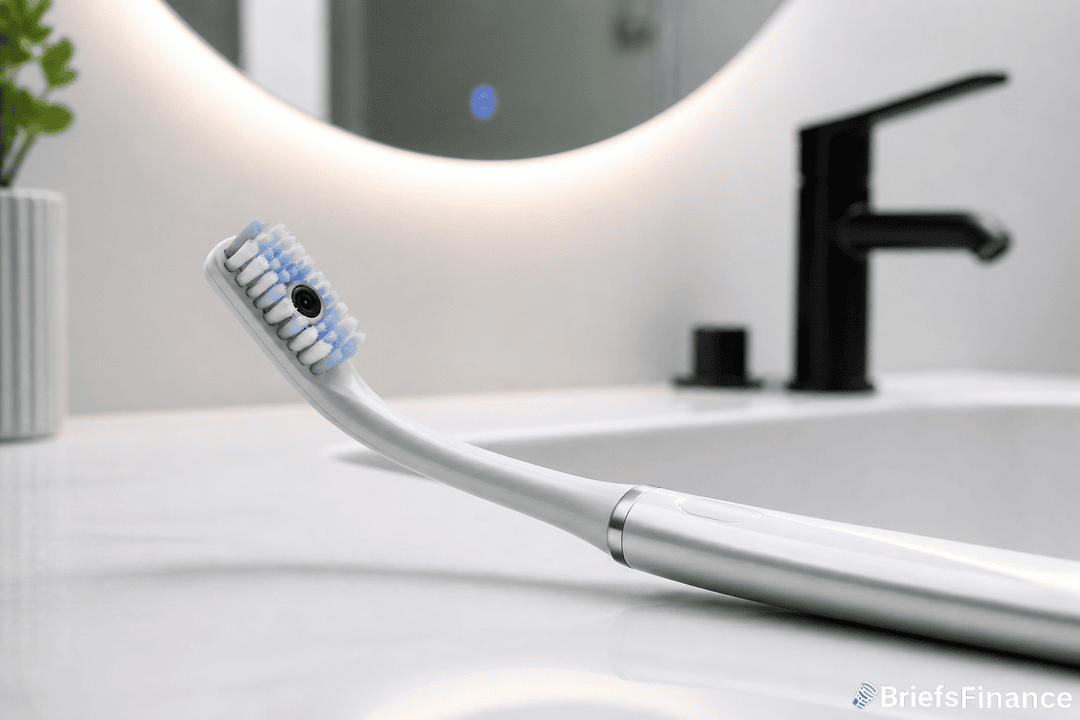
What Dyson announced
With CameraJet, Dyson is escalating smart oral care: this $499 brush pairs AI with an integrated camera to provide immediate guidance as you clean. Preorders are open now, and it comes in blue or pink. It is the latest example of cameras popping up in places they never used to be, from glasses to headphones to pendants. Whether that trend breaks into the mainstream is still an open question. In fact, a study published last year found that more than 85% of people surveyed didn't even know smart toothbrushes were a thing.
How the CameraJet cleans
The CameraJet is designed to zero in on the tight spaces between teeth where plaque gets its start and then hardens. A macro camera with 100,000 pixels shoots at 28 images per second, feeding machine learning models trained on nearly 470,000 dental images. When the system flags a spot, it aims a focused stream that delivers brief pulses of mouth rinse right where it is needed. The brush head mixes stiff and soft bristles to tackle stains and the gumline, and it oscillates to reach tricky areas. Users can choose among gentle, variable and deep clean settings, and haptic alerts buzz if you push too hard. Dyson recommends a three-minute session, and the battery is rated for seven to 10 days between charges.
Guidance and the app experience
CameraJet ties into the MyDyson app for a real-time view while you brush, step by step coaching, a visual map of where you have covered and tailored brushing insights. Dyson says the system is built to clean teeth and support gum health, and it is pitching the product at the many people who tend to skip flossing.
Strategy and what's next
Dyson is privately held and already sells a range of home and personal-care gear, including hair dryers, vacuum cleaners, fans and air purifiers. The company says it invested six years of research and development into CameraJet. "We have seen some innovation in this space, but it's largely focused on digital features and brushing specs - and no real breakthroughs in the category, which is where we come in," Senior Commercial Manager Niamh Turney said ahead of the launch. Oral care is now the company's next big category, with plans to add items like non-foaming toothpaste. The push follows some past forays that did not stick, such as washing machines, which the firm stopped making in 2005, and an electric car project it scrapped in 2019. On the flip side, Dyson's 2016 debut of the roughly $400 Supersonic hair dryer kicked off a successful personal-care run; By 2023, hair-styling devices made up 30% of the company's US sales. In April, Dyson rolled out the $100 HushJet Mini Cool portable fan; since then, stock has often been depleted.
Understanding what moved a market beats knowing that it moved. Get the free Market Briefs daily newsletter and follow the drivers.
Why it matters for your money
If you track where consumer tech is heading, CameraJet shows how far premium brands will go to blend AI, sensors and software into everyday routines. The bigger bet is that oral care can become a meaningful slice of Dyson's business alongside its existing appliances. Whether camera-toothbrushes graduate from curiosity to habit will shape how much growth Dyson squeezes from this new lane, which is the kind of shift that can ripple into the gadgets you see (and buy) next.