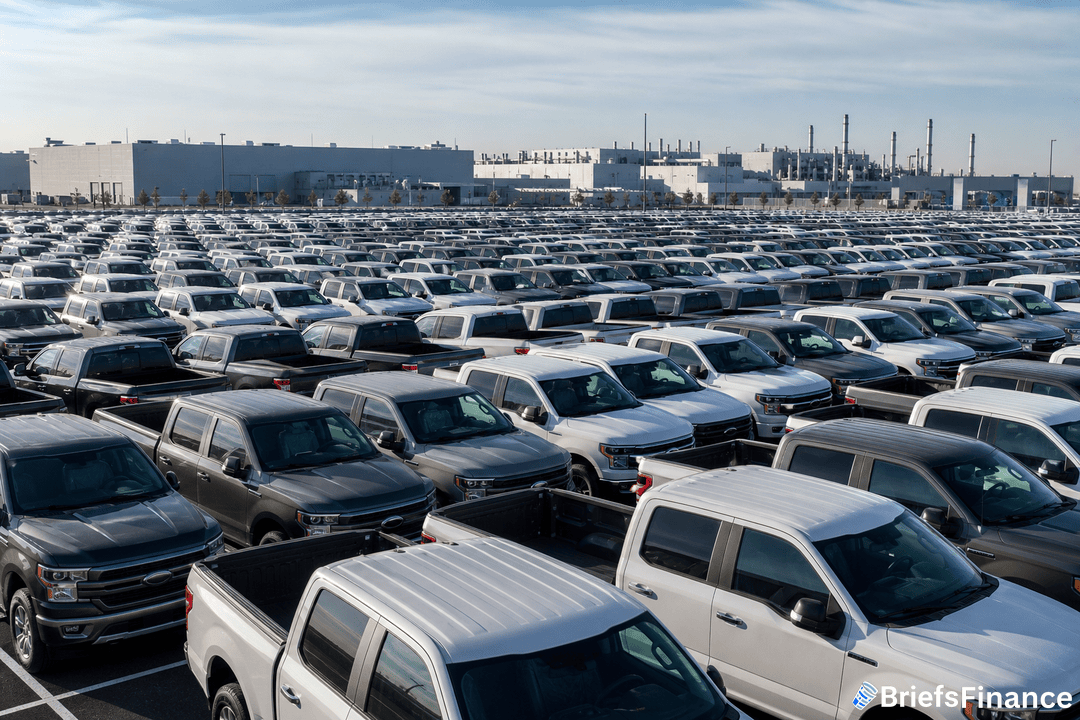
Production is bouncing back
Ford says its big, highly profitable Super Duty trucks are back in high gear. The company told CNBC that August production of Super Duty models hit a 20-year high, while the F-150 hit its strongest output in two years. The rebound follows a rough stretch tied to fires at Novelis' Oswego, New York plant that hit during September and November last year. Ford spent the past year working with Novelis to restore operations at that facility. The F-Series lineup - the F-150 alongside larger Super Duty models like the F-250, F-350 and F-450 - absorbed much of the damage because of their large aluminum bodies and components.
Sales and inventory picture
More trucks are headed to lots. "We're increasing production. Dealers will start seeing in the next 30, 60, 90 days that ramp-up in production," said Rob Kaffl, who leads U.S. sales for Ford.
"We have a healthy chain of in-transit and in-system." Ford said Super Duty output exceeded 39,000 units in August, the best since March 2006, and F-150 production reached its highest level since August 2024. The company noted that sales of Super Duty trucks drive the Ford Pro division, covering everything from the F-150 through commercial trucks and chassis cabs.
The timing matters because Ford just posted its eighth straight month of year-over-year declines in U.S. new vehicle sales in August, down 10.3% from a year earlier. F-Series sales are off 10.9% through August, including a 1.2% drop last month. Inventory is still slim by historical standards: dealers have roughly a 40 days' supply of pickups, about half of what has typically been considered healthy for that segment.
A few minutes a day is enough to stay genuinely informed about your money. Join Market Briefs free and start tomorrow.
Kaffl said, "Our gross availability of products coming in, I would say, is returning back to normalcy - the normal levels our dealers would have." Ford is targeting 50 to 60 days of truck supply, compared with the industry's historical 75 to 90 days. "We're being very intentional to make sure the production is meeting the demand," he said.
To meet pent-up demand, Ford has been running manufacturing above last year's levels to recoup lost output. The Novelis disruption is expected to cost $1.5 billion this year. Beyond trucks, sales comparisons have been pressured because two vehicles were discontinued earlier this year and by planned reductions in sales to daily rental fleets.
Labor Day also made for a tough comparison, landing in September this year versus August last year. Even so, Ford said its U.S. retail market share, excluding fleet sales, held relatively steady at 11.7% in August. The company estimates U.S. automakers overall are seeing softer demand, with new vehicle sales down about 6%.
What this means for your wallet
Truck shoppers could see more choices and shifting pricing as Super Duty and F-150 inventory builds over the next few months. If you follow Ford's fortunes, watch how quickly dealers move closer to that 50 to 60 day inventory target and whether production stays elevated as the Oswego plant's recovery holds.