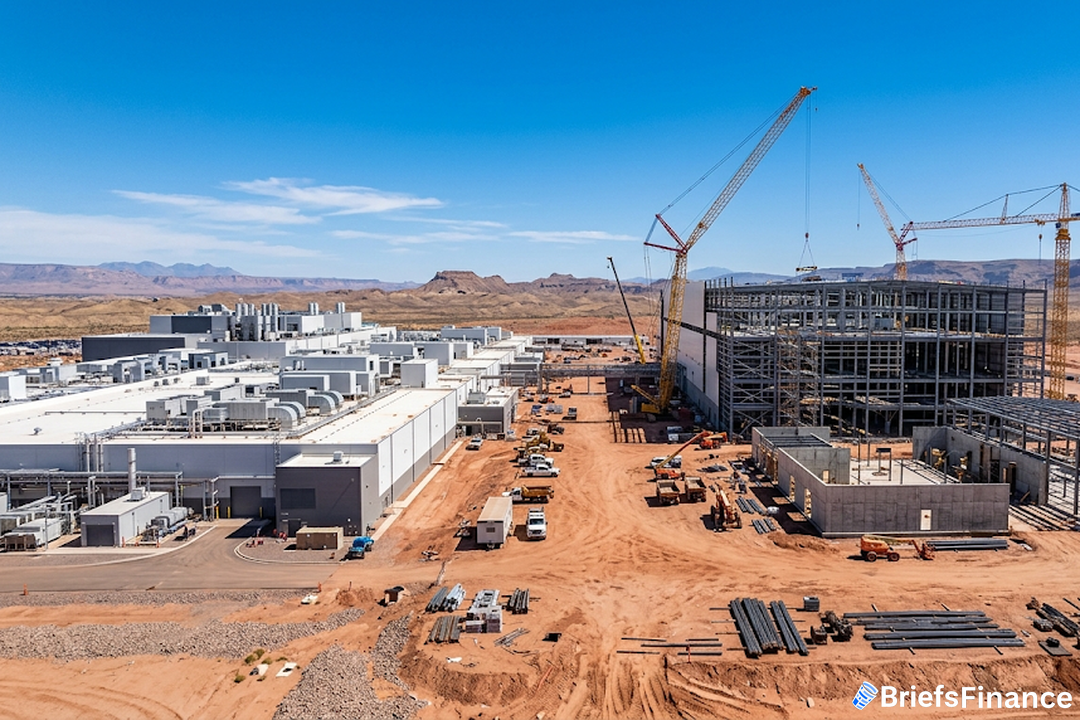
Speeding Up the Factory Work
TSMC's Arizona factory is already up and running. The first phase, which uses 4-nanometer chip technology, is in production and will expand further in the coming months. Now the company is accelerating the whole project.
Why the rush? Customers cannot get enough AI chips. Huang told CNBC that the company sees a 'multi-year demand mega trend' driven by artificial intelligence. He said the company is determined to capture as much of that growth as it can.
"As long as the megatrend is right, then we're able to continue to deliver the profitable growth to our shareholders," Huang said during his interview with CNBC's Emily Tan.
The expansion is fueled by strong U.S. government support and growing demand from American tech giants. Meanwhile, Chinese customers represent about 8% of TSMC's revenue, underscoring the importance of diversifying manufacturing locations.
Get the market news that matters in a five-minute read with Market Briefs, our free daily newsletter
The scale of the bet is enormous. TSMC now plans to spend a total of $265 billion on its Arizona operations over time, including the $100 billion it just added. For this year alone, the company expects to spend between $60 billion and $64 billion on overall capital expenditures - money spent on factories and equipment.
The Cost of Building in America
Building chips in the U.S. does not come cheap. TSMC says erecting a factory in America is four to five times more expensive than doing so in Taiwan. That is a massive gap.
What Comes Next
TSMC's next big milestone is its 2-nanometer chip technology. The company expects that to become a major source of revenue starting in the third quarter, after it already started generating some revenue in the second quarter.
Huang said, "We are aggressively optimizing our leading-edge capacities, including converting some of our 5-nanometer production lines to the advanced 3-nanometer node to serve customers."
The Arizona expansion covers more than just the main chipmaking. The new $100 billion investment includes both front-end wafer fabrication and back-end advanced packaging.
TSMC also has a joint venture with Sony focused on image sensors as part of its broader long-term growth plans.
Strategic Importance of the Arizona Site
The massive buildout in Arizona positions TSMC to serve U.S. clients like Apple, Nvidia, and AMD without the geopolitical risks tied to Taiwan. American policymakers have pushed for domestic chip production through the CHIPS Act, which provides subsidies to offset the higher construction costs. TSMC's decision to boost its total investment to $265 billion signals confidence that demand from AI will remain robust for years. The company's ability to shift some 5-nanometer capacity to 3-nanometer also highlights its flexibility in meeting urgent customer needs.
Join Market Briefs, our free daily newsletter, for a quick daily rundown of the markets