Free NewsletterPro Login
S&P 500 6,287 +0.42%
DOW 44,521 -0.18%
NASDAQ 21,103 +0.71%
S&P 500 +12.4%
Briefs Finance Fund +24.8%
JOIN THE FUND →

China's Z.AI Switches On a Vast Computing Hub Built Exclusively with Homegrown Chips

Published Jul 20, 2026
[tts_player]
Share:
Summary:
  • Z.AI completed a 1-gigawatt data center using only Chinese-made chips, a milestone in Beijing's push to reduce reliance on Nvidia.
  • China plans to invest 2 trillion yuan ($295 billion) over five years to build data centers nationwide.
  • Z.AI expects to reach $1 billion in annual recurring revenue, having already hit its 2026 sales target in July.

The Data Center That Runs Without Nvidia

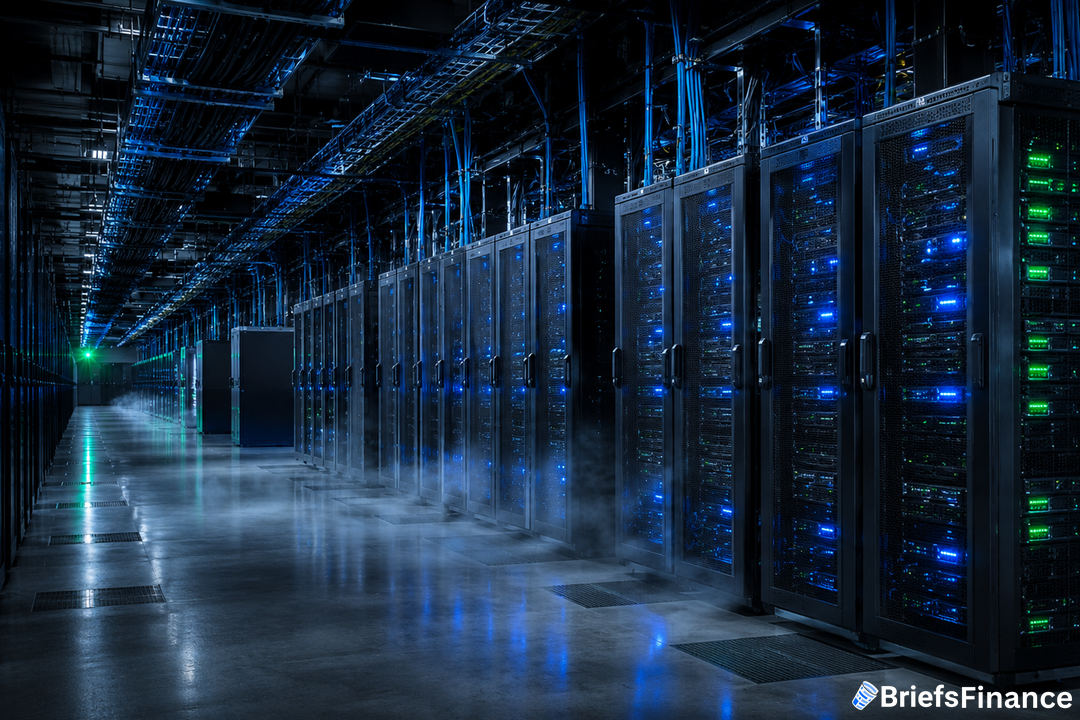
Z.AI - the company formerly known as Zhipu - finished building a data center that uses 1 gigawatt of power, enough to light up about 750,000 homes at once. Every computer chip in the building was made in China.

That matters because Beijing has been working to replace restricted Nvidia silicon. Z.AI's new center is a big step in those efforts.

The push for domestic chips comes as the U.S. tightens export controls on advanced semiconductors, forcing Chinese firms to accelerate their own chip development. Inside the facility, the company houses several major processing hubs, each built from more than ten thousand individual chips. Those clusters are designed to train the company's GLM family of AI models. The project also helps address a broader problem: Chinese AI labs have been short on computing power.

Get the market news that matters in a five-minute read with Market Briefs, our free daily newsletter

The activation of this data center comes amid escalating U.S. restrictions on advanced chip exports to China, which have pushed Beijing to prioritize self‑sufficiency in semiconductors. Chinese AI labs historically relied heavily on Nvidia's GPUs, but with limited access to the latest models, firms like Z.AI are turning to domestic alternatives such as Huawei's Ascend chips. Although domestic accelerators trail behind in performance, the massive size of Z.AI's computational groups - each comprising over ten thousand processors - underscores its resolve to develop extensive AI infrastructure with locally sourced technology.

Why China Is Betting Big on Homegrown Chips

Huawei Technologies Co. leads the design of domestic AI accelerators, competing with local firms including Alibaba Group Holding Ltd. and Cambricon Technologies Corp. to approach Nvidia's performance level. Currently, cloud service providers including Alibaba and China Telecom Corp. are recognized as the largest constructors of computing infrastructure. Z.AI's main rival is Beijing‑based Moonshot, which stunned the world on Friday by unveiling its Kimi K3 model that can compete with top‑tier models from OpenAI and Anthropic PBC. On Sunday, Moonshot temporarily halted new subscriptions, explaining in a social media post that the move was intended to "prioritize compute for current members."

The broader landscape shows Chinese AI firms racing to secure domestic chip supply as U.S. sanctions tighten. With Z.AI's new facility, the company positions itself as a leading enterprise AI provider, while the government's 2 trillion yuan investment signals long-term commitment to closing the performance gap with Nvidia's technology.

What It Means

Zhipu secured billions of dollars through an initial public offering in Hong Kong followed by an additional share sale.

The completion of this data center is a key achievement for Z.AI as it aims to stand out as an enterprise AI provider, often compared to Anthropic.

Join Market Briefs, our free daily newsletter, for a quick daily rundown of the markets
Disclosure

Recent News

1 2 3 39

Get Market Briefs delivered to your inbox every morning for free!

No fluff. No noise. No politics. Just finance news you can read in 5 minutes.

Blogs

June 29, 2026
Portfolio Diversification: Why Putting All Your Eggs in One Basket Destroys Wealth
  • Real diversification means spreading investments across all 11 economic sectors plus bonds, alternatives, and cash so no single bet can sink the portfolio.
  • Different sectors perform at different times, so a diversified portfolio captures upswings while smoothing the brutal drawdowns that wipe out concentrated bets.
  • Total market index funds offer the simplest path to diversification, and annual rebalancing is what keeps the structure working over time.
Read More
June 29, 2026
Non Taxable Income: What It Is and Why It Matters
  • Non taxable income is money you receive that you don't owe income tax on.
  • The tax code treats workers, investors, and business owners very differently, and investors often come out ahead.
  • Learning how income is taxed is a quiet superpower for keeping more of what you earn.
Read More
June 29, 2026
Semiconductor Stocks: A Simple Guide for Investors
  • Semiconductor stocks are companies that design and make computer chips, the brains inside nearly every modern device.
  • The AI boom has turned chips into one of the market's most important and most watched groups.
  • They offer big growth potential, but come with high valuations and a notoriously cyclical history.
Read More
June 25, 2026
How Stocks Work: A Simple Guide for Beginners
  • A stock is a slice of ownership in a company - buy one, and you own a piece of the business.
  • You make money two ways: the share price rising over time, and dividends paid to shareholders.
  • The simplest path for most beginners is buying into the whole market through a low-cost index fund.
Read More
June 25, 2026
Stop Loss vs Stop Limit: What's the Difference?
  • A stop loss order sells your stock once it hits a trigger price, prioritizing getting you out.
  • A stop limit order only sells within a price range you set, prioritizing price over a guaranteed exit.
  • The trade-off: a stop loss almost always executes; a stop limit might not if the price moves too fast.
Read More
June 25, 2026
Energy Stocks: A Simple Guide for Investors
  • Energy stocks are companies that produce and supply the power the world runs on, from oil and gas to newer sources.
  • They make up one of the 11 sectors of the market and tend to move with energy prices and big-picture shifts.
  • Like any sector, the key is diversification and understanding the forces driving demand.
Read More
June 18, 2026
What Is a Stop Loss Order? A Simple Guide
  • A stop loss order automatically sells a stock once it falls to a price you set.
  • It's a tool to cap losses or lock in gains without watching the market all day.
  • It works best for active strategies, and can backfire if used carelessly on long-term holdings.
Read More
June 18, 2026
Best S&P 500 Index Fund: How to Choose One
  • The best S&P 500 index fund for most investors is simply the cheapest, most established one that tracks the index well.
  • Funds like VOO, IVV, and SPY all hold the same 500 companies, so the biggest difference is the fee.
  • Pick one, automate your buys, and let time do the heavy lifting.
Read More
June 17, 2026
What Are Penny Stocks? Risks and Rewards Explained
  • Penny stocks are very low-priced shares of very small companies, often trading for just a few dollars or less.
  • They promise huge gains but carry huge risks: low liquidity, high failure rates, and wild price swings.
  • Most investors are better served by quality companies and funds than by chasing cheap shares.
Read More
June 17, 2026
Best Stocks for Beginners With Little Money
  • The best stocks for beginners with little money usually aren't individual stocks at all - they're low-cost index funds.
  • You can start with $100 or less and use small, regular investments to build wealth over time.
  • Focus on diversification and consistency, not on picking the next big winner.
Read More
1 2 3 24
Share via
Copy link











