Free NewsletterPro Login

Jensen Huang Calls Marvell The Next $1 Trillion Stock, Shares Surge 25%

Published Jun 2, 2026
Share:
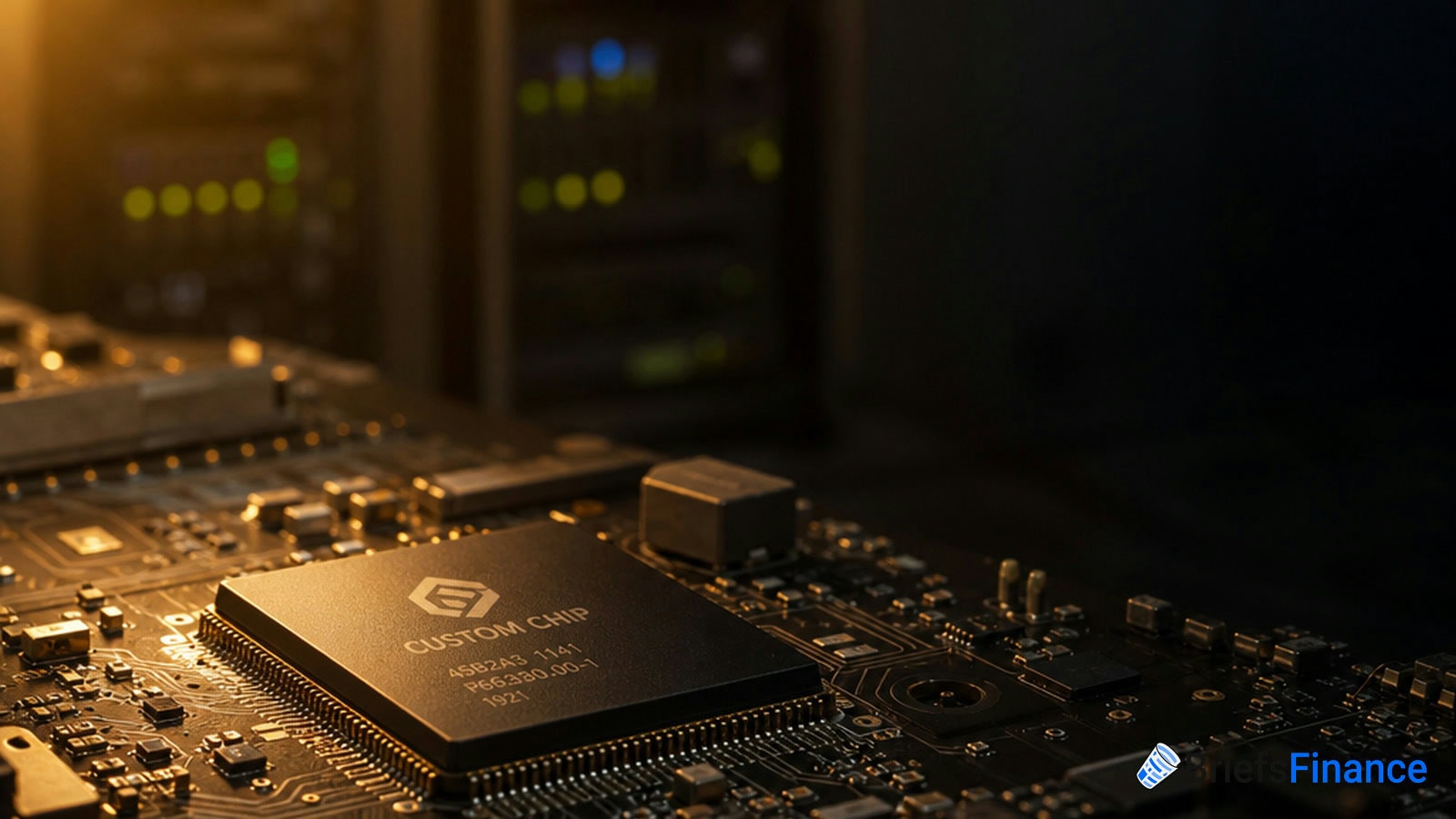
Close-up of a custom chip on a circuit board with blurred server racks in the background.
Summary:
  • Jensen Huang publicly called Marvell the next $1 trillion company at Computex in Taipei, sending shares up 25% to $274.58 in a single session.
  • Nvidia holds a $2 billion stake in Marvell through a partnership deal signed three months before Huang made the prediction.
  • Marvell's full-year gain now stands at 222% and its market cap sits at $239 billion, meaning it would need to roughly 5x to hit the $1 trillion mark.

Nvidia CEO Jensen Huang just called Marvell the next $1 trillion company - a more than 5x move from where the stock sits today, and Nvidia already owns a $2 billion piece of it.

The market took the call seriously, sending Marvell 25% higher in a single day.

Nvidia Has Skin In The Game

Huang made the prediction Tuesday at Computex in Taipei, where he stood on stage next to Marvell CEO Matt Murphy.

His pitch: Marvell's value will climb fast now that "useful AI has arrived."

Shares ran 25% higher to $274.58 - the biggest single-day pop for the stock since May 2023.

That move pushed Marvell's full-year gain to 222% and the company's market cap to $239 billion.

Marvell makes custom chips and networking gear for the cloud giants - the kind of silicon that moves AI data around inside data centers.

Custom silicon means a cloud giant like Amazon hires a chip company to design chips made just for its servers - cheaper and faster than buying off the shelf.

It's not Nvidia's GPUs, but it sits next to them in every AI server rack.

The detail Huang skipped: three months back, Nvidia put $2 billion into Marvell as part of a wider partnership.

That deal locked Marvell into the Nvidia ecosystem just as every cloud giant raced to build out AI capacity.

So the world's most valuable company is publicly calling a 5x move for a company it already owns a slice of.

We unpack the AI infrastructure plays actually worth watching in Market Briefs - delivered every morning, plus a free 45-minute investing masterclass when you sign up.

The Whole Chip Stack Is Lighting Up

Marvell isn't the only chip name having a week - the AI infrastructure trade is widening out fast.

  • SK Hynix is doubling its memory output to chase a shortage.
  • STMicro almost 2x'd its 2026 data center sales guide and floated another double on top of that for 2027.
  • Arm pulled forward its $15 billion sales target on the back of AI demand.

The money behind all of it traces back to the same place: Amazon, Alphabet, and Microsoft have pledged hundreds of billions of dollars to AI data centers.

That spending flows through every layer of the chip stack - GPUs, memory, networking, custom silicon - and Marvell sits in the networking layer.

Nvidia itself remains the cleanest read on this whole trade, with its stock up over 1,400% in roughly two years and the company now worth $5.5 trillion.

What To Watch

Fewer than 20 companies on the planet are currently worth more than $1 trillion, and almost all of them are tech.

Marvell would need to roughly 5x from here to crack the list. Nvidia did 14x in two years, so the math isn't crazy - but that's the bar.

Huang just told the market who he thinks gets there next.

Want to know which chip names Wall Street is leaning into? Join 350,000+ investors reading Market Briefs - you also get a free investing course thrown in as a bonus.

Disclosure

Get Market Briefs delivered to your inbox every morning for free!

No fluff. No noise. No politics. Just finance news you can read in 5 minutes.

Blogs

May 30, 2026
Financial Literacy Books That Actually Build Wealth
  • The best financial literacy books don't just teach budgeting, they shift how you think about money.
  • Two classics stand out: The Intelligent Investor for valuing investments, and Rich Dad Poor Dad for the owner's mindset.
  • Reading is only step one. The real wealth comes from acting on what you learn.
Read More
May 30, 2026
What Is a Roth Conversion? A Simple Guide
  • A Roth conversion moves money from a traditional retirement account into a Roth account.
  • You pay taxes on the money now, in exchange for tax-free growth and withdrawals later.
  • It can pay off if you expect higher taxes or more income in the future, but the timing and tax hit matter a lot.
Read More
May 30, 2026
Trailing Stop Loss: How to Protect Your Gains
  • A trailing stop loss is an order that automatically sells a stock if it falls a set percentage from its recent high.
  • As the stock rises, the sell point rises with it, locking in gains while capping losses.
  • It's most useful for active strategies like momentum investing, not for long-term buy-and-hold.
Read More
May 30, 2026
5 Types of Wealth: Why Money Is Only One of Them
  • Real wealth is more than a bank balance. It spans your finances, health, mind, purpose, and freedom.
  • Money is powerful, but it amplifies the life you already have rather than fixing a broken one.
  • True financial wealth means your cash flow covers your expenses, so your money works while you live.
Read More
May 30, 2026
How to Invest in Private Equity: A Beginner's Guide
  • Private equity means investing in companies that aren't listed on the stock market.
  • Traditional private equity is built for experienced, high-net-worth investors with large amounts to invest.
  • New rules have opened more accessible paths, like startup crowdfunding and real estate deals, often starting around $100.
Read More
May 30, 2026
What Is a Call Option? A Simple Guide With Examples
  • A call option gives you the right to buy a stock at a set price by a set date.
  • Investors buy calls when they expect a stock to rise, using less money than buying the shares outright.
  • The most you can lose buying a call is the premium, but time works against you, so it's an advanced tool.
Read More
May 30, 2026
EBITDA Formula: How to Calculate It Step by Step
  • EBITDA stands for Earnings Before Interest, Taxes, Depreciation, and Amortization, a measure of a company's core profit.
  • The formula adds those four items back to net income to show what the underlying business earns.
  • Investors use EBITDA to compare companies and to judge how many times earnings a stock is selling for.
Read More
May 30, 2026
What Is a Stock Option? A Plain-English Guide
  • A stock option is a contract giving you the right, but not the obligation, to buy or sell a stock at a set price by a set date.
  • There are two types: calls (the right to buy) and puts (the right to sell).
  • Options are powerful but risky, so they suit investors who already have the basics down.
Read More
May 30, 2026
Put Option: What It Is and How It Works
  • A put option gives you the right to sell a stock at a set price by a set date.
  • Investors use puts to bet a stock will fall, or as insurance to protect shares they own.
  • The most you can lose buying a put is the premium you paid, which makes it a defined-risk tool.
Read More
May 30, 2026
Operating Margin: What It Is and How to Calculate It
  • Operating margin shows how much profit a company keeps from its core business after paying its running costs.
  • The formula is operating income divided by revenue, shown as a percent.
  • A strong, steady operating margin signals a well-run business that controls its costs.
Read More
1 2 3 22
Share via
Copy link











