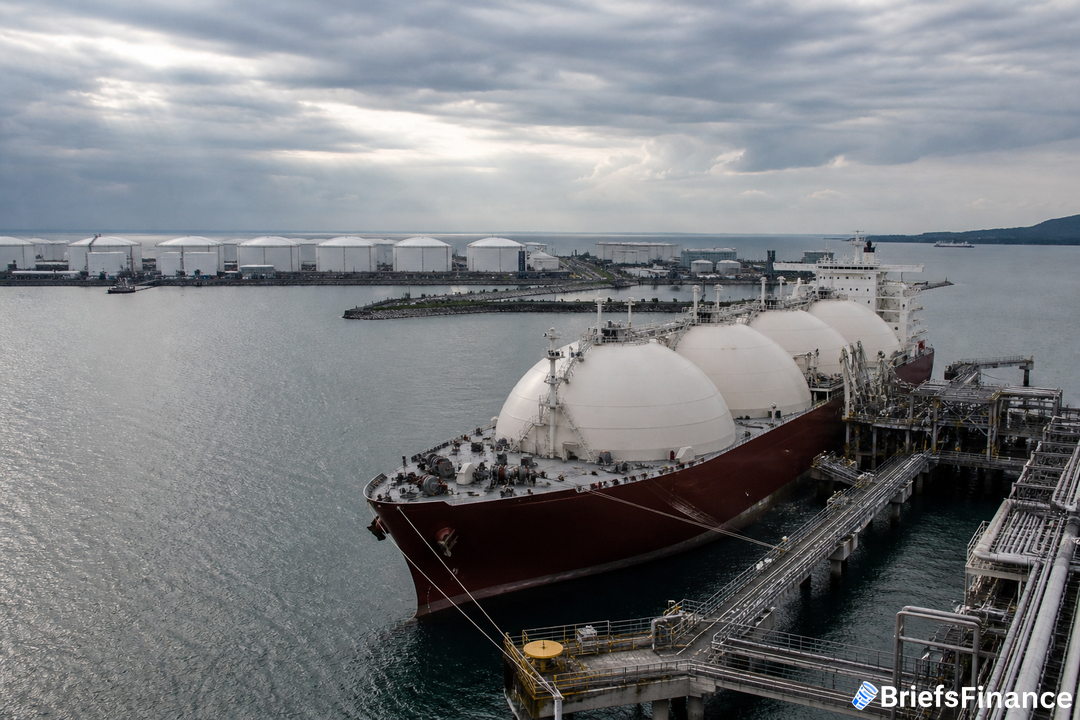
More ships steer toward Europe
Ship-tracking data from Bloomberg and Kpler show at least two US LNG vessels in the Mediterranean changed course away from Egypt. The Al Qassar reached Port Said earlier this week before turning west, and Kpler estimates it is now headed for Europe. The Amaryllis Knutsen made a sharp U-turn near Egypt on Tuesday.
Since last week, two additional US LNG carriers swung north toward Europe rather than continuing to Asia. Those diversions add supply to a tight European market even as global LNG remains constrained by ongoing disruptions in the Middle East, helping take some heat off prices after last month's near four year peak in European benchmark gas futures.
What is shifting the flows
Some big Asian buyers have stepped back, leaving spot LNG in Asia cheaper than in Europe. That price gap, together with less head-to-head bidding between Asia and Europe, is pulling more cargoes west and pressuring European prices.
Kpler's Ronald Pinto said LNG flows from Qatar have risen even with ongoing navigational hazards in the Strait of Hormuz. He also noted that the latest surges in prices have pushed up the cost of spot LNG for Egypt, and that planned capacity additions will boost the volume of gas moving from Israel to Egypt.
When global energy flows shift, staying informed matters, so sign up for the free Market Briefs newsletter to get clear daily context
Egypt's policy response and a counter-route to Asia
Earlier this month, Egypt's cabinet approved a power rationing plan for the current financial year to handle spillover effects of the Iran war. The country already reduced some electricity use this year as higher fuel costs tied to the conflict squeezed supplies.
Not every ship is Europe bound. Kpler and Bloomberg data show the Greenergy Wind turned south in the mid-Atlantic on Tuesday and is signaling the Cape of Good Hope, a standard route toward Asia. Traders say a sustained drop in spot prices could coax more buying from South and Southeast Asia, especially with several big importers still on the sidelines.
Why it matters for your portfolio
In plain English: more LNG is showing up in Europe, and that is easing price pressure for now, even as Middle East risks keep global supply tight. That mix argues for choppy gas pricing, with the balance shifting as arbitrage between Asia and Europe opens and closes.
The bottom line: flows have softened European prices in the near term, but with disruptions still in play and demand in Asia potentially snapping back if spot prices fall, volatility remains a core risk across European utilities, LNG shippers, and gas-heavy industries.
Markets and trade connections touch many parts of life, so get concise background each morning with our free Market Briefs