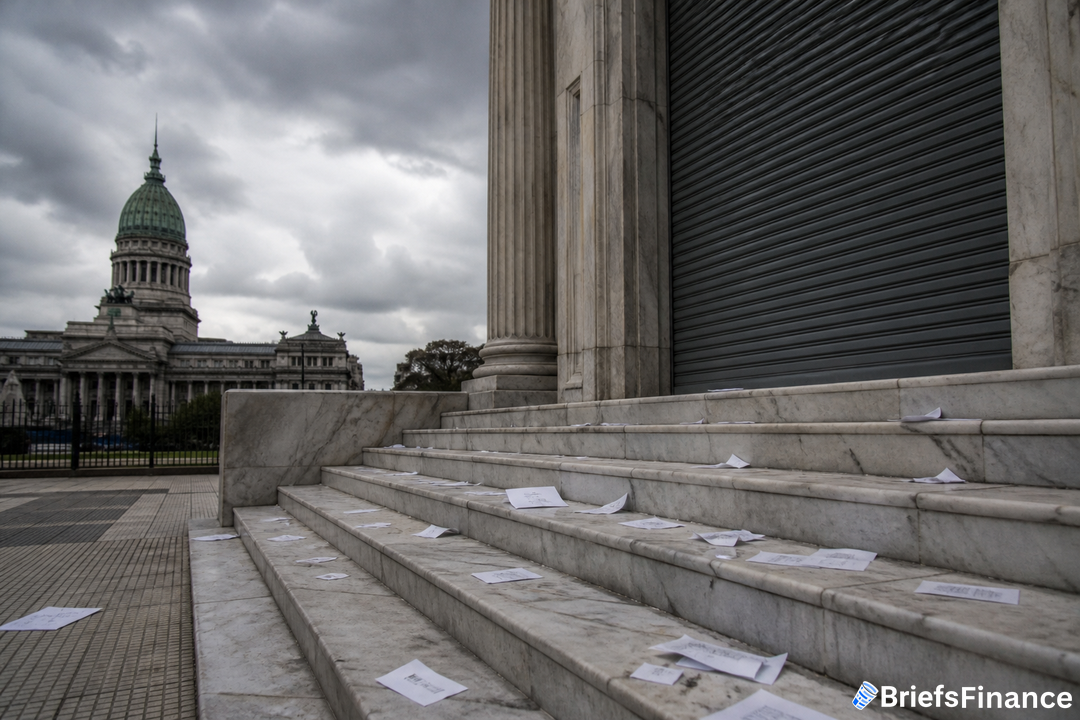
What happened this week
Paraguay's Senate voted unanimously Friday to expel President Santiago Peña, following a unanimous impeachment vote in the lower chamber on Thursday. He was then put under house arrest.
Prosecutors announced Thursday they had opened a criminal probe into Peña's alleged role in the failure of Ueno Bank SA. He previously held a stake in the bank's parent, Grupo Vázquez, before selling last year. Regulators had taken over Ueno early Tuesday.
By choosing to remove him instead of taking Peña up on his resignation, legislators prevented him from getting the lifetime, non-voting Senate seat reserved for former presidents, which would otherwise confer broad immunity from prosecution. Pedro Alliana was sworn in as president Friday and will complete the term through August 2028, after avoiding impeachment on Thursday.
How the bank meltdown fed the crisis
The takeover of Ueno froze access to deposits for millions of Paraguayans, including pensioners, triggering protests in a country where roughly one in three people had accounts at the lender. The central bank has begun repaying savers from the deposit insurance fund.
Public scrutiny intensified after data showed that when Peña took office in 2023 there were no government deposits at Ueno, but by earlier this year the total had climbed past $800 million. Peña later selected a former Ueno executive to serve as the central bank's chief, prompting criticism about cozy ties and lax supervision as the bank's rapid expansion faced little pushback. This week, central bank chief Carlos Carvallo stepped down. Also this week, authorities arrested Miguel Vázquez, who owned Ueno Bank.
Unexpected events remind investors that timely tools can help preserve and grow capital. We're hosting our first ever investor livestream on 11/17 to show you how to use ChatGPT and Claude to invest like a pro, hosted by Briefs Finance CEO Jaspreet Singh. Save your seat.
The politics behind the downfall
The Ueno saga has become Paraguay's most severe political crisis since Congress ousted President Fernando Lugo in 2012 after a deadly clash between police and landless peasants. Former President Horacio Cartes - in office from 2013 to 2018 and now the chair of the ruling Colorado Party - played the decisive role in elevating Peña. While serving as Cartes's finance minister, Peña entered the party, lost the 2017 primary, then secured the nomination five years later and won the presidency in 2023.
The partnership frayed in recent months, splintering the party. On Thursday, Cartes publicly urged lawmakers to remove Peña, setting off the swift process that ended with Friday's Senate vote. Peña, a close ally of US President Donald Trump, made frequent overseas trips to court investors, and Trump called him a "young, handsome guy" at a February summit in Washington. Before the vote, the US Embassy voiced solidarity with Paraguay's people and urged authorities to safeguard peace and democratic institutions without naming Peña.
Why it matters for investors
In plain English: a bank seizure, a criminal investigation, and a handover of power are hitting at once. Markets will be watching how fast deposit repayments progress, whether the probe widens, and how President Alliana manages governance through August 2028 as the Colorado Party navigates internal rifts. The bottom line for your portfolio is political risk now sits alongside banking risk in Paraguay's story, and both can change the pricing on local assets and counterparties tied to this market.
Learning how to use new tools calmly can strengthen long term decision making. On 11/17, our CEO Jaspreet Singh goes live for our first ever investor livestream on how to use ChatGPT and Claude to invest like a pro. Register to join him.