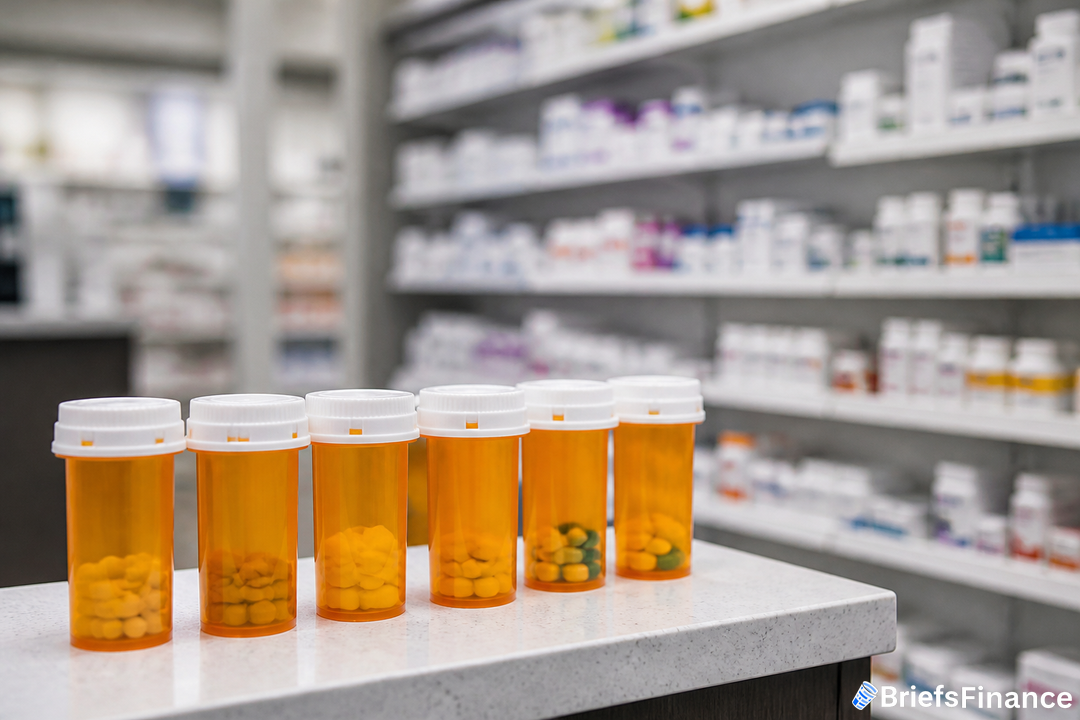
Earnings heat up as demand stays red hot
Three of the biggest US drugmakers reported their strongest quarters ever on Thursday, then bumped up their full-year targets. Eli Lilly, Merck and Bristol Myers pointed to sharp demand for fresh launches alongside steady sellers, including Lilly's weight-loss drug Zepbound.
Investors piled in. In New York, Lilly closed up 6.6%, Merck climbed 3.8%, and Bristol Myers added 1.4%. The sector's strength has turned pharma into a shelter for those looking to avoid the whipsaws hitting tech.
After the bell, Gilead Sciences topped sales and earnings expectations, with product revenue up 13% year over year on robust HIV treatment and prevention. Gilead said HIV performance was "primarily driven by higher average realized price, higher demand in HIV prevention and favorable inventory dynamics," and it lifted its sales outlook. The stock advanced 2.8% in late trading.
Lilly's finance chief told analysts that expanding volumes should more than offset any price pressure. And on pricing, Evercore ISI's Umer Raffat wrote that Zepbound is "holding in strong," pegging it at about 580 dollars per prescription, while noting Medicare fills are running at less than half that price. He said his takeaway from talks with the company was that "they do not expect it to drop off anytime soon."
Washington's squeeze meets Wall Street's rally
Drug costs are front of mind for stretched voters just days before a US midterm election framed as a referendum on President Donald Trump's second term. In response, the administration cut so-called Most-Favored-Nation deals with nearly all major pharma manufacturers to nudge US prices closer to those in other rich countries.
Trump also staged Oval Office signings where chief executives pledged to restrain costs to avoid threatened tariffs. Beyond the photo ops, the administration stood up TrumpRx, a tool to help Americans find lower cash prices for some drugs, and designed new Medicare and Medicaid efforts aimed at tamping down spending.
Smart investors look for any edge, including new tools that sharpen decision making. We're hosting our first ever investor livestream on 11/17 to show you how to use ChatGPT and Claude to invest like a pro, hosted by Briefs Finance CEO Jaspreet Singh. Save your seat.
White House spokesperson Allison Schuster cited savings from TrumpRx, Medicare's GLP-1 coverage program, and universal state participation in a Medicaid discount effort as wins. "President Trump did what no President before him could in securing Most-Favored-Nation drug pricing deals to offer Americans substantial savings that are driving the biggest drop in drug prices in decades," Schuster wrote in a statement.
Although Medicare typically cannot cover weight-loss drugs, the administration set up a route contingent on Lilly and Novo Nordisk A/S agreeing to price reductions. Lilly US chief Ilya Yuffa said its obesity medicines should reach more Medicare and Medicaid beneficiaries next year at lower prices, while prices in commercial plans would stay "overall stable."
Why the numbers still work - and where the pressure really lands
Most of the concessions hammered out by the administration do not touch the private insurance market, where pharma books a large share of its revenue. Signing on at the White House also helped companies avoid deeper, broader reductions in Medicare that could have dented profits more meaningfully.
Before that, former President Joe Biden had pushed to use Medicare's clout to lower prices on older, non-generic medicines, and Trump's bargaining came after those moves. The 2022 Inflation Reduction Act brought Medicare price cuts on select medicines for the first time.
By one gauge, prescription prices are easing. The Consumer Price Index reading for retail drugs - what patients and insurers pay at the pharmacy counter - has been slipping. But CPI excludes rebates and misses medicines administered in hospitals or clinics, which include many of the priciest oncology and immune therapies. That gap helps explain why polls from KFF find health costs high on Americans' worry list and drug prices keeping some from filling scripts, even as the CPI trend points down.
The bottom line for investors
Policy changes may take time to flow through income statements, but demand is already showing up in revenue and guidance. That split - Washington promising relief while Big Pharma posts records - has supported shares and reinforced the sector's haven status relative to volatile tech. For portfolios, it means earnings resilience today with policy risk that is more delayed than immediate.
Learning how thoughtful technologies can clarify opportunities helps investors act with confidence. On 11/17, our CEO Jaspreet Singh goes live for our first ever investor livestream on how to use ChatGPT and Claude to invest like a pro. Register to join him.