Free NewsletterPro Login

Kidults Are Rewriting the U.S. Toy Playbook

Published Oct 23, 2026
Share:
Summary:
  • A Harris Poll found 65% of U.S. adults spent at least $100 on playful goods or activities for themselves from June 2025 through June 2026, and 13% spent $500 or more.
  • Circana says the U.S. toy market reached $45.6 billion in 2025, with adult-only households making up 55% of toy sales in the first half of 2026.
  • PwC's Ali Furman: "Adults are now the single largest contributor to toy industry growth," and "Play doesn't really have an age limit anymore."

A new kind of shopper is showing up

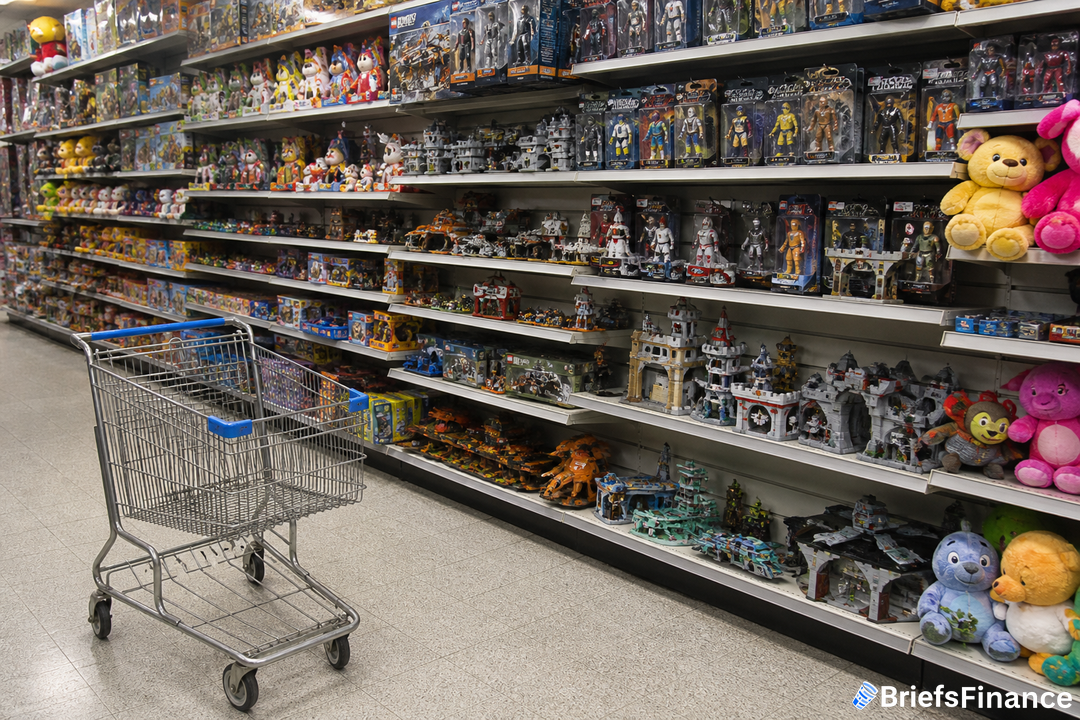
Type "Lego collection" into TikTok and you will find walls of elaborate builds - and the builders are often adults. The industry calls them kidults, a group that buys products or does activities once thought to be for kids.

A Harris Poll published Wednesday, which surveyed 2,158 people ages 18 and up, reported that 65% of American adults laid out $100 or more on playful products or activities for their own fun during June 2025 through June 2026, with 13% topping $500 in that span. The U.S. toy market hit $45.6 billion in 2025, per Circana. Some analysts define kidults as people over age 12, and PwC's U.S. consumer markets industry leader, Ali Furman, says the segment's momentum is growing.

Circana's additional data, released Aug. 12, shows adult-only households accounted for 55% of toy sales in the first half of 2026, edging past households with children over that period.

Retail response and spending signals

Retailers are now planning seasonal assortments with kidults explicitly in mind. A Sept. 8 PwC survey points to screen-free presents - such as puzzle sets, classic board games, and arts-and-crafts projects - as likely holiday winners, and many of those items are built for adults, Furman says.

Her read on what is driving the receipts: nostalgia and hands-on play have become "real spending categories with real dollars behind them." She also notes that fans often buy licensed toys tied to franchises like Star Wars or Barbie, in part because "it's an identity or community that they already care about," and it is a "very accessible way to buy yourself an experience."

When consumer habits quietly evolve, staying informed helps you understand broader trends, so sign up for the free Market Briefs

Why play is sticking in a stressful economy

In March, CNBC Make It spoke with retail analyst Marni Shapiro, who linked rising anxiety to a resurgence of nostalgia. With pressures from a tough job market to higher inflation, it tracks that adults might reach for childhood-adjacent fun in their downtime.

The Harris Poll adds a mental health angle. It found that roughly one in four respondents view kidulting as a way to remain emotionally resilient when life feels heavy, and that half consider it a primary form of self-care. Research echoes the benefits. A March 2023 article on Chinese workplaces linked playfulness to higher creativity and productivity, while a small 2021 study of working-age Australians tied more play outside of work to better overall well-being.

Some want analog, tactile experiences. That is the pitch behind the Sloomoo Institute. Co-founders Sara Schiller and Karen Robinovitz, after their own slime adventures, launched their debut site in New York City in October 2019. Parents who expect a kids' outing often end up "elbows deep" in slime, Robinovitz says, recalling a surprise 40th birthday in the Chicago site and family visits where "the youngest kids are 35."

Play is not frivolous, argues New York City toy inventor Cas Holman, who has collaborated with executives from Google, Nike, and Disney to bring play into work. It is "really how we reflect and connect with who we are." Her advice for low-cost play: lean into moments of silliness, put on favorite music while doing chores, or take a quick dance break. And the mindset shift: "I think we are taught that to play is childish, and being playful is not a good use of time," she says. "And that is not true."

What this means for your portfolio

In plain English: adults are a demand engine for toys and related experiences. The numbers back it up - 65% of adults spent $100 or more during June 2025 through June 2026, the market reached $45.6 billion in 2025, and adult-only households led first-half 2026 sales at 55%. That mix of nostalgia, collectibles tied to big franchises, and offline, tactile play is shaping what gets made and stocked.

The bottom line: if toy makers, retailers, and experience venues can convert adult fandom and stress relief into repeat purchases, revenue mix and holiday winners could keep tilting toward grown-up play.

Markets and tastes change over time, so get five minutes of clear context each morning with the Market Briefs newsletter

Disclosure

Recent News

1 2 3 … 109

Get Market Briefs delivered to your inbox every morning for free!

No fluff. No noise. No politics. Just finance news you can read in 5 minutes.

Blogs

October 16, 2026
How Boring Math Makes You Rich: The Briefs Money Spreadsheet, Explained
  • Briefs Money shows you what to do with every paycheck, and in what order: how much to spend, save, and invest, when to build an emergency fund, and which debt to pay off first.
  • The Climb to Wealth course walks you through the system step by step, and the Personal Finance Spreadsheet is where you track your own numbers.
  • Investing is one piece of building wealth. The system that gets money to your investments, and keeps it there, decides the outcome.
Read More
October 16, 2026
Common Investing Mistakes: Why a Stock Grade Is One Tool, Not the Whole Toolkit
  • The Briefs Score shows growth, income, and wealth preservation investors how well a stock fits their goal, with a separate letter grade for each one.
  • The most common mistake is treating the letter as an instruction. An A tells you a stock scores well for one goal, not that you should buy today.
  • Research works best as one input in a process you own. The grade shows how a stock stacks up. You supply the goal, the timeline, and the rules for being wrong.
Read More
October 16, 2026
How to Read a Company's Numbers Without a Finance Degree (Using Briefs Terminal)
  • Briefs Terminal lets you size up any public company in about ten minutes: what the stock costs, what it earns, how fast sales are growing, and what it pays you, all on one page.
  • It lines those numbers up against the company's closest competitors for you, so you can tell if a number is impressive or just average.
  • Below that are the income statement, balance sheet, and cash flow statement from the company's SEC filings, the latest news, and transcripts of its earnings calls.
Read More
October 16, 2026
What Type of Investor Am I? The Three Investor Archetypes, Explained
  • Briefs sorts its stock grades and monthly reports by three investor goals: growth, income, and wealth preservation. Pick yours and you know which report and which grade to read first.
  • Growth investors want stocks that beat the S&P 500. Income investors want to get paid in cash. Wealth preservation investors want stocks that hold up when the market drops.
  • The same stock can score an A- for one goal and a D- for another, so picking your goal comes before picking any stock.
Read More
October 16, 2026
How to Build a Stock Watchlist That Isn't Just Stocks You Heard About
  • A watchlist on Briefs Terminal lets you group stocks by the idea you're tracking and follow each one's price, one-day move, and 52-week high and low in one place.
  • Each list has its own name and description, so you always know why a stock is on it, and you can make as many lists as you have ideas.
  • The monthly growth, income, and wealth preservation reports under the Briefs Research tab hand you new themes to track that you didn't hear about online.
Read More
October 16, 2026
How to Choose an ETF That Matches Your Idea (Using the ETF Planning Tool)
  • The ETF planning tool takes an idea like "I want to invest in fast food companies," asks what you mean, and finds the ETFs that match, with the reasons, the holdings, and the sources.
  • Build a Plan then shows what your money could grow to in those ETFs over the years you choose, with conservative, expected, and optimistic estimates next to the S&P 500.
  • It gets you from an idea to an actual plan without researching dozens of companies one at a time.
Read More
October 16, 2026
Is This Stock a Good Buy? How to Use the Briefs Score to Tell If a Stock Fits the Way You Invest
  • The Briefs Score shows growth, income, and wealth preservation investors how well a stock fits their goal, with a separate letter grade for each one.
  • One stock can score very differently for each. Nvidia showed an A- for growth and a D- for income, because it grows fast and pays almost no dividend.
  • Seven sub scores under each grade show what earned the letter, so you can see exactly where a stock is strong or weak for your goal.
Read More
October 16, 2026
How to Tell an Asset From a Liability: The One Question to Ask Before You Buy Anything
  • The typical American household earned more in 2025 than in any year on record, yet only 30% of Americans say they could pay a surprise $1,000 bill from savings, so the problem isn't income but what the income gets spent on.
  • An asset puts money in your pocket and a liability takes money out, and the wealthy buy assets first, then let the assets pay for the fun stuff.
  • Before you buy anything, ask one question: does this put money in my pocket, or take money out of my pocket? Then you need a plan for the money you keep.
Read More
October 16, 2026
How to Build Your First $2,000 Emergency Fund and Wipe Out Every Debt Over 10%
  • Your first money goal isn't investing, it's $2,000 in its own account named Do Not Touch, built by moving 10% of every paycheck into it automatically.
  • More than a third of American adults couldn't cover a $400 surprise bill with cash or savings, according to the Federal Reserve, and that's how one bad day turns into years of credit card payments.
  • Once the $2,000 is there, attack every debt charging more than 10% interest, highest rate first, because you can't out-invest a 22% credit card so paying it off is the investment.
Read More
October 16, 2026
How to Invest Through a Crash: 3 Rules From the Worst-Timed Investor Alive
  • Meet Bunty, a fictional investor with the worst timing in history: he put $100,000 into the market in four chunks right before four crashes, never sold, and by 2025 it had grown to more than $500,000.
  • Investors who jump in and out of the market miss its best days, and missing just a handful of those days can cut your final result roughly in half.
  • The fix is ABB, Always Be Buying: you buy on a schedule through booms, crashes and scary headlines, which matches the market, and beating it takes knowing where the money is moving first.
Read More
1 2 3 … 29
Share via
Copy link










