How a crypto casualty became an AI asset
A mining outfit that looked finished after Sam Bankman-Fried's empire imploded is getting a second life powering AI. The operation, once called Genesis Digital Assets, had been tied up for years in the FTX bankruptcy chaos. Launched in 2017 by German and Kazakh founders, it became one of the biggest players in bitcoin mining. Bankman-Fried got involved in 2021, putting more than $1 billion into Genesis via Alameda Research, which ultimately held 20% of the company, and Alameda was tightly connected to FTX.
When FTX entered bankruptcy in November 2022, Genesis was already reeling from a sharp bitcoin downturn and mounting resistance in Kazakhstan to miners' intensive power consumption. FTX's administrators sued the miner last year to claw back $1.15 billion, calling it "one of Bankman-Fried's most reckless investments," and arguing its Kazakhstan holdings were "virtually worthless" while its U.S. assets were "worth only a fraction of what Bankman-Fried paid." The case was dropped on June 15.
SWI's deal and the money behind the pivot
On that date, SWI Group disclosed a $500 million outlay to acquire a significant ownership position in Genesis Digital. In the aftermath, SWI increased its holdings to a controlling stake, and CEO Max-Hervé George said that every dispute connected to FTX and other shareholders is now settled. George, a 37-year-old French entrepreneur, started in distressed real estate before turning to data centers. His take on the strategy now is simple: "We need capital to deploy more compute," and he has "zero interest" in bitcoin mining.
On Monday, the Amsterdam-listed, Singapore-incorporated company announced an 800 million euro raise to upgrade and expand its data centers. The stock popped 16% after the news, lifting SWI's market capitalization to roughly $6.9 billion.
Converting mining sites to data centers is the cleanest AI pivot there is. Market Briefs covers that reuse free every weekday.
What SWI plans to do with former mining sites
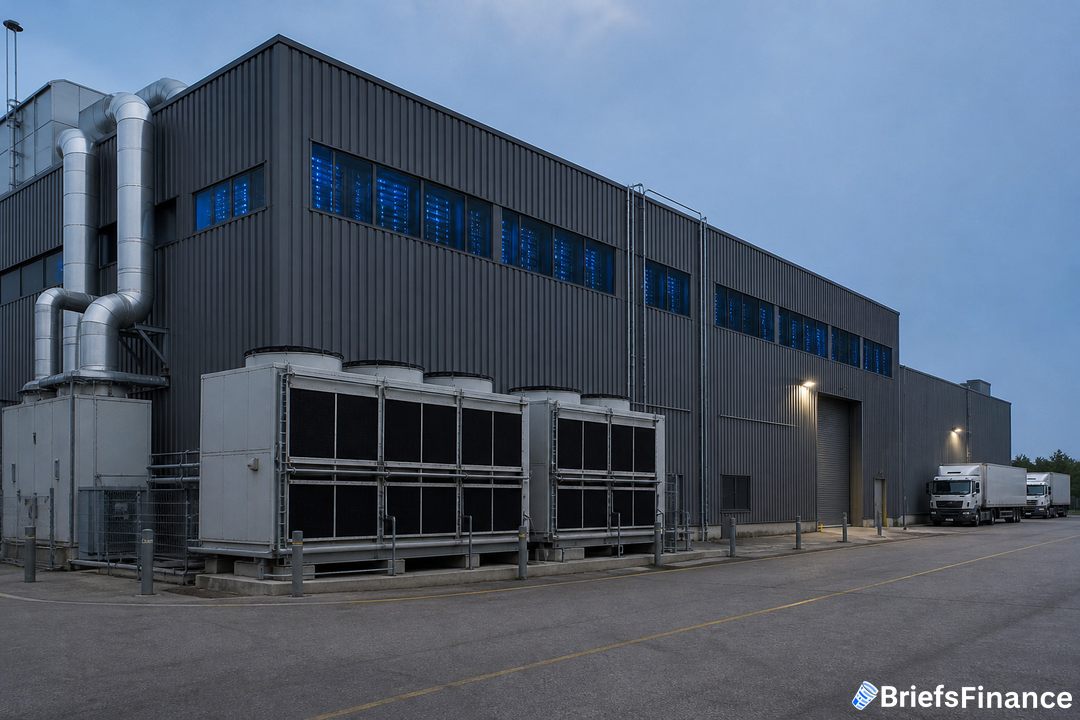
SWI has been acquiring facilities across the U.S. and Europe to host AI workloads that demand massive compute. What it really wanted from the Genesis deal were the facilities in Texas, North Carolina, South Carolina and Sweden. The plan is to turn those sites into capacity for hyperscalers - think Amazon Web Services or Google Cloud, which power much of ChatGPT-style AI.
Genesis originally concentrated its mining in Kazakhstan, then scaled back. According to George, SWI is currently moving to divest the final assets it still holds there - three small bitcoin-mining sites. For context, bitcoin mining means running software that cracks complex math problems to mint new coins.
It started on home PCs and became industrial, with miners stacking racks of Nvidia chips. Lately, a lot of those operators have been refocusing on AI because the returns look better.
Why this move matters for your portfolio
SWI turned a troubled crypto-era business into AI infrastructure, and the market noticed with a 16% rally and a roughly $6.9 billion valuation. The pivot is backed by 800 million euros in fresh funding and a $500 million buy-in, all to feed hyperscaler demand for compute rather than chase bitcoin. Meanwhile, after a fraud conviction, Bankman-Fried is serving a 25-year term, and some of his wagers look different with time: Back in 2021, he put $500 million into Anthropic, securing for FTX a 7.8% ownership position that the bankruptcy estate went on to sell in 2024 for $1.3 billion. Using the AI firm's most recent valuation as a reference point, that 7.8% would now have an estimated value of about $75 billion.
For regular investors, the takeaway is straightforward: assets can be retooled, capital can find new lanes, and what looked worthless yesterday can get a second act when the tech cycle shifts.
Power contracts and cooling are the assets, not the hardware. Join Market Briefs free and follow it.