What economists expect
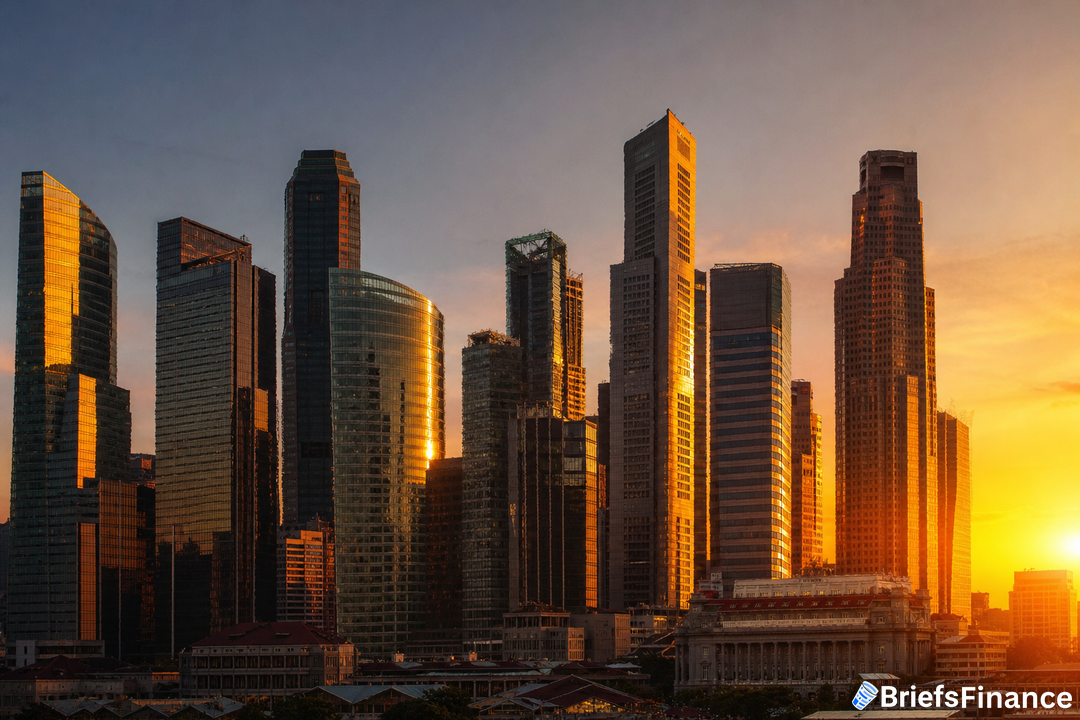
Most watchers think Singapore's central bank is not done. In Bloomberg's survey of 20 economists, 17 expect the Monetary Authority of Singapore to steepen the exchange-rate band at Wednesday's quarterly review, while three foresee no change. The MAS manages policy through the Singapore dollar rather than interest rates, and it has been inching tighter this year. The slope went up in April, then again in July by what the MAS described as a very slight change - widely read as roughly a 25 basis point equivalent, or about half the usual step.
Prices, policy drivers and the next mile
Singapore is caught between two big 2024 storylines: pricier energy imports feeding costs and an AI-driven pickup that has outpaced expectations. That pairing risks keeping inflation sticky. As Maybank Securities' Chua Hak Bin and Brian Lee wrote, "Monetary policy tightening would be a forward-looking response to renewed energy and food pressures and broadening import-cost pass-through." Bank of America's Kai Wei Ang and Rahul Bajoria added, "It is the inflation tail, rather than the hump, that warrants closer attention."
Core inflation climbed to 2.2% in August - a two-year high - and still sat within the MAS's 1.5% to 2.5% projection for 2024. Public transport fares are set to rise 7% in December, outpacing last year's increase. Electricity and natural gas tariffs are due to slip this quarter, though BofA expects a sharper rebound next year after the surge in global energy costs.
Singapore manages policy through the currency rather than rates. Market Briefs explains that mechanism free every morning.
The broader backdrop
Following the US and Israel's attack on Iran and a jump in energy costs, the MAS moved before any other central bank in Asia this year. Others have since followed as El Niño disruptions and a global bond selloff piled on. Both BofA and Maybank judge that another MAS tweak in January is on the table if inflation fails to cool, a move that would constitute Singapore's longest tightening cycle since 2022.
Growth signals to watch
Advance Q3 GDP, due Wednesday, is projected to show growth slowing to 5.1% following a strong June quarter driven by electronics shipments. Retail sales figures last week showed contractions in pockets such as motor-vehicle parts and food and beverages. Even so, the MAS projects full-year growth of 4.5% to 5.5%, solid by Singapore's historical standards. As CIMB's Chew Khai Yen and Michelle Chia wrote, "Stronger growth and the broader pass-through of imported costs continue to support further tightening, although the expected moderation in inflation in the fourth quarter and mixed growth signals argue for another smaller adjustment."
Energy-driven inflation puts that framework under real pressure. Get the free Market Briefs daily newsletter and follow it.