What the government needed to hear
Officials wanted to make sure a boardroom brawl would not slow India's flagship push into chips and electronics, a centerpiece of Prime Minister Narendra Modi's industrial agenda. With Tata central to the plan to build a local base in sectors long led by China, Taiwan and South Korea, the government checked in last week and was told the program is still on track. That assurance eased worries that deadlines could slip.
What Tata is building and why it matters
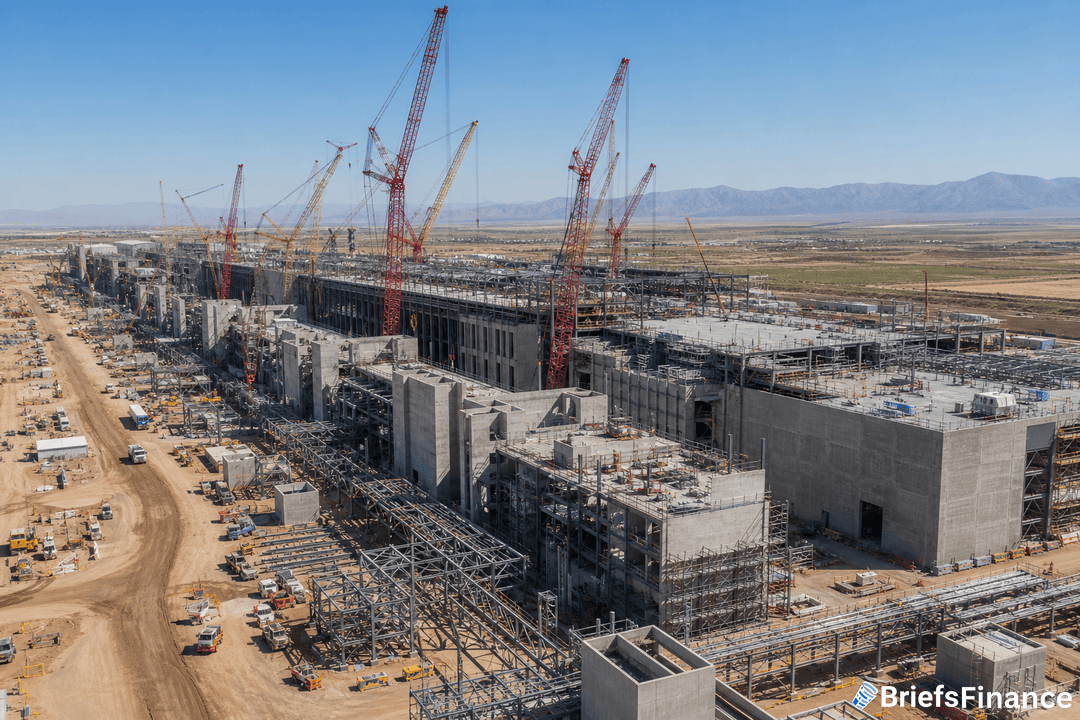
India's inaugural commercial chip fabrication facility at Dholera in Gujarat is moving ahead under Tata Electronics, working alongside Taiwan's Powerchip Semiconductor Manufacturing Corp. The investment, roughly $11 billion, targets chips made on 300 millimeter wafers across 28nm to 110nm nodes for uses spanning cars, phones, PCs, communications and more.
To round out the supply chain, Tata is also putting about $3 billion into a semiconductor assembly and testing site in Assam designed to package and test billions of chips annually. The company has become a key Apple partner too, acquiring Wistron's India operations in Bengaluru and scaling output in Tamil Nadu and Karnataka, including iPhone and component production.
When big projects face uncertainty, investors benefit from steady steps to protect wealth. Join Briefs Finance CEO Jaspreet Singh on September 29th for a FREE live investor workshop, How to Profit From A Dollar That's Losing its Value, where he shows how we're spotting investment opportunities as the dollar falls. Save your spot.
As Semicon India 2026 wrapped up, Tata Electronics signed agreements with Fujifilm and other overseas partners to bolster materials supply, production tools, and advanced packaging know-how for the Dholera facility. The goal is to seed the broader ecosystem needed for chipmaking in India.
The boardroom tension in the background
The government's check-in came as Tata Sons became embroiled in a quarrel with its majority owner, Tata Trusts, concerning the reappointment of Chairman Natarajan Chandrasekaran and compliance with a listing directive. On Sept. 17, the Tata Sons board supported Chandrasekaran for another five year term, even as Trusts Chairman Noel Tata voted against it. Later, the Trusts - which control about 66% of the holding company - labeled that move "illegal." The board also agreed to examine a potential listing of Tata Sons, a step Noel opposed.
Neither a spokeswoman for Tata Electronics nor a spokesman for the ministry responded to requests for comment.
What this could mean for your portfolio
For anyone betting on India as a manufacturing alternative, this is the signal you wanted: the factories are still getting built, the timelines are intact and the ecosystem work is underway. If the projects deliver as laid out, India reduces its import dependence and moves up the value chain, while Tata gets a bigger footprint from wafer to package to finished devices. The corporate drama may grab headlines, but the buildout is what ultimately changes the math for supply chains and, over time, could shift where tech hardware gets made and how stable that supply looks.
Long term growth comes from thoughtful decisions, not reactions to unfolding headlines or noise. Our CEO Jaspreet Singh is hosting a FREE live investor workshop, How to Profit From A Dollar That's Losing its Value, on September 29th. Sign up free to join him live.