What happened to LNG flows and prices
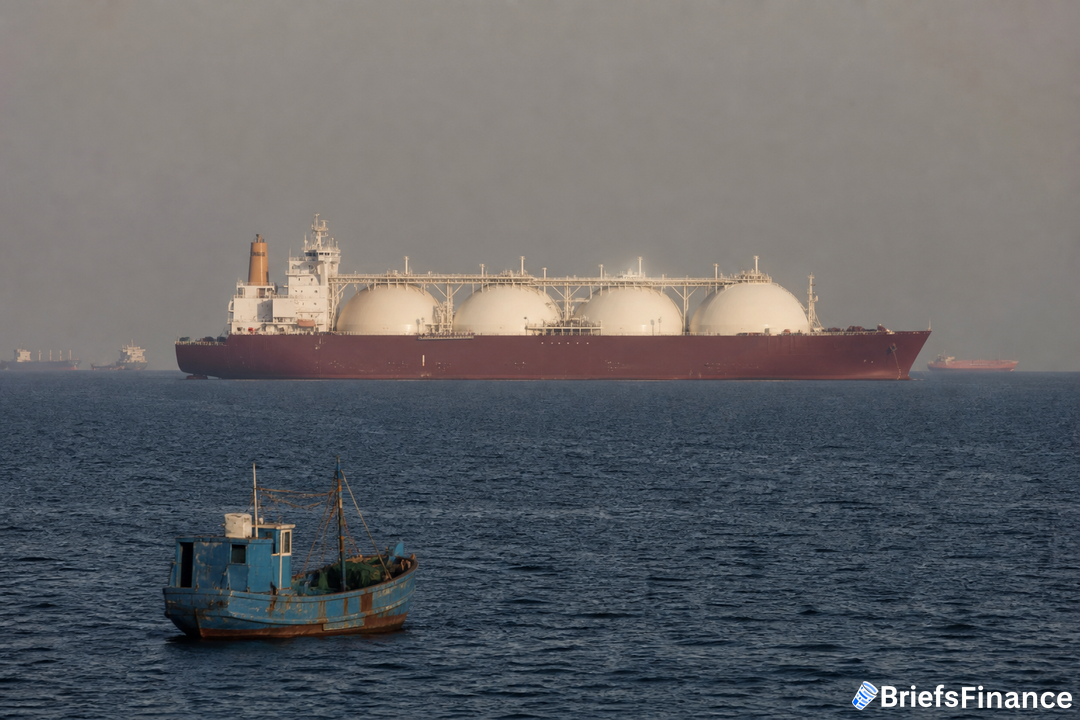
A war that knocks out one in five LNG molecules is going to be expensive, and Asia's emerging markets are feeling it. Qatar supplied around 20% of global LNG before the fighting, and shipments through the Strait of Hormuz/) have mostly disappeared since the conflict kicked off at the end of February. Buyers across Asia lost contracted barrels of the power and industrial fuel and had to chase replacements on the open market, where prices have jumped.
The bill shows up fast. Based on Bloomberg News' tally of tenders, non‑China emerging Asian buyers - India, Pakistan, Bangladesh, Thailand and Vietnam - have outlaid $7.4 billion on spot cargoes since the war started. Roughly the same amount of gas would have run about $3.1 billion over the equivalent stretch last year under long-term contracts.
How governments and buyers are reacting
There is no quick swap when you need gas today, so governments are paying up to keep the lights on while they rethink the next decade. Bangladesh alone has spent more than $2 billion backfilling lost Qatari supply and is introducing programs that reward households for adding rooftop solar. Pakistan is expected to lean more on solar and hydro as the Hormuz squeeze bites, according to BloombergNEF's Akshay Modi.
Price stickiness is testing LNG's pitch. "If prices remain at such levels, we think that LNG will have a problem competing with the alternative fuels," said Fabian Kor, SEFE Marketing & Trading Ltd.'s executive vice president for Asia, in Singapore last week. And Sam Reynolds of IEEFA, who oversees LNG and gas analysis across Asia, added: "One geopolitical conflict is a really negative thing. A second geopolitical conflict is a pattern. And that is, fundamentally, being recognized by Asian countries."
Short-term pain, longer-term rethinking
This shock lands only a few years after the Russia‑Ukraine war also squeezed supplies and spiked prices, denting LNG's image as the dependable bridge from coal to renewables. Many countries are now mapping alternatives: more renewables such as solar and wind, coal and nuclear where feasible, and closer-to-home gas or pipeline options. Falling storage costs help too, with battery prices down by more than 30% over the past four years.
Not every path is green. Vietnam and the Philippines could swing back toward coal, Modi said. The International Energy Agency expects coal use to reach a record this year, helped by costlier gas and a strong El Niño that is cranking up air-conditioning demand.
Supply shocks remind us that protecting your savings is as important as ever. Join Briefs Finance CEO Jaspreet Singh on September 29th for a FREE live investor workshop, How to Profit From A Dollar That's Losing its Value, where he shows how we're spotting investment opportunities as the dollar falls. Save your spot.
Market shifts, projects and what it means for your money
Buyers are reworking how they source fuel. About four in five expect to change their playbook and put more weight on spreading purchases across regions over the next few years, a McKinsey & Co. survey found. That puts a shine on projects with a straight shot into Asia.
TotalEnergies SE and Exxon Mobil Corp. aim to bring the Papua LNG project in Papua New Guinea to a final investment decision later this year. If purchasers spread supply beyond Qatar, the US and Canada could benefit as well.
High prices have already slowed the buildout. Over the past five years, 47 planned gas-fired power plants worth a combined $52 billion have been scrapped, withdrawn, or stalled in countries that include the Philippines, Thailand and Vietnam, according to IEEFA. The industry's big tent - Gastech, the world's largest LNG conference - is in Bangkok this week, where Shell's August call for LNG demand to climb 65% by 2050, largely from South and Southeast Asia, will face tough questions. Host nation Thailand just set a goal for at least 65% of its electricity to come from renewables by 2050, trimming gas's role in the mix.
For your wallet, this is about where energy dollars flow next. If LNG stays pricey and volatile, capital could tilt toward projects with closer access to Asian consumers or to alternatives like solar, storage, and even coal in the near term. Keep an eye on policy moves - like Thailand's renewables target and incentives in places like Bangladesh - because those choices shape which parts of the energy stack attract investment next.
Steady strategies help your money weather uncertainty and grow over the long run. Our CEO Jaspreet Singh is hosting a FREE live investor workshop, How to Profit From A Dollar That's Losing its Value, on September 29th. Sign up free to join him live.