Why captives are suddenly center stage
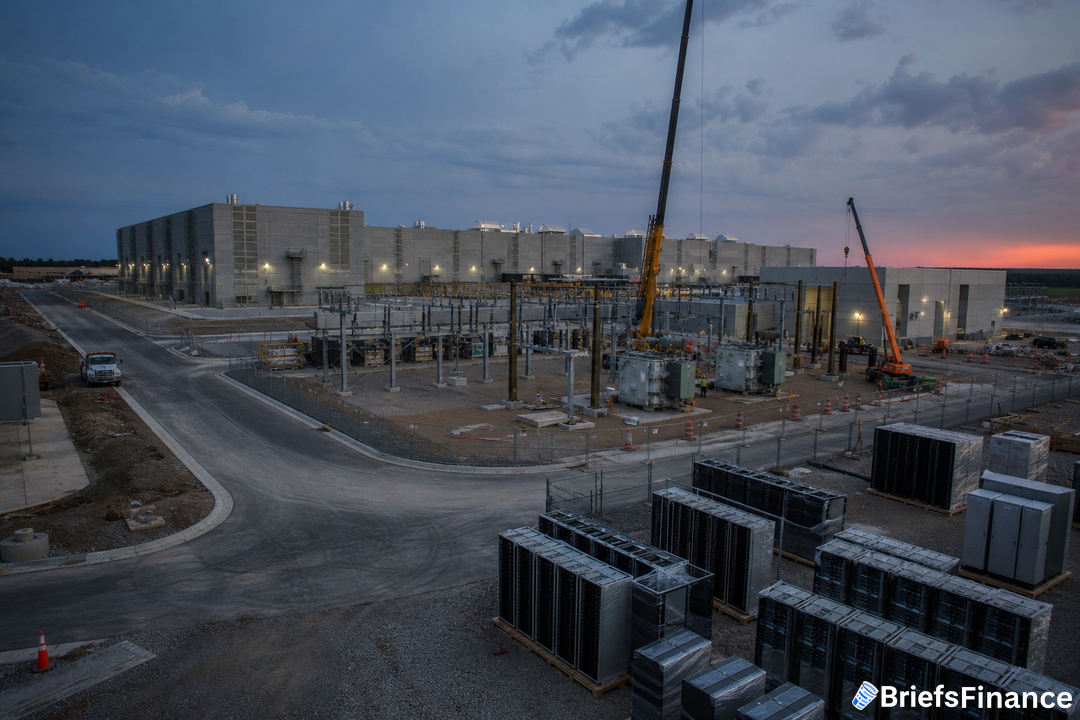
Supersized AI data centers are landing where land is cheap, which often means sharing zip codes with tornadoes, floods, or drought. Traditional coverage struggles to keep up. Michael Serricchio, who runs captive solutions for the US and Canada at Marsh, put it this way: "What you're going to see is an explosive growth in the use of captives to take on the portfolio risks for data centers." He said risks tied to "build-outs, construction, surety, property and liability" will likely "end up in their captive." Serricchio didn't name specific companies, citing deal sensitivities.
Captives aren't new. Oil and gas players helped kick them off around five decades ago to handle hard-to-place environmental disasters like oil spills. Today, they can be set up to handle natural catastrophe exposure, liability, and workers' compensation. A major selling point is the ability to reinvest premiums rather than treating them as a sunk cost paid to a third party. As Cottingham & Butler puts it, turning insurance from "a pure cost center into a potential profit center" is the corporate world's "best kept financial secret." Serricchio hears a common refrain from clients: "I've paid property insurance premiums for 10 years, I've never made a claim, and I don't want to do that anymore."
The coverage gaps and the workarounds
Some data center risks do not fit neatly into standard policies. S&P Global Ratings notes that there is no obvious insurance product for the costly GPUs inside these facilities. Even business interruption cover for a power outage can come with a 12 to 24 hour waiting period before it activates, according to S&P. "There's an insurance gap that needs to be solved," said Charles-Marie Delpuech, a director at S&P Global Ratings.
That gap is spurring alternative forms of risk retention that mimic captives without being captives. Meta Platforms Inc., for instance, explored ways last year to backstop risk at its Hyperion data-center campus, Delpuech said, calling the facility "beyond fully-insurable." Meta ultimately provided a special guarantee for bondholders financing part of the project. The senior secured notes sold by Beignet Investor LLC - an SPV created by Blue Owl Capital Inc. for its share of funding in the Hyperion transaction with Meta - received an A+ from S&P. A request for comment to Meta drew no prompt reply.
Smart investors build strategies that protect capital while positioning for steady long term growth. Join Briefs Finance CEO Jaspreet Singh on September 29th for a FREE live investor workshop, How to Profit From A Dollar That's Losing its Value, where he shows how we're spotting investment opportunities as the dollar falls. Save your spot.
The numbers behind the trend
This is no longer a niche. Captive Review counts more than 6,000 captives worldwide writing about $240 billion in premiums, close to a fifth higher than two years ago. AM Best reports that the approximately 150 US captives it reviews generated in excess of $8 billion of savings during the past five years.
Marsh says it oversees around 1,900 corporate captives that together write approximately $79 billion in premium, with about $11.5 billion deployed to buy reinsurance for large risks. Joe Peiser, who leads risk capital at Aon Plc, characterizes the trend as "a steady and almost uninterrupted increase," attributing it to rising loss severity that encourages clients to retain the first layer of risk.
Where regulation is heading and why it matters for your money
Governments want a local foothold. In 2023, France enacted measures aimed at fostering domestically domiciled captives, while UK policymakers have been working on a bespoke and competitive framework to cultivate a homegrown market. That could shift some business away from established centers such as the US, Bermuda, and the Cayman Islands. Zurich Insurance's group head of captives, Adriana Scherzinger, said captives have moved beyond a niche alternative and now function as core instruments for financing risk, allocating capital, and managing volatility. In her words: "In data centers, the scale is unprecedented: trillions of dollars will be deployed in the coming years." With capacity already tight, "reinsurers, captives, cat bonds and sidecars will all need to play their part to put the risk capacity in place and keep this growth story running through 2027 and beyond."
For your wallet, watch which companies keep more risk in-house, how much premium stays on corporate balance sheets instead of going to insurers, and which locations become hotbeds for captives. That is where pricing power, capital flows, and operational resilience across the AI buildout will start showing up in quarterly numbers.
A thoughtful plan helps you safeguard savings and seek opportunities to grow wealth. Our CEO Jaspreet Singh is hosting a FREE live investor workshop, How to Profit From A Dollar That's Losing its Value, on September 29th. Sign up free to join him live.